Master's Degree vs. Work Experience: The Dilemma Facing China's Graduates
**China's Job Market: The Debate Between Work Experience and Higher Education**
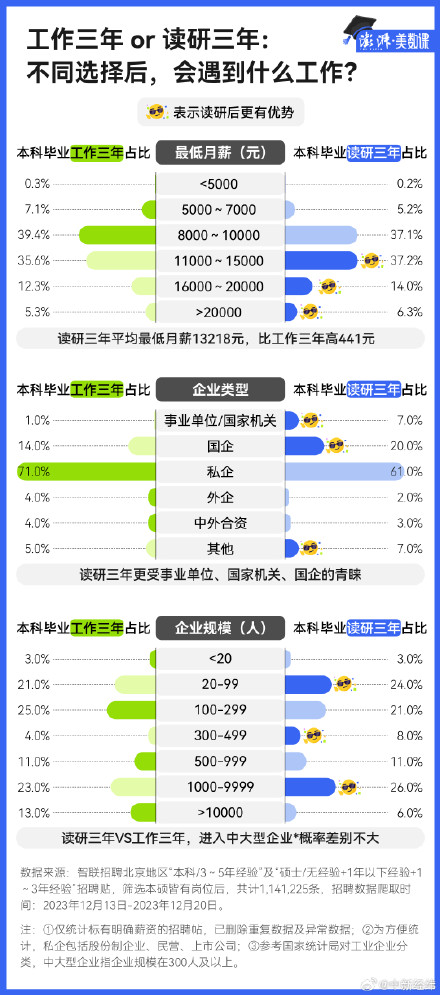
As the dust settles on another academic year, Chinese graduates are once again faced with a pivotal decision: to dive into the workforce or to continue their academic journey. A recent survey has stirred up the debate, suggesting that those who choose to pursue a master's degree may enjoy a financial edge in the job market.
The survey, which analyzed employment data and salary trends, found that on average, graduates with a master's degree earn a minimum monthly salary of 13,218 yuan, approximately 441 yuan more than those with only a bachelor's degree and three years of work experience. This revelation has sparked discussions among students and industry experts alike, as they weigh the merits of practical experience against the allure of a higher degree.
According to the survey, a significant portion of graduates with a master's degree find employment in government institutions, state-owned enterprises, and large corporations. This is reflected in the data, which shows that 70% of master's graduates are hired by these sectors, compared to only 10% of their bachelor's-educated counterparts.
However, not everyone is convinced by the numbers. Critics argue that the survey overlooks the nuances of the job market, pointing out that the type of work and industry can greatly influence earnings, regardless of educational level. They also caution against placing too much emphasis on average salaries, urging a closer look at the median income to get a more accurate picture.
Moreover, the survey's findings have raised concerns about the value of a master's degree in today's job market. With the number of Chinese students opting for postgraduate studies on the decline, some see this as a sign that the perceived "gold content" of a master's degree is waning.
Despite the debate, the survey has provided a glimpse into the preferences of employers, suggesting that they may favor candidates with a master's degree, particularly for positions in research, management, and specialized fields. This, in turn, could influence the career choices of future graduates.
As the discussion continues, one thing is clear: the decision to work or to study is a complex one, influenced by personal goals, economic conditions, and the ever-evolving demands of the job market. For now, the survey has added fuel to the fire, prompting young professionals to reconsider their path to success in China's dynamic job landscape.