Top Mathematicians, Led by Terence Tao, Call for a Boycott of OpenAI's Machine-Generated Proofs
Fields medallist Terence Tao and the Association for Human Mathematics have urged the world's mathematicians to stop working with OpenAI after it published more than 700 machine-generated proof manuscripts in a single drop. The fight over what counts as real mathematics has become the talk of Zhihu, and Chinese AI labs have as much at stake in the answer as anyone.
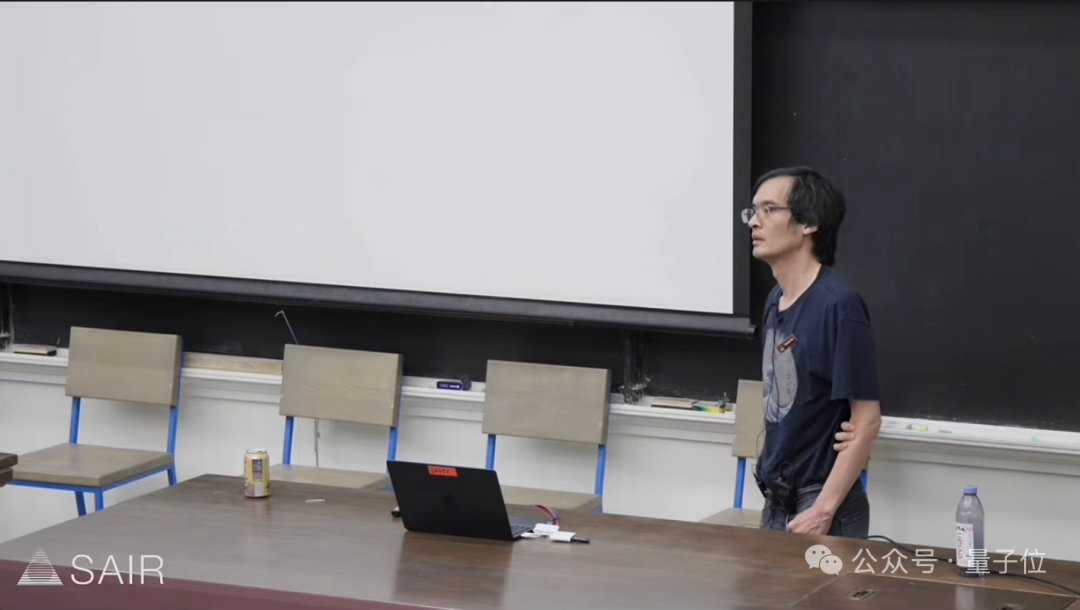
The mathematics community has been building towards an open break with OpenAI for weeks, and it finally arrived not as a letter but as a gesture of refusal. On October 6 the company published 722 manuscripts of machine-generated mathematics — proofs of new results, released in bulk and, its critics say, in bulk unusable. Three were withdrawn the next day over a single symbol error and its knock-on effects, leaving 719 files covering 372 families of results. Days later, the Association for Human Mathematics, a body led by Fields medallist Terence Tao, issued a joint statement urging every mathematician alive to stop cooperating with OpenAI and to return to "a scientific vision centred on human understanding".
The grievance is not that machines did mathematics. It is the manner of the release. The statement's most-quoted line calls the dump "not research at all — pure performance, showing off computational hegemony" (炫耀算力霸权). As Chinese tech media reconstructed the escalation, Tao had already rounded up two dozen Fields medallists in September to ask OpenAI to slow down, after the company claimed its internal model had produced a solution to the Navier–Stokes millennium problem, Lean-verified and disputed. The answer, in effect, was 719 more files. The theoretical computer scientist Scott Aaronson is credited with the label now attached to the affair in both English and Chinese: the Mathocalypse (数学界的末日浩劫).

On Zhihu, where the story has charted for days, the argument is less about OpenAI than about what a proof is for. A widely shared essay titled "The Golden Age and Lost Age of Mathematics" argues that the discipline is the field where AI pressure has become most direct, precisely because mathematics has always run on the currency of human understanding. One commentator put the factional line bluntly: "This is a declaration of war. A split. Human mathematics versus AI mathematics." His own position is that AI assistance is fine so long as the human community can read, check and restate the output — and he pointed to DeepMind's Go-era practice of publishing game records with commentary as the model OpenAI ignored. The others' output, he said, reads like a book from heaven (天书): some mathematicians who tried were, by his account, moved to tears by their inability to follow it.
Chinese readers are not spectators here. The same week, the Financial Times reported that OpenAI's annualised revenue sat closer to 50 billion dollars than the 70 billion the market had assumed — a 20-billion-dollar gap that knocked the Nasdaq down 1.4% and pulled the whole AI trade's premises into question. On Zhihu, that news ran in parallel with reports that DeepSeek, Hangzhou's flagship model lab, is closing a round of up to 100 billion yuan that would clear the way for an IPO. A fight over the norms of AI-produced science, in other words, is unfolding while China's own challengers raise the money to contest it.
The boycott's practical effect may be small; OpenAI does not need the goodwill of the American Mathematical Society to train. But the statement names the real fault line. A proof exists to be understood, and the question the mathematicians have put — what a result is worth if no human can follow it — is now the same question being asked in Chinese on Zhihu and in funding committees in Hangzhou.