Merz Leads Union Party to Victory in German Federal Election
The German federal election has concluded with the Christian Democratic Union and Christian Social Union, collectively known as the Union party, securing the lead according to exit polls. Friedrich Merz, the Union party's candidate for chancellor, declared victory at a campaign celebration in Berlin, stating, "We have won the 2025 German federal election!" Merz emphasized the need for the swift formation of a new government, noting, "The world will not wait for Germany, and we must quickly become capable of governing."
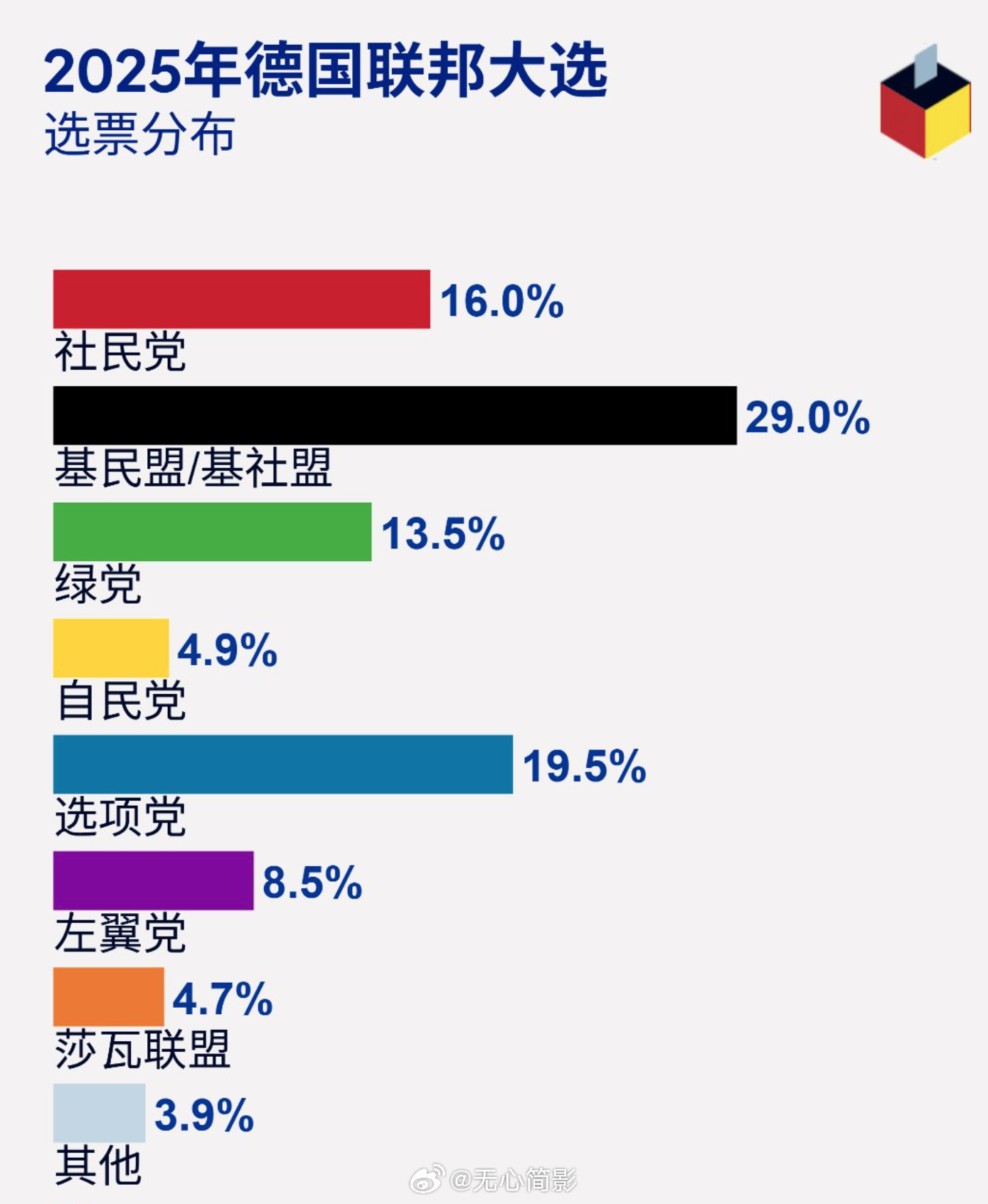
The election, which was initially scheduled for September, was brought forward due to the collapse of the current "traffic light" coalition government led by Chancellor Olaf Scholz. The latest polls indicate the Union party has secured 29% of the vote, followed by the right-wing Alternative for Germany (AfD) party with 19.5%, and the Social Democratic Party (SPD), led by Chancellor Scholz, with 16%.
Chancellor Scholz has conceded defeat, describing the outcome as "a painful election result and a defeat." He pledged to continue serving as chancellor until the end of his term and congratulated Merz on his victory. The SPD's secretary general, Matthias Miersch, noted that the Union party now holds the initiative in forming a new government, which will be determined by the final election results.
As the country awaits the official preliminary results from the Federal Election Committee, expected to be announced on February 24, the focus shifts to the formation of a new government and the potential implications for Germany's future. With the Union party emerging as the largest faction, Merz is poised to play a crucial role in shaping the country's direction, having promised to restore stable and efficient governance to Germany.
Merz's victory declaration underscored his commitment to ensuring Germany returns to a path of stable and efficient governance, stressing that the world cannot wait for Germany, and thus, the country must rapidly become capable of governing effectively. This significant shift in the German political landscape could lead to changes in domestic and foreign policies, with implications for Europe and the world. As the country transitions to a new government, all eyes will be on how the Union Party, under Merz's leadership, will navigate both the challenges and opportunities that lie ahead.
The outcome of the election is expected to have a profound impact on Germany's future, potentially leading to a shift towards right-wing policies. The Union party's stance on immigration, aid to Ukraine, the euro, and its stance on the European Union may lead to increased isolation within the EU and strained relationships with other European nations. Furthermore, the party's anti-immigration and anti-aid policies could exacerbate social divisions within Germany, making refugee and immigration issues more pronounced.
On the other hand, Merz's victory could also bring about positive changes, such as economic growth and job creation, as a result of the Union party's economic policies. However, Merz will need to strike a balance between the party's right-wing policies and the needs of German society to avoid facing strong opposition from other parties and segments of society.
In conclusion, Merz's victory marks a crucial turning point in German politics, and the country's political landscape is expected to be complex and challenging in the coming years. Merz will need to demonstrate his leadership abilities by combining the Union party's policies with the needs of German society to lead the country towards a more stable and prosperous future.