Minor Nightquake in Crayfish Hub Xuyi Sparks Social Media Buzz Amid Calm
On the night of3. kilometres. The seismological data, released by the China Earthquake Networks Center, initially listed the event as magnitude 3.4 before being revised to 3.3. Though modest in size, the quake was felt in nearby urban centres, most notably Nanjing and Yangzhou, prompting a flurry of posts on China’s dominant social‑media platform, Weibo.
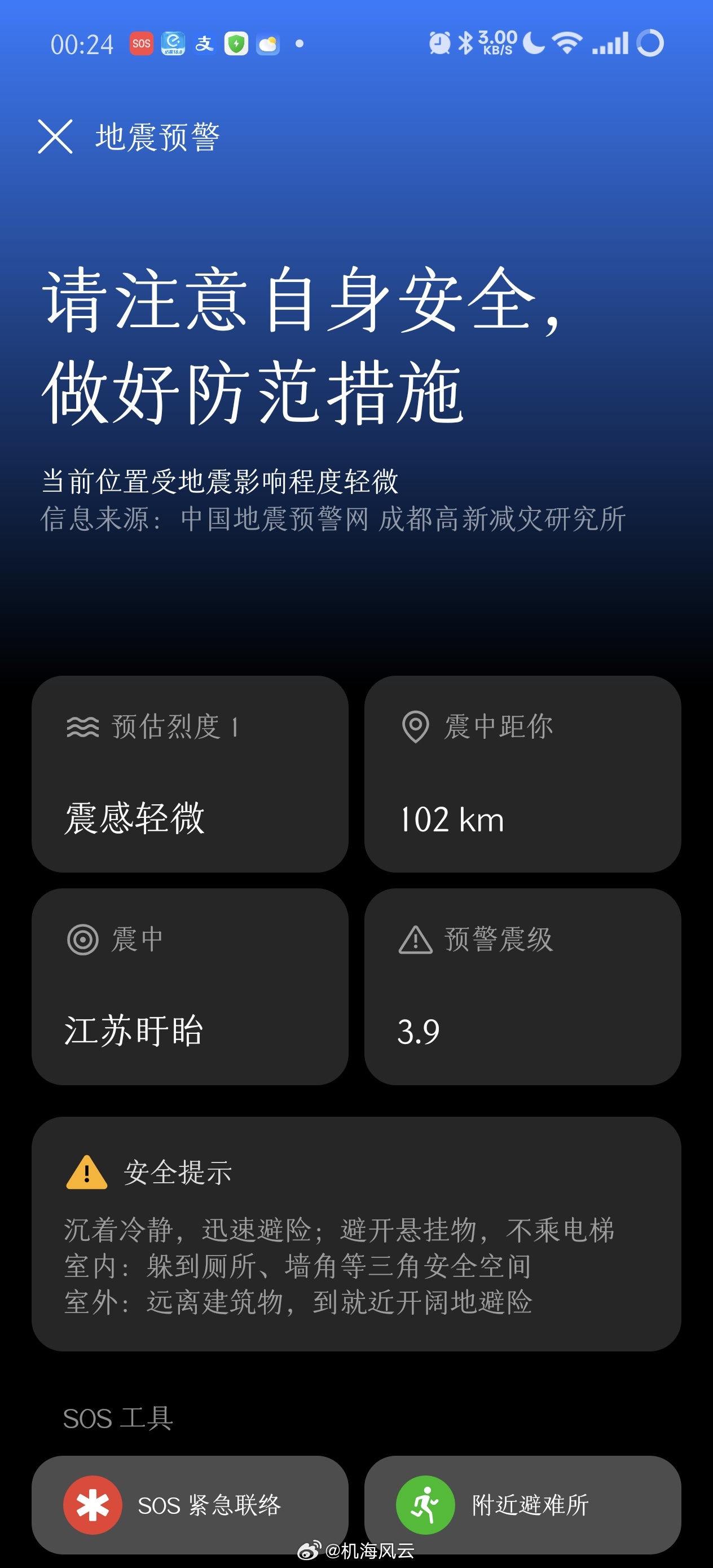
Residents of Nanjing described the experience as a sudden, unsettling jolt, with one user writing, “太可怕了!大半夜的江苏盱眙3.8级地震,不知道大家有没有感受到震感!” (“It’s terrifying! A 3.8‑magnitude earthquake in Xuyi, Jiangsu, in the middle of the night—did anyone feel it?”). In contrast,感觉” (“Why did the earthquake happen and I didn’t feel anything in Jiangsu?”). The hashtag #盱眙地震# quickly trended, serving as a virtual bulletin board where netizens shared personal accounts, jokes, and speculative commentary about the quake’s origin.
Local authorities confirmed that the tremor caused no injuries, fatalities or significant damage to infrastructure. Emergency management officials in Xuyi County, although not named individually in the reports, activated standard rapid‑response protocols, dispatching inspectors to assess the epicentre and surrounding villages. Their swift assessment, communicated through official channels, helped reassure the public that the event was minor and that there was no immediate threat to safety.
The brief episode of anxiety revives an under‑examined chapter of Xuyi’s seismic history. Historical records indicate that the region experienced a magnitude 5.0 event in 1624—the strongest quake on file for the area—and a magnitude 3.5 tremor in 2005 that struck the city centre. Whilelying province, is not immune to tectonic activity. The awareness of past earthquakes surfaced in several Weibo posts, where users juxtaposed the current tremor with the 1624 and 2005 events, suggesting a renewed public interest in the area’s geological past.
Beyond the seismic angle, Xuyi is more commonly known across China as the “capital of Chinese crayfish.” Its annual crab‑farming festivals and bustling aquaculture industry draw tourists and business travelers alike. The juxtaposition of a quiet agricultural hub with an unexpected earthquake sparked a wave of light‑hearted memes linking the “crayfish capital” to “shaking the pond,” a pun that circulated widely among younger netizens.
The reaction to the Xuyi quake illustrates how modern Chinese society processes natural events. In the age of mobile connectivity, information spreads instantly, and the collective voice of ordinary citizens can amplify a minor geological occurrence into a moment of national attention. Yet, the overall sentiment remained measured: curiosity and mild concern gave way quickly to reassurance as authorities confirmed that the quake had caused no harm.
As scientists continue to monitor fault lines beneath the Yangtze River delta, the Xuyi tremor serves as a reminder that even low‑magnitude earthquakes can capture public imagination, especially when they interrupt the quiet of night. For now, Xuyi’s residents can return to their nocturnal routines, and the region’s famed crayfish farms can resume their bustling production—both unshaken, at least for the time being.