'Eating the Last of the Line': the Unwritten Grading System in China's Nursing Homes
A long essay explaining two pieces of Chinese nursing-home slang has been read millions of times over the holiday: 吃绝户, 'eating the last of the line,' the quiet downgrading of care for residents whose families rarely visit, and 翻床率, 'bed-turnover rate,' the churning of beds for revenue. With 323 million citizens over 60 and roughly two million in institutions, the essay's closing demand — that a bed, a hot meal and an answer to the call button should not come in grades — is the argument now running through China's social feeds.
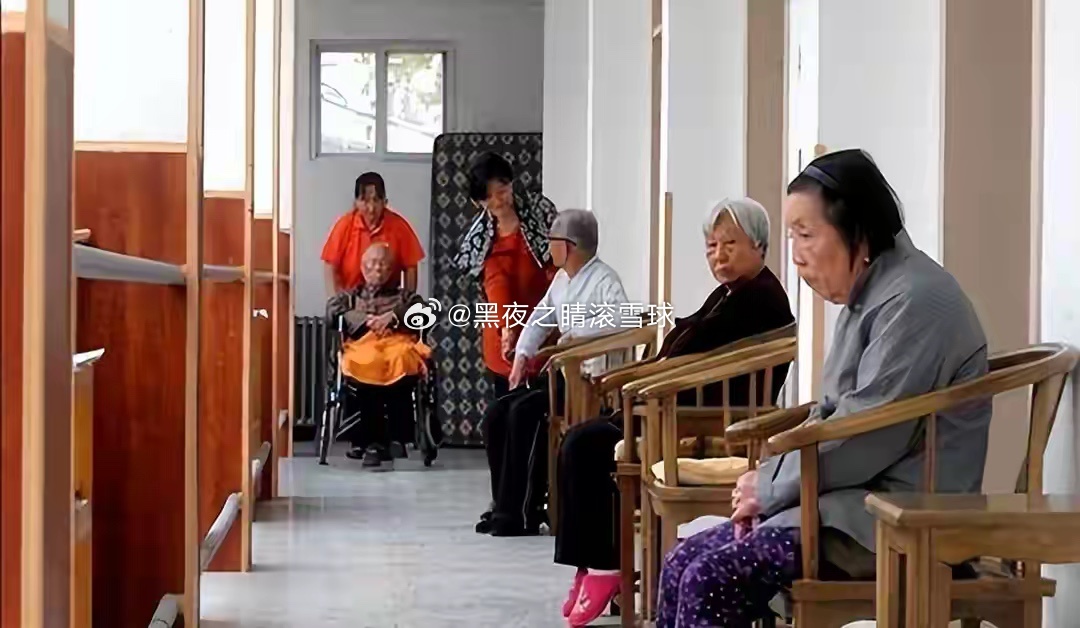
养老院里的吃绝户 — 'eating the last of the line, inside the nursing home' — sat at No. 14 on Weibo's National Day trending board, carried by a single long essay that has been liked more than 5,000 times and republished across the platform. Its subject is two pieces of industry slang that outsiders rarely hear. The first, 吃绝户, borrows an old and cruel folk term: historically it meant devouring the estate of a family whose line had died out. In the institutional-care business, the essay explains, it has been repurposed for the living — the quiet sorting of residents into tiers based not on their medical charts but on whether anybody comes to visit.
The mechanics it describes are banal and damning at once. Family visits often, and the room is warmer, the portions fuller, the call button answered sooner. Family stays away — a widower with no children, a resident whose relatives live in another province — and the standard of care slides tier by tier, with nothing written down. The criterion, the essay says, 'is almost never the resident's actual condition; it is whether anyone comes asking.' A comment from an industry veteran underneath the post supplied the phrase that stuck: 'A cold stove cooks no hot meals' (冷灶烧不出热饭).
The essay reaches back to a 2011 case in Zhengzhou that still circulates as the slang's worst-case proof: a caregiver with an undisclosed history of mental illness, hired with almost no vetting, was caught forcing urine into the mouth of a resident with no family. Cases like it, the essay argues, are not historical accidents but the tail end of the same incentive structure — a workforce of roughly 500,000 registered caregivers against an estimated 6 million needed, so staff triage by the likelihood of complaints.
The second slang term is the beds themselves. 翻床率, bed-turnover rate, measures how many times a bed changes occupants in a year — and in profit-oriented homes, fast turnover is a good quarter. Residents get moved under the language of 'bed optimization' or 'centralized care': from a single room into a double, from a double into a ward, or into a dim room far from the nurses' station until the family gives up and takes them home, freeing the bed for a new deposit and a new bed fee. The post cites a 2024 review by the geriatrics team at Fudan's Huashan Hospital, in the Chinese Journal of Geriatrics, finding that repeated relocations measurably raise falls, delirium and acute cognitive decline among the very old — for a dementia patient, a stable room is itself part of the treatment.
The numbers around all this are large and getting larger. China counts 323 million people over 60, about 23 percent of the population, of whom roughly two million live in institutions; the Ministry of Civil Affairs' most recent figures, as the essay assembles them, list 410,000 facilities with more than 8.2 million beds, 64 percent of them nursing-type, serving over 45 million disabled or semi-disabled elderly. Under the country's '9073' plan, about 90 percent of elders age at home, 7 percent rely on community services, and only 3 percent enter institutions — meaning the beds that exist are reserved for the frailest. Capacity is still being built as fast as the state can manage, down to converting empty primary schools into nursing homes, and a January 2024 State Council document on the silver economy ordered tighter regulation of care quality.
That is why the thread's second-most-shared post is practical rather than angry. Writing for the childless — the 丁克 couples the slang most obviously threatens — one Weibo user laid out a checklist: designate, while still competent, who signs for you when you cannot (the formal device is 意定监护, voluntary guardianship); keep care and property separate, 'care with professionals, assets with the law'; put the surplus into trusts or annuities; keep a will and keep revising it. 'When interest and care are not bound together,' the poster wrote, 'human nature is never put to the test.'
The essay ends on the line being quoted across the holiday feeds: a bed, a hot meal, an answer to the call button — 'none of it, in the end, should come in grades.' Whether the ministry answers a viral essay with inspection rules is the open question, on a clock that only moves one way: by 2035, China enters what its demographers call severe aging, and the two million in those beds will not shrink.