Olympic Divide: Paris 2024's Gender Parity Sparks Controversy and Celebration
The 2024 Paris Olympics has made history by achieving a 50-50 gender ratio among its 10,500 athletes, with 5,250 men and 5,250 women participating in the event. This milestone has sparked controversy and excitement among netizens on social media platform Weibo.
The historic achievement is being hailed as a major breakthrough in gender equality, with many users praising the organizers for taking a significant step towards promoting women's participation in sports. "This is a landmark event! In the 10,500 athletes participating in this year's Olympics, the ratio of men to women is exactly 1:1, a first in the 128-year history of the Olympics," wrote one user.
However, not everyone is celebrating. Some users have expressed discontent with the opening ceremony, which they claim did not accurately reflect the gender equality theme. "Westerners are all complaining, saying that the West has declined to this point. They're also comparing it to the 2008 Beijing Olympics and the Paris Olympics opening ceremony, and criticizing it heavily. It's said that the Paris Olympics has achieved gender equality, but the opening ceremony was dominated by male and female performers, and they can't even tell the difference between men and women anymore?" wrote one user.
Others have taken issue with the perceived emphasis on gender equality, arguing that it is being taken too far. "So the whole world is going to realize how far France has gone into trans propaganda. I'm so ashamed of what my country is becoming," wrote a user, echoing concerns that the Olympics is being used as a platform to promote a particular ideology.
Another point of contention is the design of the female knight's armor, which some users believe was designed with a feminine touch. "The armor design is clearly done by a female designer, it doesn't emphasize the chest and body curves, weakening the distinction. I think the female knight is a nod to Joan of Arc," wrote one user. However, others have argued that this design choice is a step in the right direction, countering the objectification of women's bodies in fashion design. "In my 10 years of working in fashion design, all the male leaders who asked me to 'accentuate the female figure' or 'make the chest more prominent' - they're all men, and they're not even managing their own bodies well. But they love to scrutinize their female subordinates or actresses' body lines..." wrote another user.
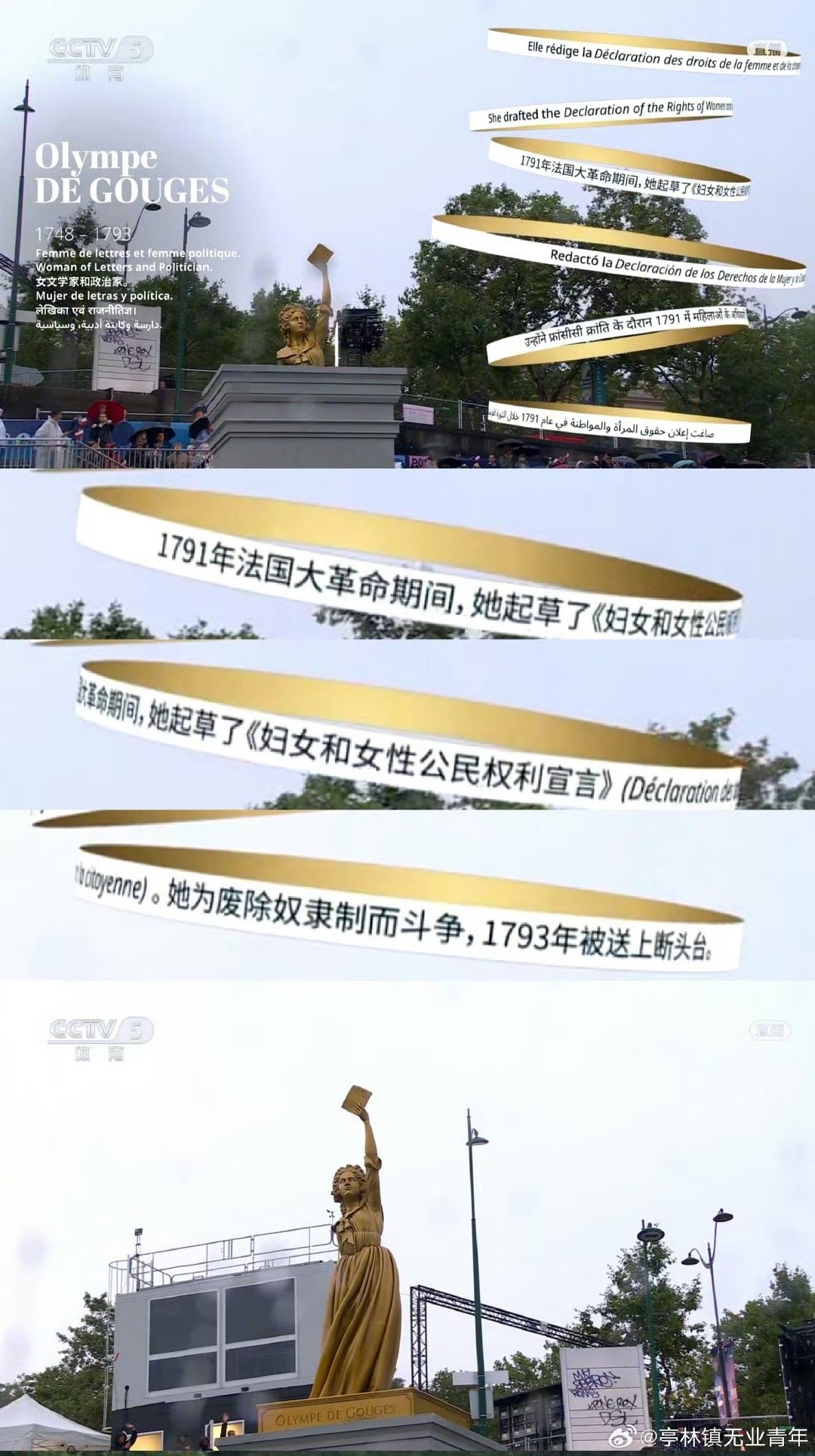
The controversy has also extended to the inclusion of Olympe de Gouges, a French playwright and feminist, in the opening ceremony. Some users have praised her inclusion, hailing her as a pioneer for women's rights. "Olympe de Gouges drafted the Declaration of the Rights of Women and Female Citizens in 1791, a true woman of letters and politician," wrote one user. However, others have criticized the move, arguing that it is an attempt to push a feminist agenda.
The debate sparked by the Olympics' gender equality theme reflects the complexities of promoting social change in a society where traditional values and modern ideals often clash. While some users have hailed the Olympics' achievement as a major milestone, others have expressed concerns that it goes too far in promoting a particular ideology. As one user wrote, "Heart law does not depart from worldly law, spirit is always bound by social reality. Currently, it's just an idealized state. Moreover, 'gender equality' should be written as equal rights for men and women."