Nobel Medicine Prize Goes to Optogenetics Pioneers as China Names Its Own Contenders
Karl Deisseroth, Peter Hegemann and Georg Nagel share the 2026 Nobel in Physiology or Medicine for light-controlled neurons. On Chinese platforms the award opened a week of prize-watching with a familiar argument underneath: what the Nobels do and don't measure.
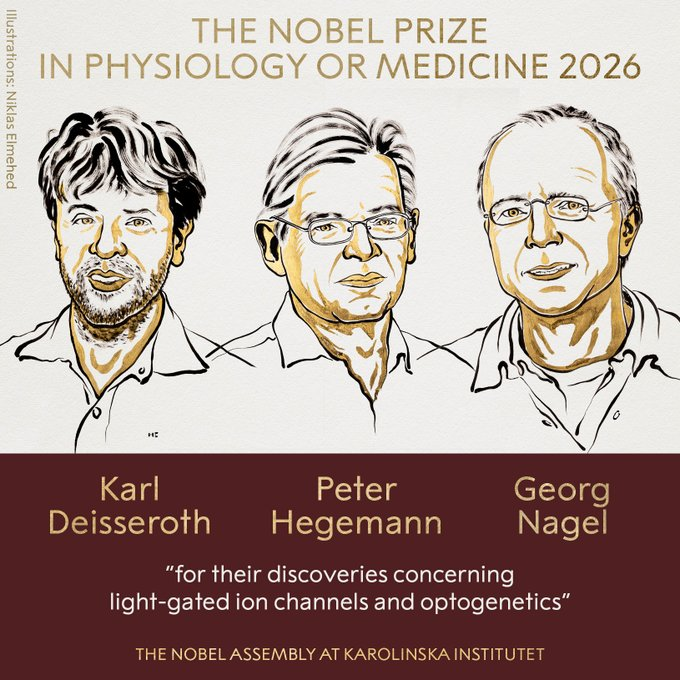
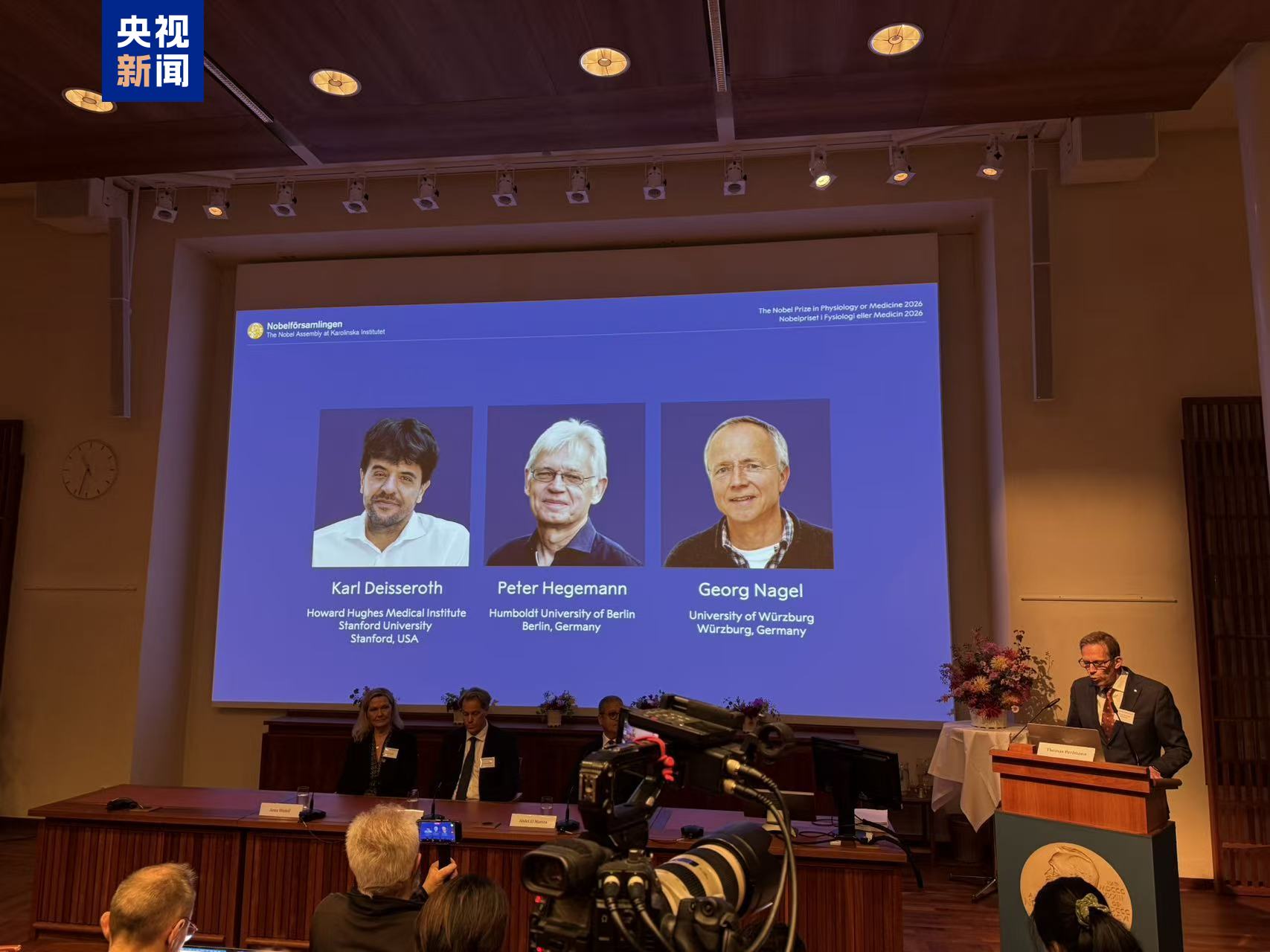
The Karolinska Institutet opened Nobel week on Monday by awarding the 2026 prize in Physiology or Medicine to three scientists who found a way to switch brain cells on and off with light: Karl Deisseroth of Stanford and the Howard Hughes Medical Institute, Peter Hegemann of Berlin's Humboldt University and Georg Nagel of the University of Würzburg. They share 12 million Swedish kronor, about 8 million yuan after this year's raise, for discoveries the citation calls light-gated ion channels and optogenetics.
The road to Stockholm began in pond water, as the explainer posts that swept Chinese platforms recounted: Hegemann spent years asking why single-celled algae swim toward the light, and with Nagel identified the light-sensitive proteins that steer them. Deisseroth's lab worked out how to install those proteins into neurons, handing researchers a remote control for the brain: one color of light fires a circuit, another silences it. That is optogenetics, and it has reshaped how memory, emotion and behavior are studied. The technology outlet IT之家, in the trending summary of the award, noted the field has now begun moving into clinical research.
Chinese platforms carried the announcement within minutes. CCTV carried the Stockholm ceremony, the news was on Baidu's search board before the hour was out, and a Zhihu question asking how to understand the work's significance sat near the top of the platform's hot list into the evening.
The conversation that formed around the prize was about more than the science. One widely read comment cut against the reflex of scoring the award as a national contest: "People used to treat the Nobel as science's report card, whoever has more wins more. Now more people read it another way: the medal's weight is real, but there's no need to deify it. A trophy can arrive decades late; real technological and industrial competition doesn't wait for the judges to finish voting."
The scorekeeping is never far off, though. A list of this year's favorites, compiled from citation records and circulating on Baidu's board, names nine Chinese-affiliated scientists as contenders across physics, medicine and chemistry, among them the quantum physicist Xue Qikun, the physicist Jun Ye, the DNA-testing pioneer Dennis Lo and the gene-editing researcher David Liu. Tu Youyou's 2015 medicine prize remains the reference point for what a win means, and her decision to donate part of the prize money surfaced again this week in the chatter over the raised purse.
The week's opening lands days after Golden Week, when shopping malls across the country put scientists' faces on their billboards, and six more prizes will be announced through October 12. With Chinese names on every favorites list, the argument over what the trophies measure has a week to run.