Poland's Constitutional Court Crisis Reaches Beijing: An Ambassador Resigns Over a 'Coup' at Home
A standoff over Poland's Constitutional Tribunal escalated on October 30 when protesters clashed with police outside the court, the president cut short a state visit, and Poland's ambassador to China resigned rather than defend a government he accused of trampling the law. On Weibo, where the hashtag 'Poland coup' trended, Chinese readers watched a familiar constitutional drama unfold in a European capital.
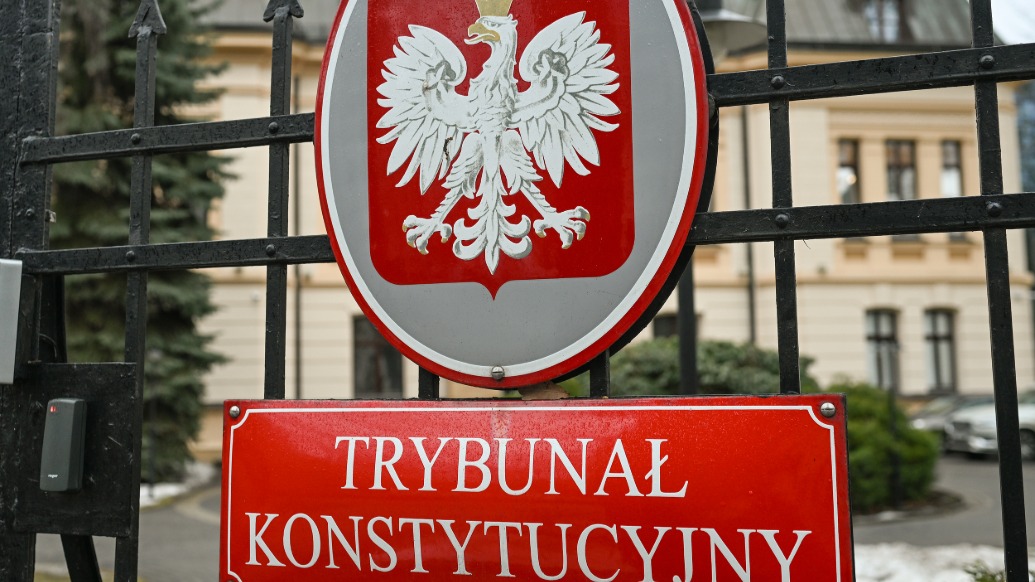
The crisis in Poland arrived on Chinese social media this week wearing a startling word: 政变 — coup. The hashtag "Poland coup" trended on Weibo on Friday morning, and what lay behind it was not a seizure of power by soldiers but a fight over who controls Poland's Constitutional Tribunal — a fight that in two days produced street clashes, a president turning his plane around, and the resignation of Poland's ambassador to China.
The immediate trigger came on October 30, when the court's website announced that its chief justice, Bogdan Święczkowski, and his deputy had been "suspended from their duties for a month," with judge Anna Korniewska-Pietrowska named to run the court in the meantime. The Tribunal's own account pushed back within hours, saying the website had been "illegally taken over" and that Święczkowski remained chief justice — and disputing that his stand-in was even a legitimate judge. The Paper's report traced the dispute to the long-running conflict between the government of Prime Minister Donald Tusk and the opposition-aligned judiciary: this year the Sejm, where the governing coalition holds a majority, has selected eight constitutional judges, but President Karol Nawrocki, who is close to the opposition, has sworn in only three, leaving the other five's status in limbo.
That evening, crowds gathered outside the Tribunal in Warsaw to protest what they called a government attempt to seize the court. Xinhua's report, carried by CCTV, said some protesters clashed with police and three people who entered the court compound were detained, with several injured. Opposition leader Jarosław Kaczyński and former prime minister Mateusz Morawiecki appeared at the protest. President Nawrocki, who was en route to Senegal, interrupted his trip and flew home. Tusk, for his part, wrote on social media that after years of "legal disorder" the government was restoring the rule of law — each side using the same phrase, the rule of law, to describe opposite goals.
The most startling Chinese-language development came from Beijing. In a post that one Weibo user shared alongside a screenshot, ambassador Jakub Kumoch — the former Polish official known in Chinese as 古天卫 — announced that "in light of the events in the country, I believe I cannot continue to fulfill the duties of the Ambassador of the Republic of Poland," and said he had submitted his resignation that day. Foreign Minister Radosław Sikorski replied briskly: "I have noted the unprofessional end of your mission. You no longer represent the Republic." Nawrocki's own international-policy office then praised the ambassador for resigning in the face of "the Tusk government's trampling of the law and the armed attack on the Constitutional Tribunal." A Weibo user summed up the absurdity in a line that drew a like from thousands: "One Twitter account resigns, another Twitter account accepts the resignation — you'd think this was your government's office messenger."
For Chinese readers, the fascination is partly the unfamiliarity of the setup — a court whose legitimacy both sides dispute, a president and prime minister from rival camps — and partly the recognition of a familiar pattern: an institutional dispute that each side frames as defending the constitution while the other calls it a coup. On Zhihu, the question "How did Poland's judicial-control dispute escalate, and what are the causes and consequences?" drew detailed explainers within hours.
Poland's constitutional crisis has been building since 2015; October 30 was simply the night it spilled into the street. Whether the suspended chief justice returns to his post, and whether the five unsworn judges are ever seated, will decide what happens next — and both sides have dug in.