A Misfired Message Shows a Chinese Automaker's 'Attack-Defence' Playbook Against Xiaomi's New SUV
A PR staffer accidentally posted an internal 'attack-defence' instruction into a rival launch's media group, exposing how a Chinese automaker tracks and counters coverage of Xiaomi's Pengcheng SUV — and costing the group its existence within minutes.
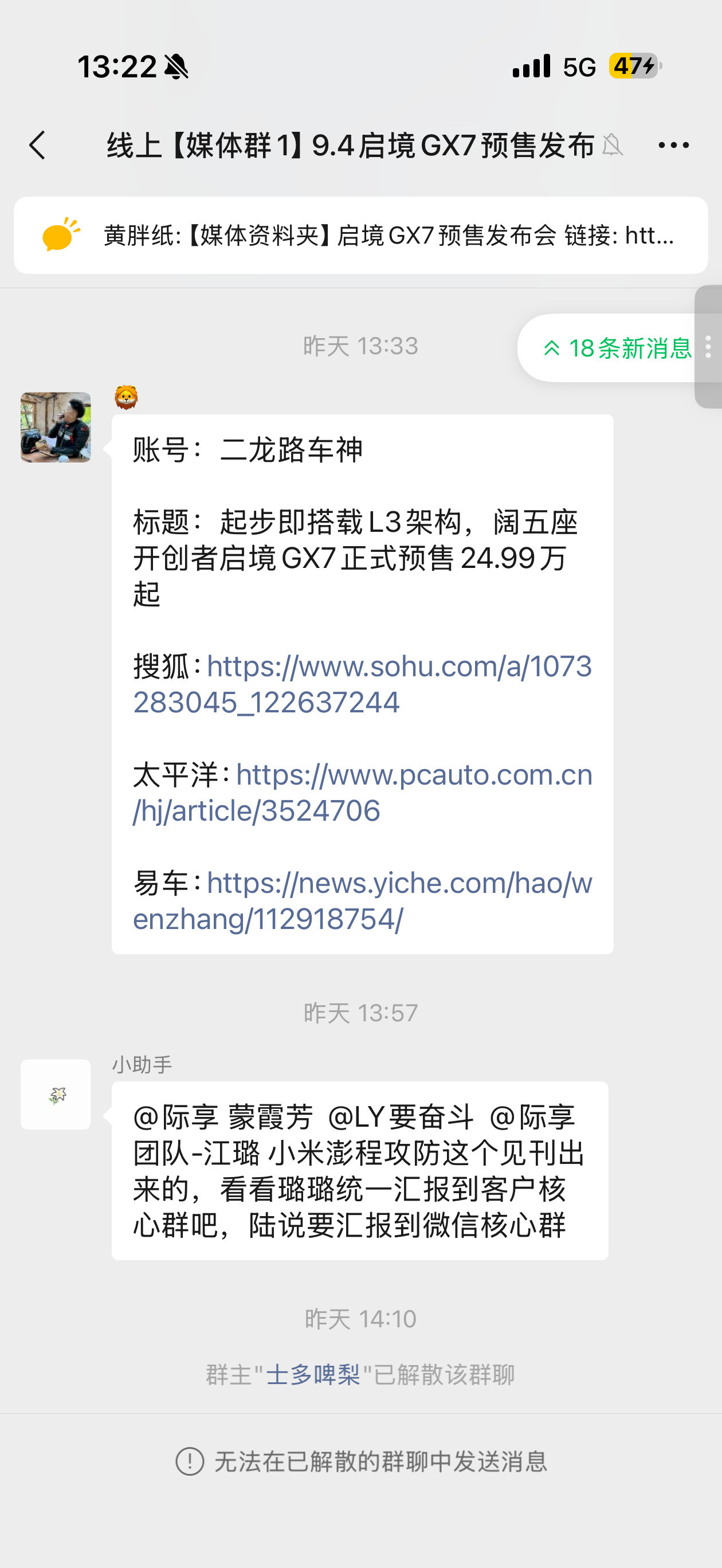
A single misdirected message in a journalists' WeChat group has shown, in one screenshot, how China's car wars are fought behind the scenes — and cost the group its existence within minutes.
During this week's media group for the pre-sale launch of the Qijing GX7, an SUV from a domestic automaker, an account called "小助手" — Little Assistant — posted something that was not meant for journalists: an internal instruction about "小米澎程攻防", the Xiaomi Pengcheng "attack-defence" file, telling staff that once the piece was published it should be compiled and reported up to the client's core group on WeChat. Sina Technology reproduced the screenshot: the assistant's message sits in the group above a system notice recording that the owner had dissolved the chat moments later, ending the conversation for everyone. No carmaker involved has commented.
What the slip actually exposed was the machinery. As the auto account 海评 laid out in a post shared hundreds of times, the internal file shows Qijing treating Xiaomi's Pengcheng N90 as a dedicated "competitive communications / public-opinion attack-defence" (舆情攻防) project — with media comparison pieces specially tallied and reported to the core team. The irony was not lost on readers: the automaker had built a whole surveillance program around Xiaomi's new SUV, and the evidence escaped in a message about managing its coverage. "The cars haven't even started fighting," the post concluded, "and the media group is gone first."
The "attack-defence" framing is the part an outsider should notice. 舆情 — public sentiment — is a managed quantity in Chinese corporate life, staffed by agencies that seed positive coverage, flag negative pieces, commission head-to-head comparison posts, and report the scoreboard to clients daily. The chat that leaked shows the workflow plainly: links to just-published pieces on Sohu, PCauto and Yiche, an instruction to compile them, a report upward. Media groups like the one dissolved are the infrastructure this runs on — and everyone in one knows that what is said there is work, not conversation. The comparison coverage it was tracking is itself part of the game: the same day, bloggers were already posting seat-by-seat breakdowns of the GX7 against the Pengcheng N90 Max.
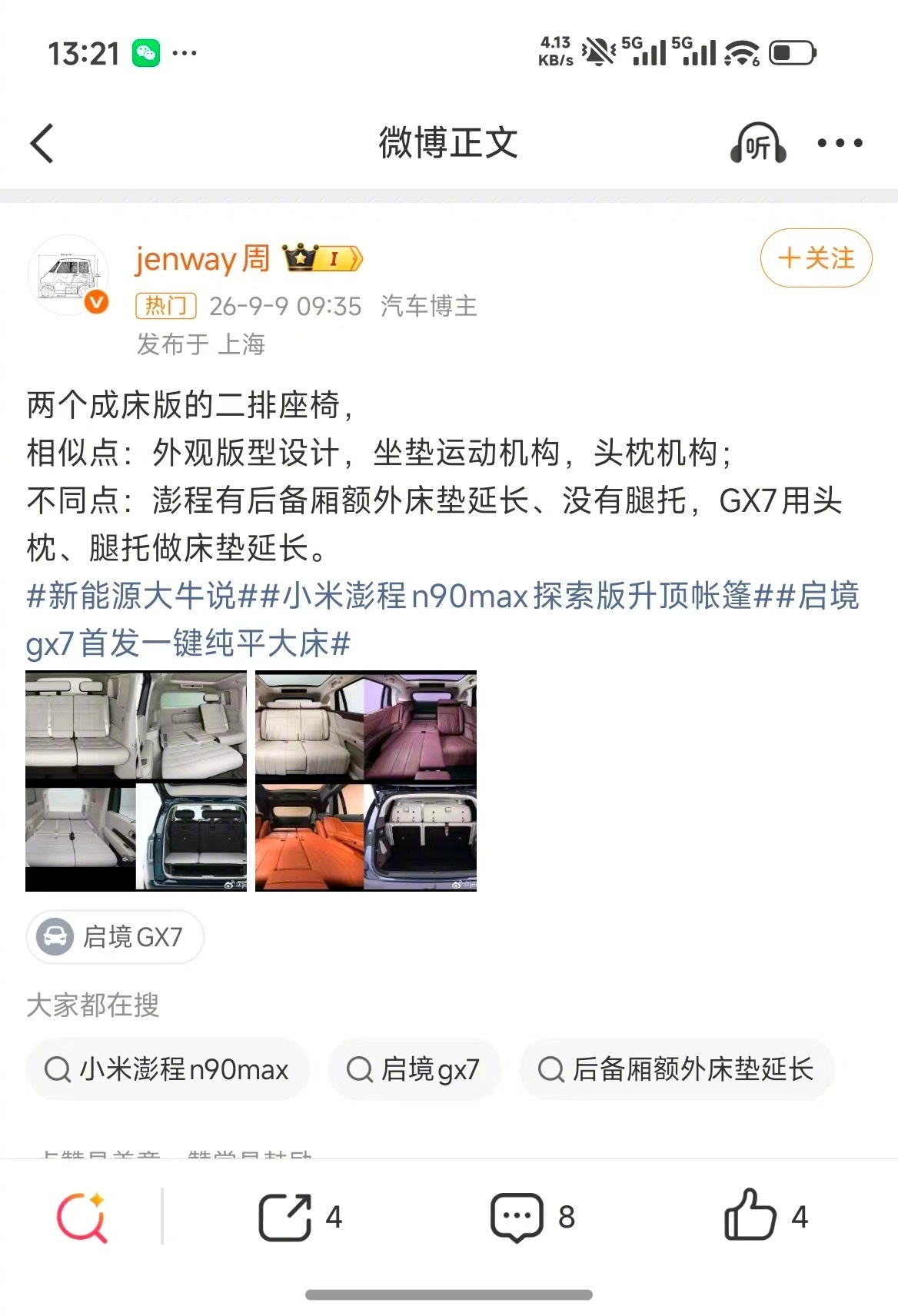
The timing made it funnier. Xiaomi's Pengcheng line — four new models launched on September 7, booking 10,000 orders in four minutes — is the hottest property in China's car market, and Lei Jun spent September 9 promoting it by quoting the netizens praising it, most touchingly, as the car for people who "are always on the road" for work: salespeople, service engineers, county-hopping inspectors. His rival's PR operation, in the same 48 hours, dissolved its own media group. "Whatever disaster you think you've caused at work," one post offered, "imagine that team right now."
The unnamed automaker had not responded by press time, which leaves the story where the screenshot does: a reminder that in China's electric-vehicle price wars, the competition you can see — the launches, the order counters — is only the visible half.