Xiaomi's New SUVs Took Four Minutes to Book 10,000 Orders
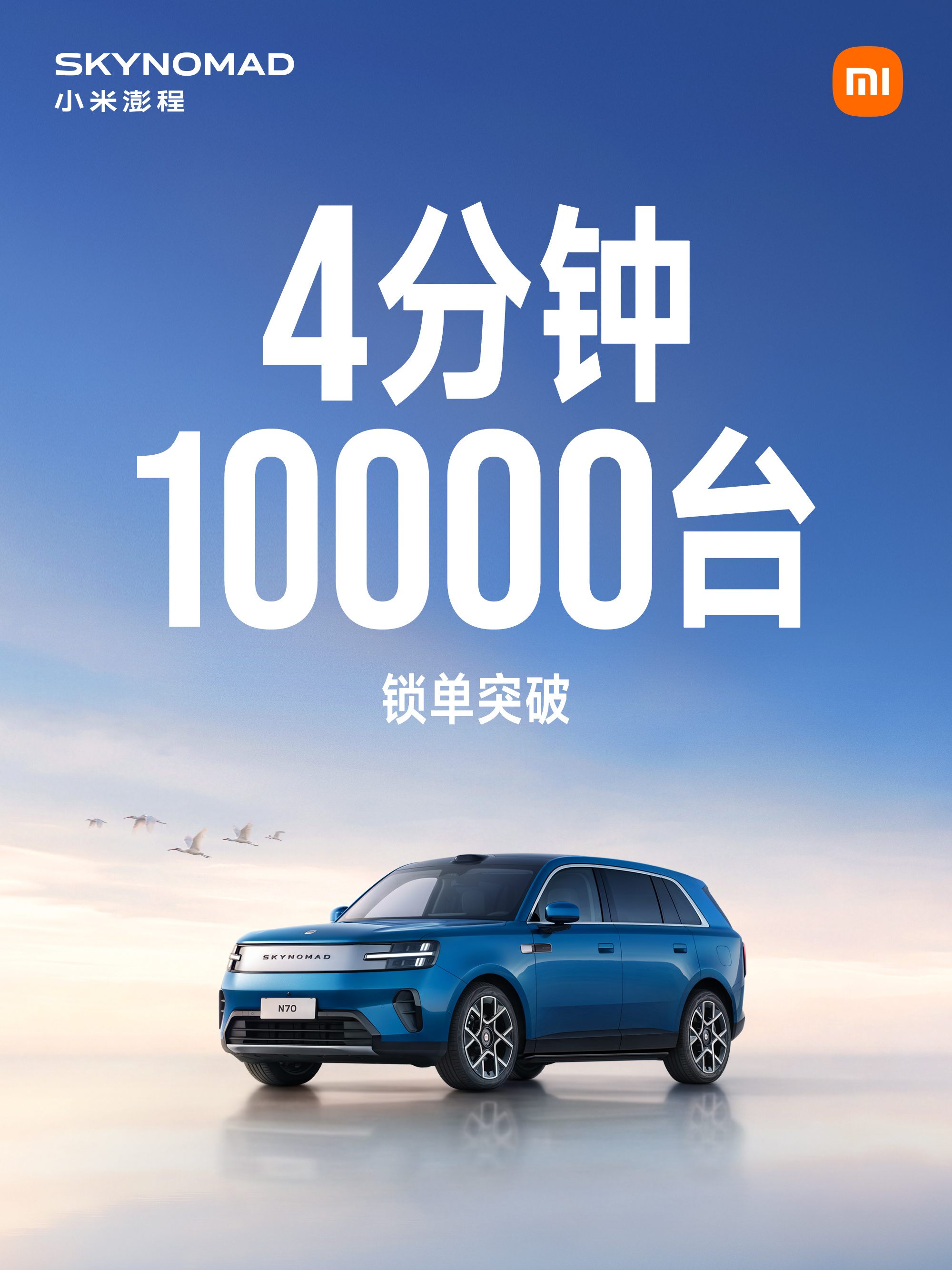
Xiaomi's Pengcheng range-extender SUVs opened for sale with a starting price of 209,900 yuan — and booked more than 10,000 locked orders in four minutes. The launch rounds out a September in which the phone-maker-turned-car company is pushing into the most contested corner of China's auto market.
The order counter told the story before the reviews could: Xiaomi's new Pengcheng SUV line, opened for sale on September 7, locked in more than 10,000 orders in four minutes. "Thanks for everyone's support," the Pengcheng account posted — a candour-less four minutes of marketing that Chinese car bloggers immediately treated as the week's most consequential datapoint.
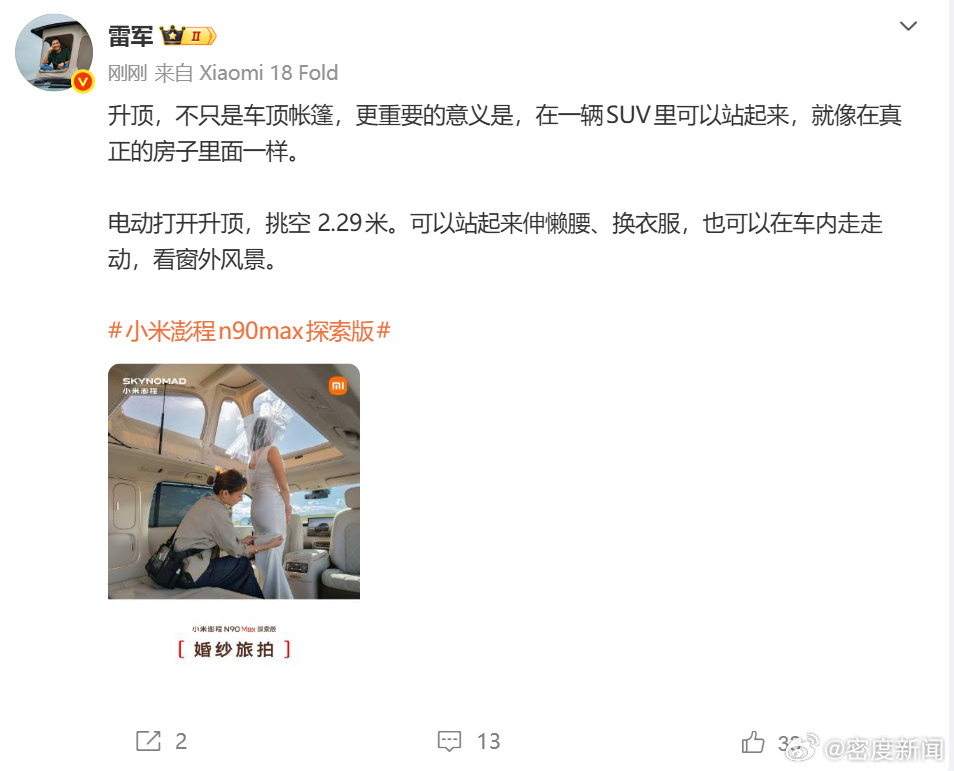
The lineup is unambiguously a price attack. Four models span from the N70 Pro, a five-seat mid-to-large SUV at 209,900 yuan, to the N90 Max Exploration Edition at 299,900 yuan, a seven-seater whose electric pop-up roof gives 2.29 metres of standing headroom. All are range-extenders — petrol generators backing a battery — the technology that has quietly become China's fastest-growing powertrain segment because it sidesteps charging anxiety on holidays.
The "are you not entertained" pricing
Lei Jun, Xiaomi's founder, personally explained the pop-top in a post: the point of a roof that lifts, he wrote, is not a rooftop tent but that "you can stand up inside an SUV, as if you were in a real house" — stretch, change clothes, walk around, look out the window. A photo attached to his post shows a woman doing exactly that, standing upright in the glass-roofed cabin.
Analysts on Weibo and Zhihu read the pricing as aimed at every rival at once. One widely shared take put it in grid terms: below 200,000 yuan, pressure falls on Leapmotor, LeDao, and HarmonyOS-branded models; in the 200,000–300,000 band, the N70 and N90 land squarely on Li Auto, Aito and XPeng, with BYD covering the whole range. "Imagine how brutal the mid-to-large SUV market will be in 2027," the post concluded. On Zhihu, the top question — how competitive is the 209,900-yuan starting price — drew answers debating whether Xiaomi is once again applying its phone-era playbook: premium specs at a hair-thin margin, sold in volume.
From phones to family cars
The Pengcheng launch completed a September that has made Xiaomi's two-front war explicit. On the same evening, the company launched the 18 Fold foldable phone — priced from 10,999 yuan as Lei Jun blamed costly memory — three days after the company had announced the EV-and-foldable double header. The company pre-empted skepticism about a phone company building family cars with a heavily circulated figure: 4.28 million kilometres of real-world testing over more than 1,000 days, across extreme heat, humidity, cold and altitude — "reliability welded into the name," as the campaign put it.
Whether four minutes of orders converts into four years of satisfied owners is the question the car industry is asking. But the demand signal lands at a moment when China's EV price war is entering its most expensive phase yet, and Xiaomi — the company that made "Are you OK?" a national meme — has now planted its flag in the family-SUV heartland where the money is.