'Renegade Immortal' Fans Trace a Cartoon Coffin to a Real 1,400-Year-Old Sarcophagus
A new artifact in China's hit animation 'Renegade Immortal' — a stone coffin said to raise the dead — sent fans hunting for its real-world model. They found it in Xi'an's Beilin Museum: the Sui-dynasty sarcophagus of a nine-year-old court girl, carved with a curse that reads 'whoever opens it dies.'
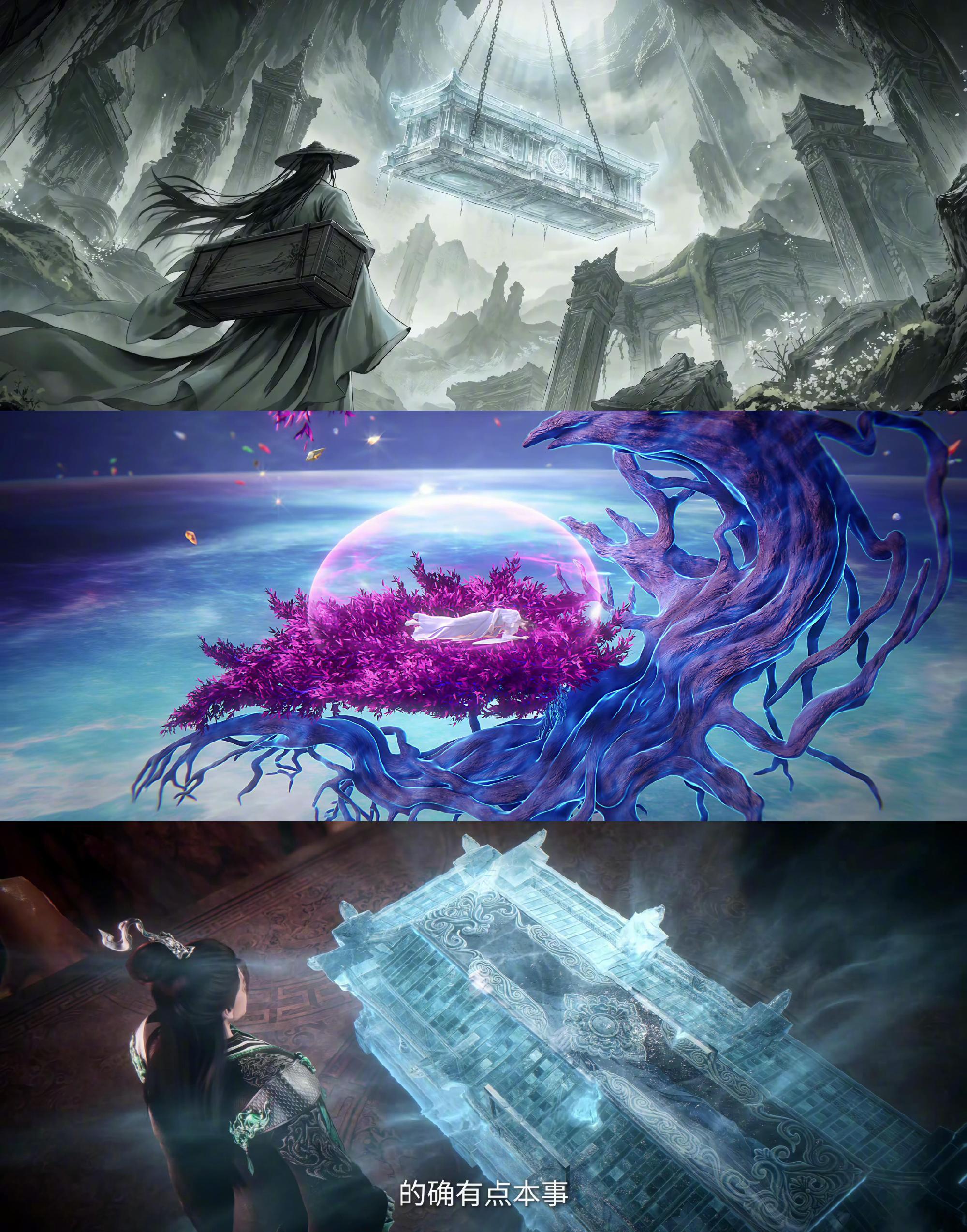
Episode 161 of "Renegade Immortal" (仙逆), one of China's most-watched animated series, introduced a new treasure this week: the "heaven-avoiding coffin" (避天棺), a carved stone sarcophagus rumored in the story to hold the power of "turning death back to life and flesh back to bone." Within hours of broadcast, the show's hashtag had a side conversation going — not about the plot, but about where the prop came from.
A fan posting under the handle 鱼三尾 had it: "A fellow fan spotted it — incredible. The heaven-avoiding coffin is modelled on this one, I think. My strongest memory of the tomb's occupant: Little Li. So utterly, utterly beloved." (李小孩,特别受宠爱,特别受宠爱,特别受宠爱。) The tripled phrase was the tell — this was a viewer who remembered the archaeology before the animation.
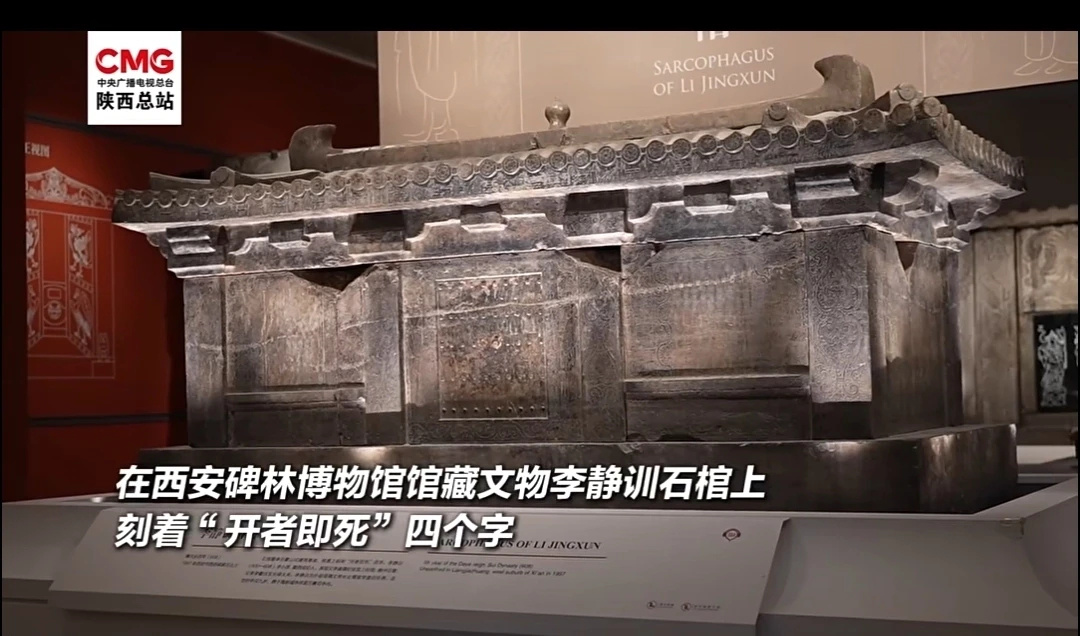
The real object is famous on its own terms. The sarcophagus of Li Jingxun — "Little Li" — held a girl of the Sui imperial court who died in 608 AD, still a child, and was buried in Chang'an, today's Xi'an, with grave goods of a richness her age makes almost unbearable. Excavated intact in 1957, her stone coffin is carved as a miniature house: a tiled hip-and-gable roof, round tile-ends along the eaves, a panelled door. It has stood in Xi'an's Beilin Museum for decades, and state broadcaster CMG's Shaanxi bureau recently put it on camera with the detail that stops visitors cold: carved on the coffin are four characters, 开者即死 — "whoever opens it dies."
The resonance fans were enjoying runs in both directions. The cartoon coffin defies death; the real one threatens it. A prop of resurrection in a xianxia fantasy turns out to be modelled on China's most storied child's sarcophagus — its rooflines and tile rows echoed closely enough that frame-by-frame comparison shots spread within hours. That fans of a fantasy animation carry a Sui-dynasty tomb in their heads — and can cite the museum label — says something about the audience Chinese productions now write for.
It also says something about the productions. Borrowing from museum collections has become a signature move in Chinese screen work: viewers of the drama "Water Dragon's Chant" had earlier documented its celestial pillar lifted from the Sanxingdui bronze tree, down to the nine branches, the fruit-birds and the descending dragon. Animation studios working at "Renegade Immortal's" scale employ art teams who trawl catalogues of excavated objects, and audiences treat the detective work as part of the viewing — a national habit fed by the museum-going boom that has filled Xi'an's galleries for years.
The heaven-avoiding coffin will keep its secrets on schedule, parcelled out in weekly episodes; a preview for episode 162 promises the story's great reunion. The real coffin surrendered its secrets once, in 1957, to archaeologists who paid the carved curse no mind — and fourteen centuries after its occupant was laid down, the object has acquired a second audience, watching a cartoon coffin glow blue on their phones and checking, frame by frame, the tiles on the roof.