Sichuan Just Got a 7.7 Earthquake Warning. The Quake Was a 4.7.
At 8:26 on the morning of August 24, a 4.7-magnitude earthquake struck Changning, Yibin, in Sichuan. Before most people felt a thing, phones across the region lit up with a warning of magnitude 7.7. The alert came from a private institute that had already lost its official authorization — and it exposed how little control the state agency now has over the channels that ping millions of phones.
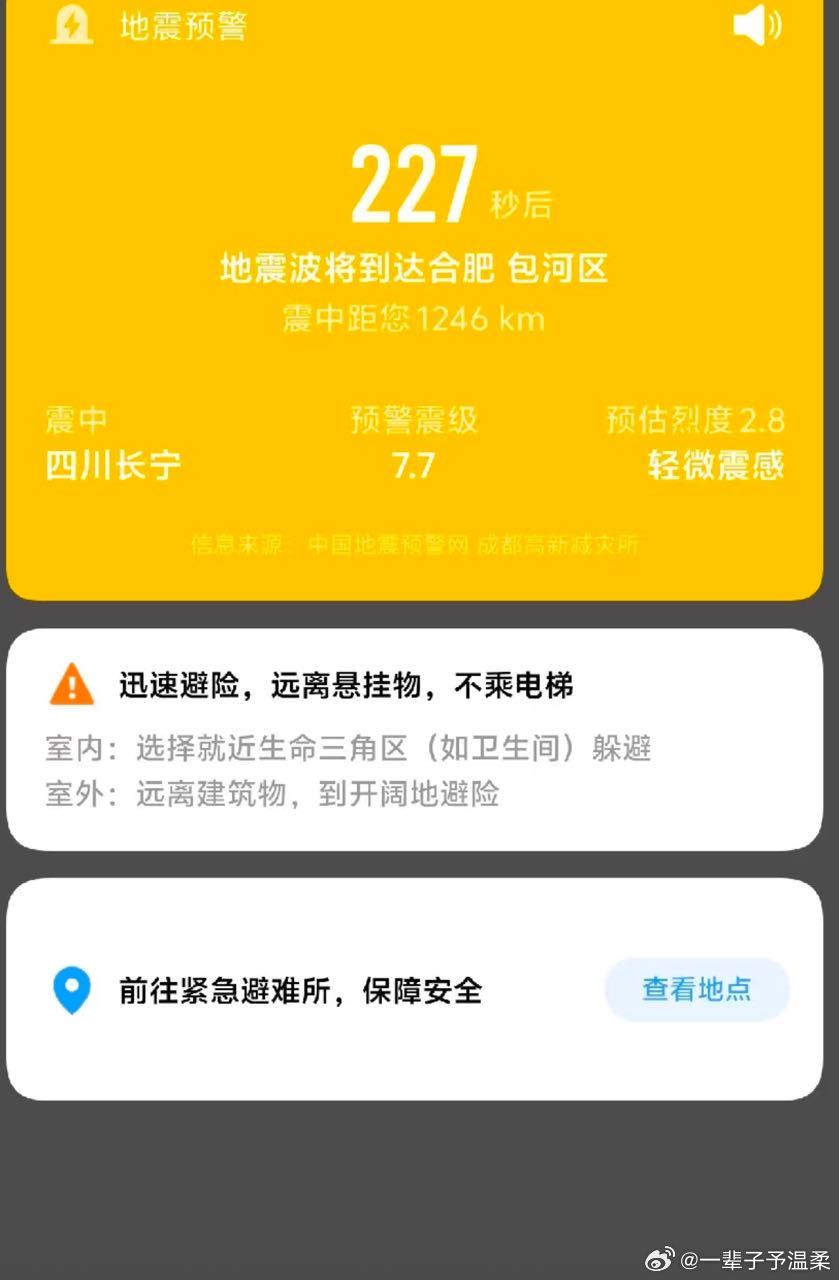
At 8:26 on the morning of August 24, a 4.7-magnitude earthquake shook Changning County, in Sichuan's Yibin — the kind of modest, furniture-rattling tremor the region absorbs without much drama. The drama arrived through phones, seconds later. Screens across the province flashed an emergency warning of magnitude 7.7, a number reserved for disasters that flatten towns. One screenshot showed a countdown clock: 227 seconds until the shaking reached Hefei, 1,246 kilometers away.
The earthquake was real. The 7.7 was not. The Sichuan Earthquake Bureau said the alert was issued by the Chengdu High-tech Disaster Reduction Research Institute, a private operation that had been stripped of its official authorization on July 22 — more than a month earlier. It had pushed the warning to Honor and Vivo phones, and to Xiaotiancai children's watches, while presenting itself as the China Earthquake Early Warning Network. The official network's own rapid estimate was 5.4; the final catalog magnitude was 4.7.
The gap is not a rounding error. China's smartphone early-warning system works by racing digital alerts ahead of seismic waves — a few seconds of lead time that, in a genuine 7.7, can mean the difference between people in elevators and people under desks. A false 7.7 is, in effect, a drill no one asked for, delivered at full volume to millions who had just woken up. One Weibo user described the feeling plainly: "I was genuinely terrified — and then relieved that it was only a 4.7."
The episode trended on Baidu and Zhihu because it pressed on a specific nerve. Earthquake early warning is one of the rare public-safety systems Chinese people largely trust and even brag about — the rare infrastructure that has never asked anything of them in return, and that has demonstrably saved lives in the past decade. The revelation that an unauthorized third party could still reach the operating systems of major phone brands after its license was pulled punctures that confidence in a way a bureaucratic notice cannot easily repair. The institute, for its part, published its own apology calling the initial 7.7 estimate the largest warning deviation in 15 years.
The bureau's response was to insist that the public should "follow official channels." But the problem the alert exposed is architectural: by the time the message reached those phones, the channel was already not the bureau's. The institute had lost its authorization, yet the push to Honor, Vivo, and children's watches still went out. Somewhere between the state agency and the screens lies a kill switch that no one appears to have pulled in time.