Water, Power, Computing, Pipes: China Opens Its New Five-Year Plan by Laying Six Networks
State media's frame for the opening of China's 15th Five-Year Plan is six national systems under construction at once — a build-out running from aging urban sewer pipes to the computing hubs the AI boom demands.
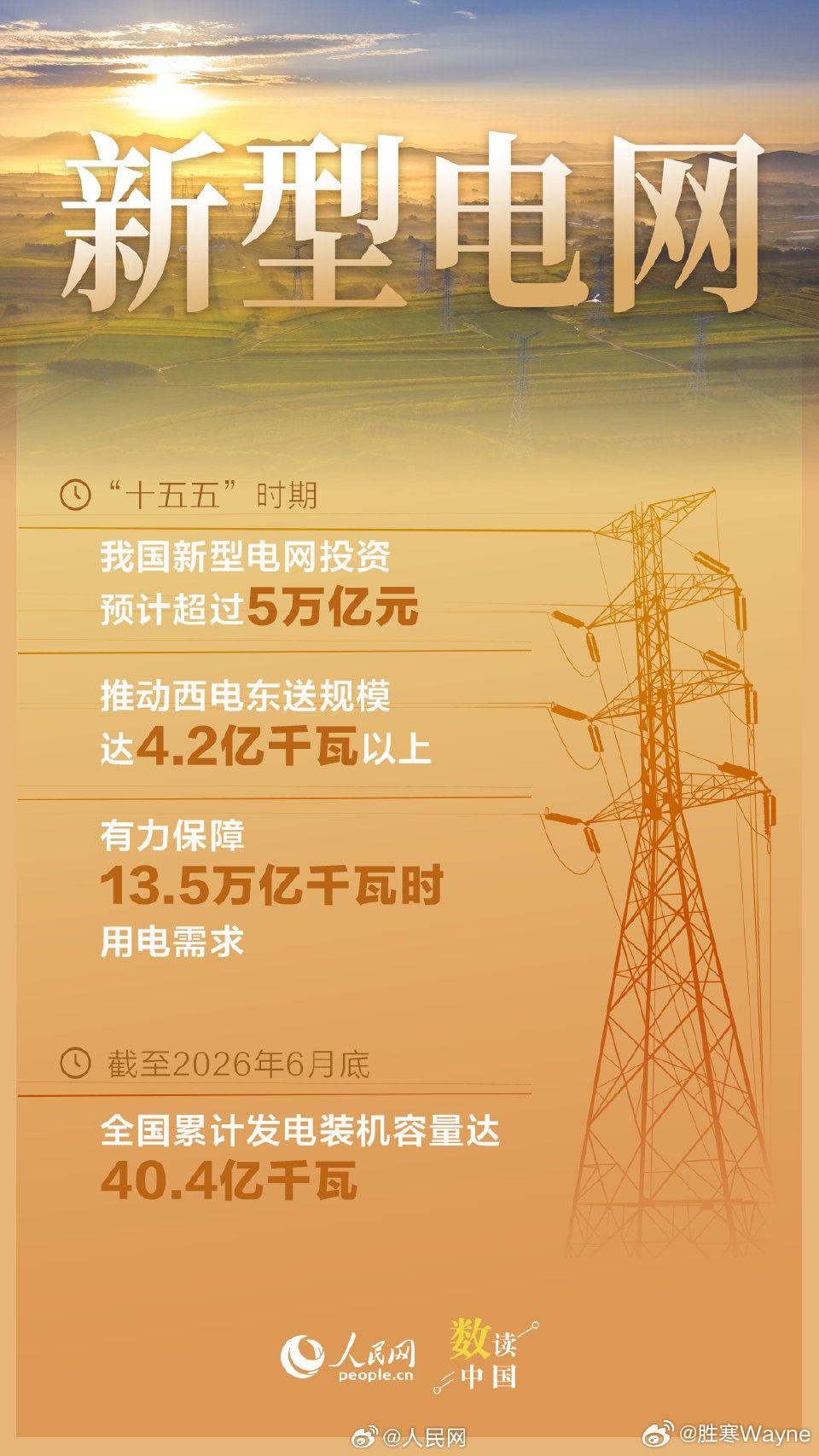
Five-year plans usually arrive as documents. China's 15th, which opens this autumn, is arriving as a construction schedule. Through the first week of October, the state media frame for the plan's start has been "six networks laid out together" (六张网齐铺开) — six national systems, from water to computing, under construction at once — and the phrase has climbed to the top ten of Weibo's trending list.
The six are worth naming, because together they are a sketch of what China thinks the next five years are for: a national water network moving river water to dry provinces; a "new-type" power grid built around renewables; a computing-power network; a next-generation communications network; the buried pipe network under the cities; and a modernised logistics network. CCTV's explainer video runs them as one continuous build, and a prime-time feature on the state broadcaster's site billed the programme as "the new opportunities the six networks bring."
The arithmetic attached to them is large even by Chinese-infrastructure standards. Posters produced by People's Daily Online's data desk put planned investment in the new-type power grid above 5 trillion yuan for the plan period, against an installed generating capacity that passed 4.04 billion kilowatts at the end of June and west-to-east transmission set to exceed 420 million kilowatts. The computing network, by the same series' figures, has connected more than 40,000 entities — ten times the count at the end of 2025 — behind eight national computing hubs that hold over 80 percent of the country's intelligent-computing capacity. Posts circulating with the hashtag, like one lawyer's widely shared take, bundle the six into "a 26-trillion-yuan dossier" (26万亿的"超级卷宗"); the official material cites its trillions network by network rather than as one total.

The least glamorous of the six is the one with the clearest safety case. A separate explainer charting on Baidu's board — "why spend trillions rebuilding underground pipe networks" — walks through the condition of the pipes China's cities actually have: most were laid in the 1980s and 1990s, are corroding past their design life, and in the agency's phrase are "running while sick," leaking, silting up and failing under streets whose traffic was never imagined when they were laid. The failure modes it lists — gas leaks, contaminated drinking water, streets flooding in summer storms — are the everyday news that keeps the buried network in the plan.
The computing and communications networks have a different logic: the artificial-intelligence boom. On Friday the Central Committee and State Council published their opinion on developing "new quality productive forces," the plan's banner concept, with financial media noting the parallel "AI+" action plan moving into full implementation (Yicai's evening brief). Computing capacity is the physical form of that policy, and it is why a slogan about sewers and substations now sits next to one about data centres.
Chinese readers have been translating the campaign into their own registers. A new-energy industry account posted the grid posters with a one-line verdict — bullish for storage, the sector it watches. The lawyer's post supplied the line much of the comment section adopted: "This isn't bridge-and-road infrastructure any more — it's installing an operating system for the whole of society" (给整个社会装上了"操作系统"). Central state firms are moving first on the projects, as the posts note; how the other layers get financed through a plan period of strained local budgets is the standing question underneath the posters' big numbers.