South Korea's Healthcare Crisis: Mass Resignations and the Struggle for Reform
In South Korea, a massive surge of resignations from medical students and healthcare professionals has disrupted the nation's healthcare system. Starting from February 20th, over 1.15 million medical students have applied for leave, making up 61.1% of the total medical student population, according to Korean media. Moreover, it is reported that the attending physicians who replace the residents after their resignation may leave their positions soon, deepening the crisis.
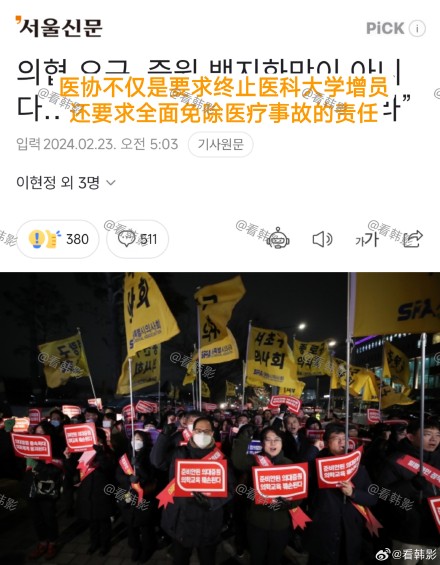
This sudden upheaval in the Korean medical community was triggered by the government's announcement to increase the number of medical students by 65% from 2024 to 2029. The government aims to tackle the severe shortage of doctors in the country, where there are only 2.6 doctors per 1,000 patients, one of the lowest ratios among the OECD countries. According to the Organization for Economic Cooperation and Development (OECD), the average ratio of doctors to 1,000 people is 37.
However, the proposed expansion measure has drawn fierce opposition from the medical community, leading to the current "resignation wave". The primary concern of the medical students and professionals is not the expansion of the medical workforce itself, but the potential exploitation of healthcare workers and the further degradation of the already strained medical system.
Under the current system, South Korea's medical students go through a rigorous and costly education process that can take anywhere from 8 to 10 years. After completing their studies, many become residents and work at hospitals for an additional 3-6 years, earning meager salaries during this period. Once they become attending physicians or specialists, their salaries increase significantly, reaching up to $200,000 a year, making them some of the highest-paid professionals in the country.
The resignation wave is not only due to the government's plan to increase the number of medical students but also stems from growing resentment among medical professionals themselves. Many residents and attending physicians feel overworked and underpaid, working long hours with minimal support and resources. This has led to a high burnout rate among healthcare workers, contributing to the existing shortage of physicians in the country.
Social media platforms like Twitter and Weibo have become hotbeds for discussions on the ongoing crisis, with many users expressing their sympathy and understanding for the striking medical professionals. However, others argue that the strike is selfish and self-serving, harming public health and prolonging patients' suffering. Some have questioned the morality of the striking doctors, stating that their actions go against the ethics of their profession.
In response to the escalating crisis, the Korean government has urged medical students to return to their studies. However, it remains to be seen whether the government will address the underlying concerns of the medical community, such as working conditions, salaries, and the overall structure of the healthcare system.
This latest chapter in South Korea's healthcare saga highlights the urgent need for reform in the medical education and training system. As the country grapples with a rapidly aging population and decreasing birth rates, finding a sustainable solution to the healthcare crisis is more critical than ever. The Korean government must work closely with medical professionals to devise a plan that not only expands the medical workforce but also ensures a better quality of life for those who dedicate their lives to healing the sick and ailing.