Starbucks Opens Its First Stores in Xinjiang, With a Flagship at Urumqi's Grand Bazaar
Two stores — a flagship inside Urumqi's International Grand Bazaar and one at the international airport — bring Starbucks into a region where, until this week, there was none.
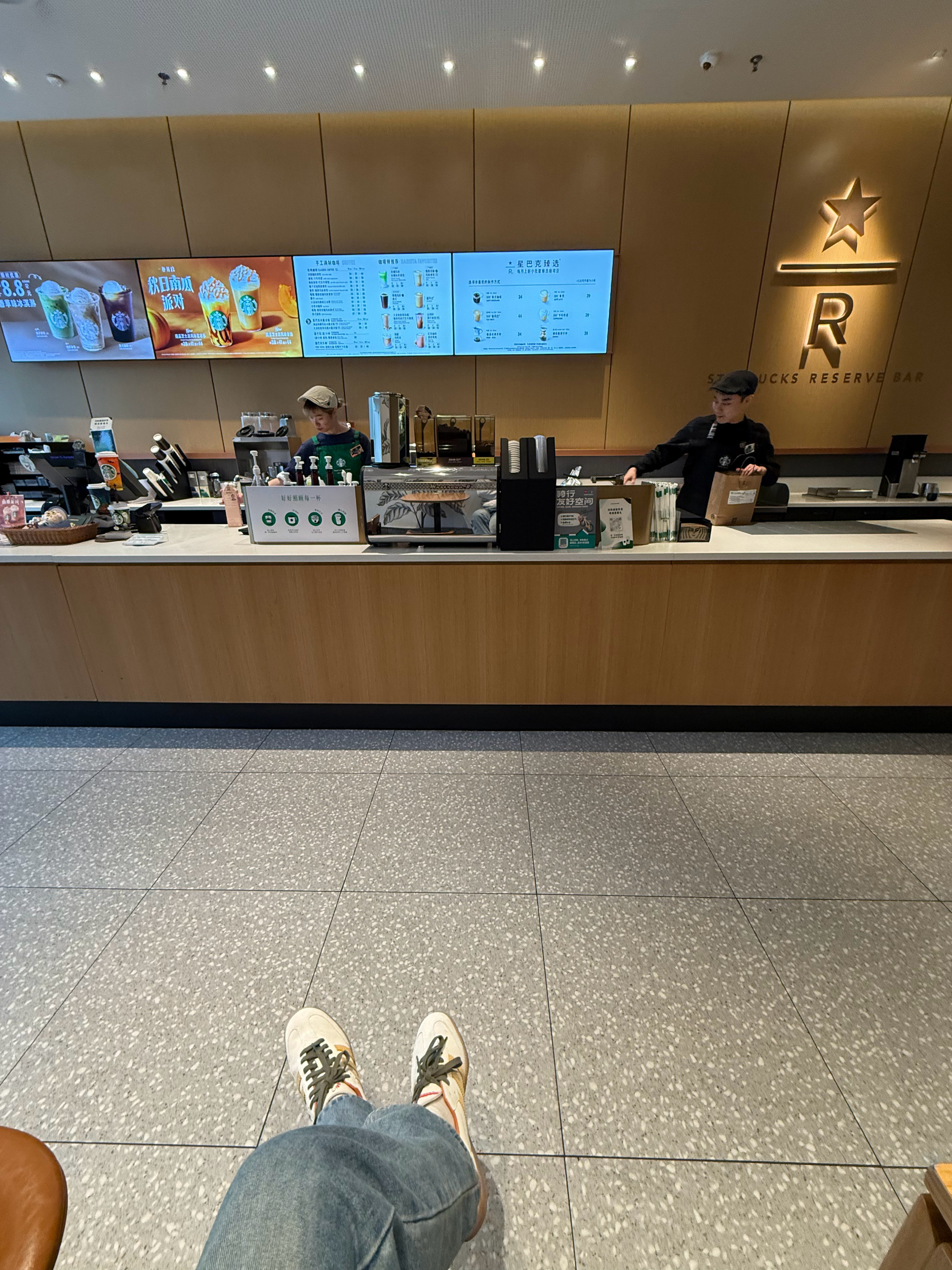
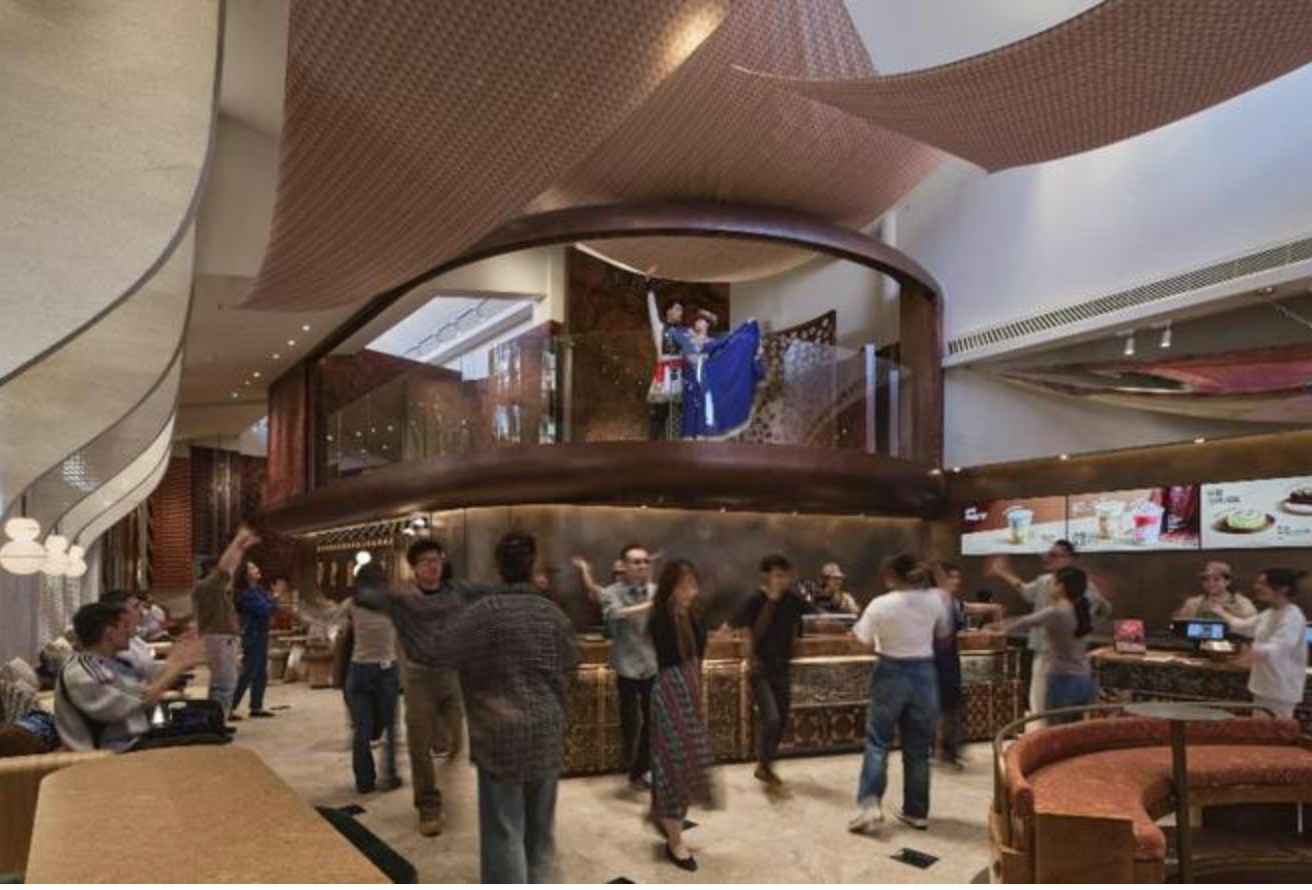
Starbucks has opened in Xinjiang for the first time. The chain debuted two stores on September 29: a flagship inside Urumqi's International Grand Bazaar — branded "Xingbaza" (星巴扎), a portmanteau of "Starbucks" and "bazaar," and fitted out with local intangible-heritage crafts — and a second at Tianshan International Airport, the city's main gateway. The Bazaar flagship is the newest of the seven intangible-heritage concept stores Starbucks China has opened since 2020.
For one traveler landing as the stores opened, the logo said more than any press release. "When the plane crossed the Tengger Desert and the Tianshan range, Bogda Peak showed itself in the sunset," he wrote on Weibo, describing a walk out of an airport that has just been renamed for those mountains — "and at the exit, suddenly, a Starbucks. This was unimaginable in the old Xinjiang." Five years ago, he recalled, Urumqi had no Luckin Coffee and "barely one Wanda" shopping mall; today he called it a transit hub whose flights reach Central Asia, the Caucasus, Russia and Europe, its schedule thickening with the China–Europe freight trains he could hear below the flight path.
The chain's absence had been its own index of the region. "There's still no Starbucks anywhere in Xinjiang," another user lamented as recently as last November, celebrating a business trip by having an obligatory cup once he reached Chengdu. For frequent travelers, the missing mermaid was less a complaint about coffee than a shorthand for how far the region sat from the consumer map.
The placement is deliberate. Starbucks China has spent recent years pushing its premium "heritage" format into landmark locations, and choosing the Grand Bazaar — the timber-carved heart of old Urumqi that anchors most tourists' itineraries — puts the brand beside the naan stalls and hand-pulled-noodle shops rather than in a business district. The stores arrive as Xinjiang markets itself hard to domestic tourists, and as Urumqi's airport and rail yards handle a rising share of trade with Central Asia.
For the international reader, the two new stores are a small thing that maps something larger: a consumer frontier that has quietly closed. The traveler who posted the sunset arrival ended on what he could see from the tarmac — an airport renamed for the mountains it now connects, and a city that now sells lattes at both ends of the runway.