Streaming Sensation “Madam Mei Dotes on Her Husband” Revamps Chinese Mythology with Dark Romance and Soul‑Swap Twist
The latest Chinese fantasy drama to capture attention on streaming platforms is an adaptation of Fuhua’s bestselling web novel “梅夫人宠夫日常” (literally “Madam Mei Dotes on Her Husband”). The series, which began rolling out in August 2025, has quickly become a talking point for its striking visuals, charismatic leads, and the way it reimagines traditional mythic elements for a modern audience.
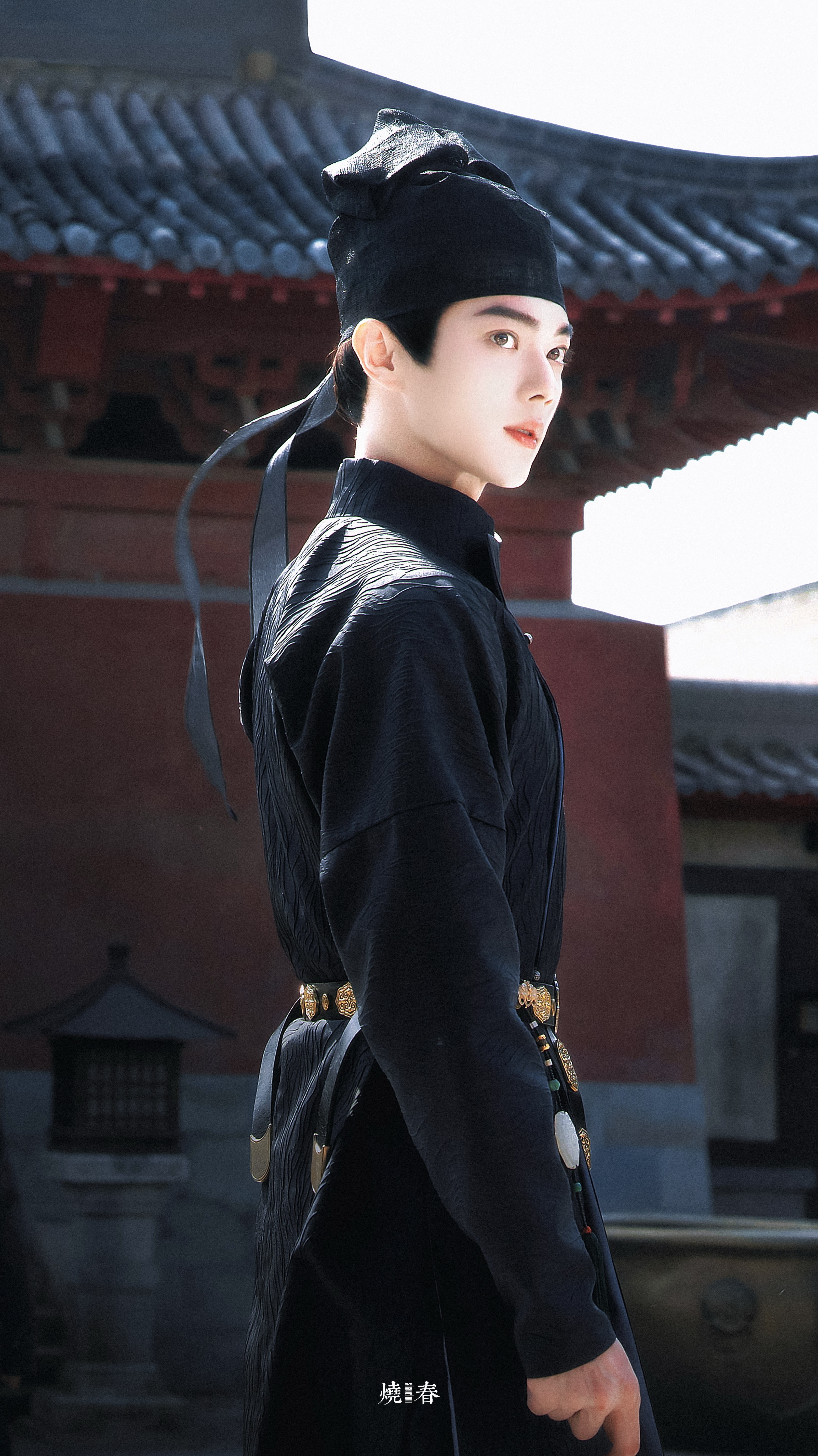
At the heart of the story is Mei Zhuyu, portrayed by popular actor Xu Kai, and Wu Zhen, brought to life by newcomer Tian Xiwei. Mei Zhuyu is a half‑demon demon hunter, the son of a former “Cat Duke” and a mortal mother. Trained by the reclusive Changxi Palace Heavenly Master after his parents’ mysterious deaths, he possesses the rare ability to see ghosts. His upbringing has left him serious and methodical, but beneath that exterior lies a relentless drive to uncover the truth behind his family’s tragedy.
Wu Zhen, by contrast, is a half‑human, half‑demon noblewoman who moonlights as the current “Cat Duke” (猫公) of Chang’an’s infamous demon market, or Yaoshi. By day she moves through the bustling streets of the fictionalized Tang‑era capital with a vibrant, unconventional charm; by night, she transforms into the market’s formidable ruler, her feline‑like agility and deadly prowess making her a key figure in the city’s underworld of spirits and demons.
The series thrives on the tension between their dual identities. By daylight, Mei Zhuyu and Wu Zhen are lovers, sharing tender moments that highlight their humanity amidst a world teeming with supernatural danger. As night falls, the pair find themselves on opposite sides of a shadowy battleground: Mei Zhuyu, armed with talismans and incantations, hunting rogue entities; Wu Zhen, wielding her title as Cat Duke to police the very market where those entities are bought and sold. Their love is thus tested by a relentless cycle of collaboration and conflict, culminating in a high‑stakes plot twist that forces the two to swap souls—a narrative device that allows the drama to explore themes of empathy, identity, and the thin line between hunter and hunted.
Supporting characters add further layers to the mythos. The spirit of Mei Zhuyu’s father, the former Cat Duke, lingers as a guiding presence, aiding both protagonists in their battle against the malevolent “evil spirit” known as 诡婴. The Xuanjian Division—an official body tasked with maintaining order in Chang’an—serves as Mei Zhuyu’s bureaucratic anchor, while the bustling demon market offers a vivid tableau of otherworldly commerce and intrigue.
Beyond the plot, the drama’s production values and casting choices have sparked a wave of fan enthusiasm that extends beyond traditional viewership metrics. Xu Kai, already a household name thanks to his roles in period romances and action blockbusters, brings a seasoned gravitas that contrasts sharply with Tian Xiwei’s fresh, magnetic energy. Social media feeds across China and Southeast Asia have been flooded with fan art, “shipping” memes, and discussions about the show’s aesthetic—some outlets even tout the series as having the “highest颜值” (most attractive cast) of the year.
Industry observers see the series as a bellwether for the continued rise of fantasy adaptations drawn from the prolific world of Chinese web novels. The seamless blend of high‑concept mythology, romance, and urban intrigue demonstrates how producers are capitalising on a readership hungry for visually rich, emotionally resonant stories that can be streamed globally. Moreover, the drama’s success underscores the growing appetite for content that reinterprets classic folklore—such as demon hunters, cat‑spirit lords, and celestial masters—through a contemporary lens.
While the narrative does not overtly comment on current political or social policy, its underlying motifs of coexistence between humans and non‑human entities echo broader conversations in Chinese pop culture about diversity, tolerance, and the negotiation of tradition with modernity. The duality of the protagonists—half‑human, half‑demon, lover and adversary—offers a subtle allegory for the challenges of living in a rapidly changing society where old hierarchies clash with new possibilities.
As the series rolls out new episodes, viewers can expect deeper explorations of Chang’an’s conspiracies, more elaborate demon‑fighting sequences, and, inevitably, further twists in Mei Zhuyu and Wu Zhen’s intertwined destinies. Whether the couple ultimately reconciles their night‑time antagonism or is forever bound by a soul‑swap remains to be seen, but the show has already secured a place in the conversation about what Chinese fantasy drama can achieve on the international stage.