A Taiwanese Actress Poured Oil on a Japanese National Treasure and Called It Prayer
A 39-year-old Taiwanese actress known for the youth dramas Zhongji Yijia and Zhongji Sanguo was arrested at Kansai airport this week, suspected of pouring glycerin on the 'Buddha's foot stone,' a Japanese national treasure at Yakushi-ji temple in Nara. Her explanation — that she pours oil to pray when moved by something — has turned a minor heritage crime into a story about impulse, borders, and the collision of private ritual with public protection.
The woman arrested on Saturday was not, at first glance, an obvious candidate for an international heritage crime story. She is 39, Taiwanese, and for a long time was best known as Wu Xiong — the cheerful screen persona of Cai Yizhen, who appeared in the long-running youth franchises Zhongji Yijia (The X-Family) and Zhongji Sanguo (K.O.3an Guo). That context is why the story landed so hard when Japanese police announced they had picked her up at Kansai airport, accused of damaging a national treasure.
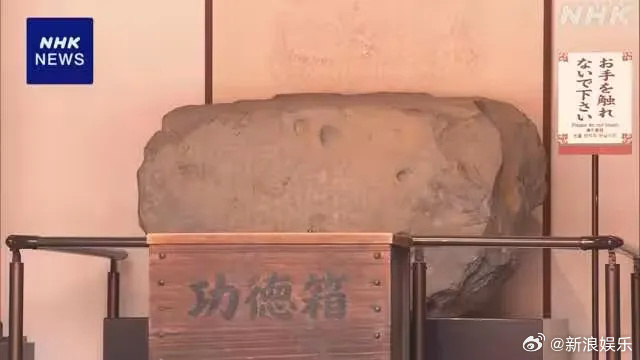
The alleged act happened in April. According to Taiwanese media, a Cai-identified woman visited Yakushi-ji, the 8th-century temple in Nara, and poured a colorless, transparent glycerin over the temple's 'Bussokuseki' — the Buddha's foot stone, an engraved slab that is one of Japan's oldest written artifacts and a designated national treasure. She then left Japan, police said. In August, when the same woman re-entered the country through Kansai airport, officers moved in and arrested her under the country's cultural-properties law.
What made the story trend on Weibo was not the arrest itself but the explanation. The suspect reportedly admitted the act and said she has a habit of 'pouring oil to pray' when she encounters something that moves her deeply. It is the rare defense that turns a vandalism charge into a question of intent: Was this an offering, or an attack? In Chinese law and Japanese law, the difference matters, but so does the object. For a country like Japan that treats specific stones, wood, and paper as time machines, the act of pouring anything over a 1,300-year-old inscription reads less like devotion and more like an intrusion.
One viral post from the news aggregator Sina Hotspot laid out the evidence trail: the woman's name, age, and self-described occupation as a TV host all matched the entertainer; she had posted photos from Nara in April. Another user put the tone more bluntly, writing that it was 'honestly a bit unexpected' for an actress from Zhongji Yiban to be in this position, before settling into the same careful caveat as everyone else: the case is still being processed, and what happens next depends on the official report. Her agent did not answer requests for comment from Taiwanese media.
The cultural weight of the story runs in two directions. In Japan, the Buddha's foot stone is not merely old; it is one of the founding documents of Japanese writing itself, a stone stele carved with a Buddhist inscription that scholars date to the late 7th century. To a Chinese-speaking audience, meanwhile, the arrest plugs into a familiar, uneasy dynamic around cross-border behavior and the fear of losing face abroad — the same nerve touched by stories of travelers carving names into ancient walls. That is why the Weibo conversation keeps circling back to one word: unbelievable.
What the case honestly leaves open is the question of whether the poster in the middle of it all is deliberation or delusion. A person who pours oil over a national treasure and calls it prayer has either failed to understand what the word 'treasure' means, or has understood it and chosen to override it. Both possibilities are human; only the second one is a crime.