Refused Arrest, Released on Bail, Then a Killing: Taiyuan Case Puts Domestic-Violence Risk Review Under Scrutiny
A Taiyuan man who slashed his wife and her mother with a kitchen knife was freed on bail after prosecutors declined to approve his arrest — weeks later he strangled his wife and took his own life. Her family wants to know who assessed the risk, and how.
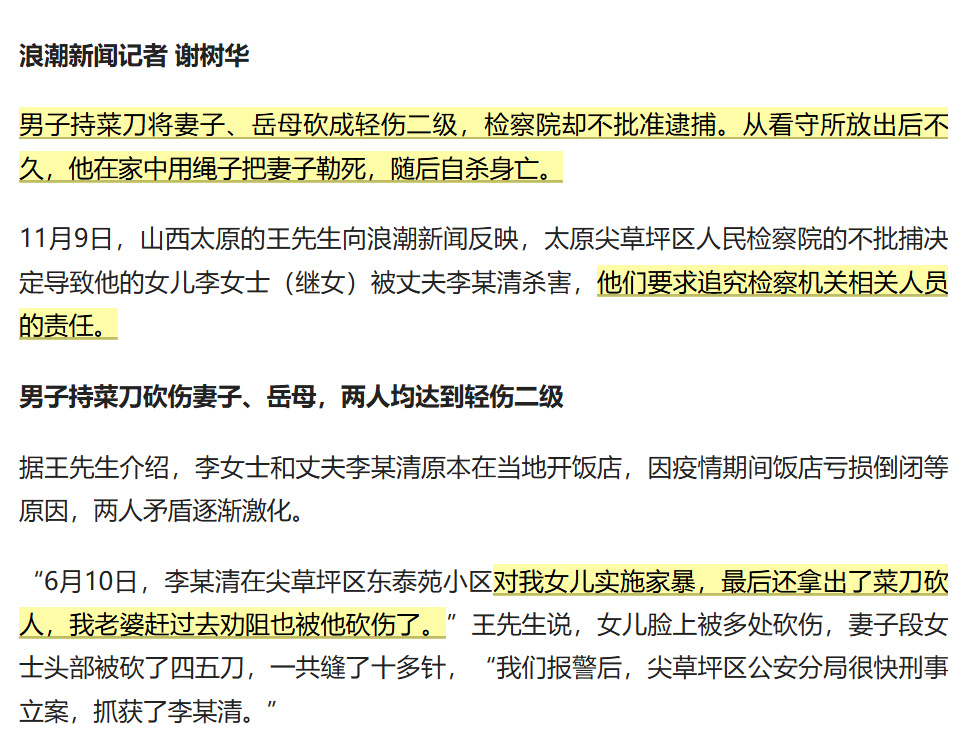
The sequence, as it has spread across Chinese social media this week, reads like a system failing in slow motion. In June, a man in Taiyuan's Jiancaoping district attacked his wife and her mother with a kitchen knife. He was detained; police asked the district procuratorate to approve a formal arrest. The procuratorate refused. Released on a bail-style guarantee, he returned home — and, according to the family and the posts carrying their account, strangled his wife with a rope before killing himself.
What the paperwork shows
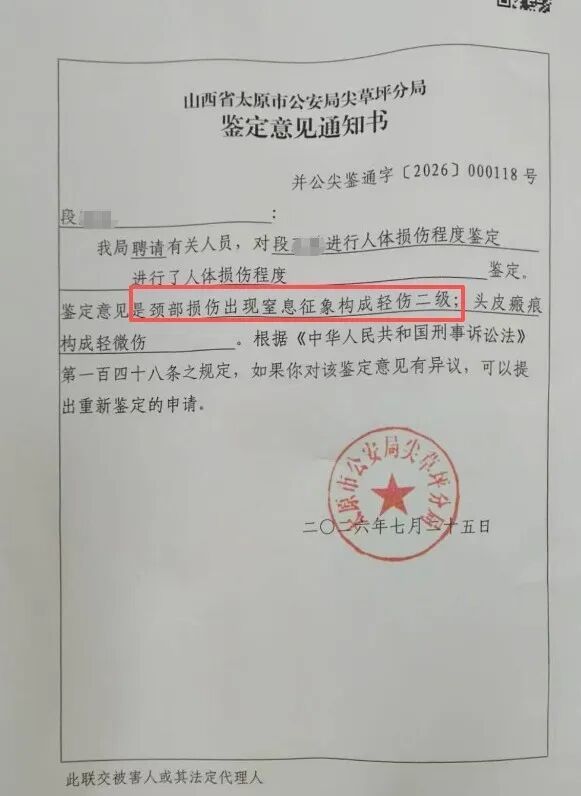
The family has been publishing the documents online, and they tell a precise story. A notification from the Jiancaoping branch of the Taiyuan Public Security Bureau grades both women's injuries as "minor injury, second degree" (轻伤二级) — under China's injury-grading standards, the mildest tier that still makes an assault a criminal offence. In ordinary terms it was worse: the wife's face was cut in several places, and her mother, who had rushed over to intervene, needed more than a dozen stitches to her head, posts recounting the family's account say.
Under Chinese criminal procedure, formal arrest requires the procuratorate's approval, and the test is not guilt but "social danger" — whether a suspect might flee, interfere with evidence or harm again. Without an approved arrest, Li was released on 取保候审, a guarantee pending trial that is supposed to come with supervision. Shortly after he left the detention centre, posts say, he used a rope. The couple had run a restaurant together; pandemic-era losses and mounting debt, her family says, had steadily poisoned the marriage.
The question the case raises
Legal commentators have split into, as one put it, "two camps — one saying a tiger was released, the other mocking commenters as legally illiterate." The same writer, posting under the name Yuanzhezhi, argued the procedural machinery may have had no formal flaw: the real question is how a risk assessment let "a man who had just swung a kitchen knife return to live under the same roof" as the woman he cut. A post that drew nearly 16,000 likes carried the family's demand that the procuratorate staff responsible be held to account; the story has since climbed Baidu's trending board as well.
The detail that has landed hardest with readers: the victim did everything the system asks of a domestic-violence survivor — she reported the assault, the case was opened, the injuries were appraised — and the paperwork did not protect her. Commentators argue that intimate-partner violence is by nature persistent and escalating, and that a recent armed attack should weigh heavily in any release decision.
The procuratorate has registered the family's complaint but has not yet answered it. Whether it does — and whether the case pushes a national tightening of how "social danger" is weighed for abusers awaiting trial — is what to watch.