Tang Shizeng, the Reporter Who Waited Out Scud Missiles in Tel Aviv, Dies at 65
Tang Shizeng, the Xinhua journalist dubbed China's first war correspondent, has died in Beijing at 65 following a long battle with aplastic anemia — and Weibo is honoring the man who filed dispatches from Scud-era Tel Aviv and interviewed everyone from Gaddafi to Mandela.
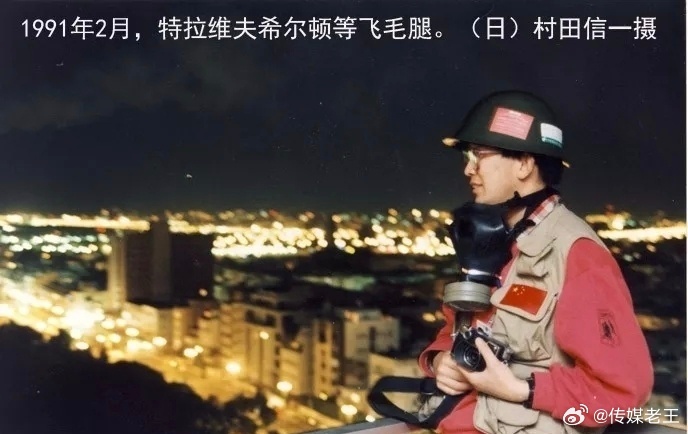
Tang Shizeng, the Xinhua war correspondent whose dispatches from Scud-missile-era Tel Aviv and Saddam Hussein's Baghdad made him "China's first war correspondent," died in Beijing on Aug. 23 at 65, per a statement from Chinese state media citing friends. Chinese social media treated not the fact of his filing but the way he lived — and died — as the story.
His two trending hotwords are telling: one is a bald obituary line, the other the medical fact that his white blood cell count was "almost zero" at the end. That detail came from an open letter by fellow Peking University and China University of Political Science and Law alumni, who described him as a critically ill patient whose immune system had been destroyed by chemotherapy, unable to stand or walk without risk of falling. The disease behind it was aplastic anemia, which one health outlet explained with a blunt analogy: his bone marrow "factory" had gone on strike.
Born in 1961 in Wuxi, Jiangsu, Tang was an improbable figure for a Chinese state news agency. He joined Xinhua in 1986, and by the early 1990s had wandered into the Middle East as a photo- and text-correspondent during the Gulf War. He created his own dispatch line by filing from Tel Aviv and Jerusalem, and would go on to interview a who's-who of wartime leaders: Gaddafi, Mubarak, Arafat, Shamir, Rabin, Peres, Barak, Sharon, Mandela. The fact that he had talked to both sides's principals made him a living brag in Chinese newsrooms.
His books carried the same literal, boots-on-the-ground titles: "I Came Back From The Battlefield," "I Crawled Into The Pyramids," "Return To Baghdad," "My Normandy." He was as much a travel writer as a war correspondent, funny and self-mythologizing in equal measure — a persona Chinese readers of his books either loved or rolled their eyes at.
The radiation exposure he had accumulated in war zones finally caught up with him. In 1998 he was diagnosed with aplastic anemia, a bone-marrow failure condition in which the body stops producing enough red cells, white cells and platelets. For years he kept working through the disease, posting dispatches and photographs under his "Peace Duck" brand. The one usable image in his obituary posts shows him at night, helmet on, gas mask around his neck, camera in hand, waiting for a Scud over a lit-up city — the caption reads, "February 1991, Tel Aviv Hilton, waiting for Scud [missiles]."