China's Teachers Are Entering Their 'Most Fragile Time Of Year': The Late-August Breakdown Meme
As the school year looms, a Weibo hotword calls late August 'the most fragile time of year' for Chinese teachers. The meme, the comment threads, and the backlash-laden response all capture the strange public contract around a job the internet both envies and resents.
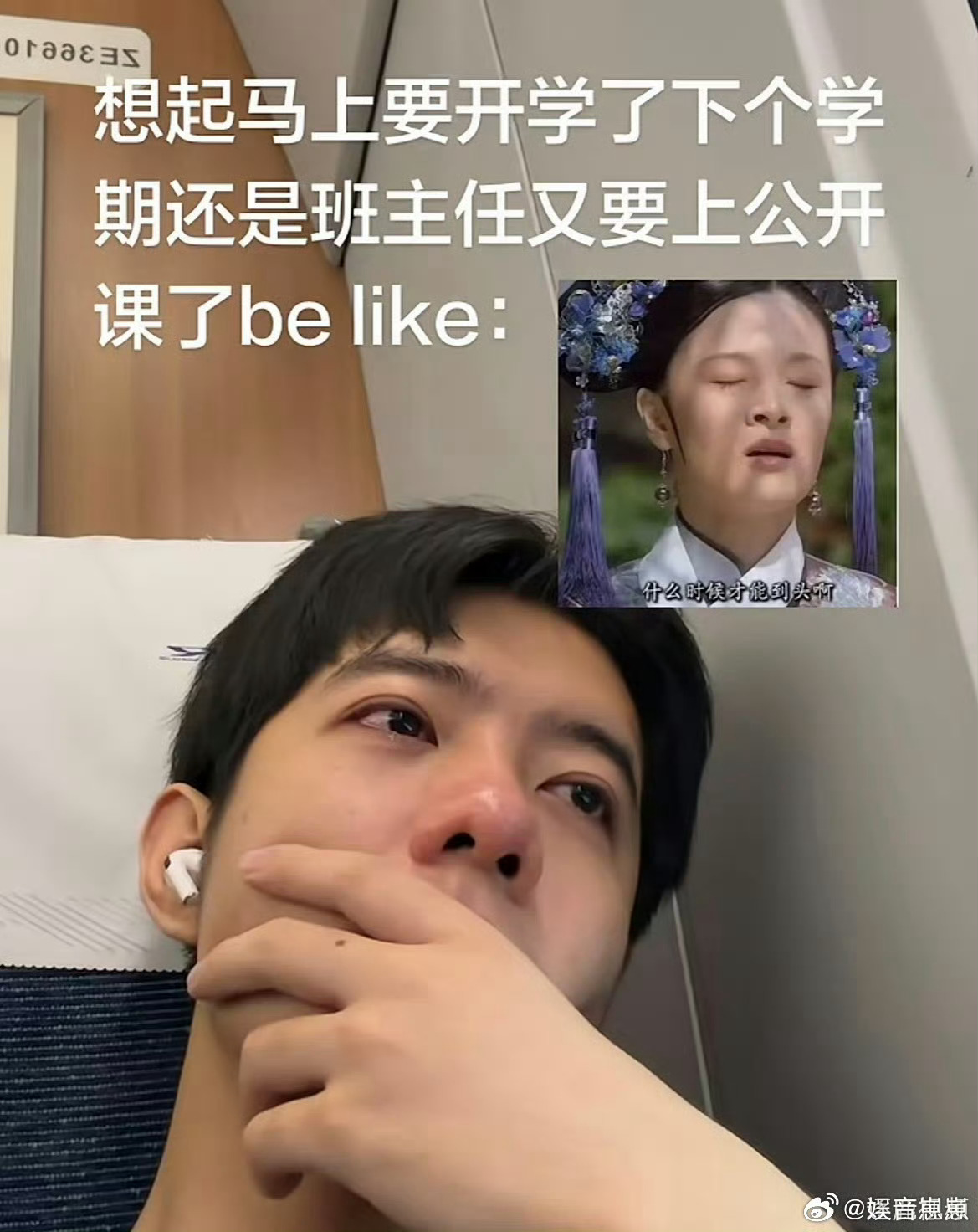
There is a particular late-August feeling that Chinese teachers know intimately: the calendar flips toward September 1, and the slow dread of the new school year arrives on schedule. A hotword climbing Weibo this week gave that feeling a name — "Recently is the most fragile time of year for all teachers" — and the posts that attached themselves to it form a small and very online portrait of a profession.
The image that anchored the trend was a meme: a young man in a mask-and-earbud setup, mid-commute, his hand over his mouth, with a caption pointing at the specific horror of realizing that the new semester will mean being a homeroom teacher again and having to deliver an "open class" — the public demonstration lessons Chinese teachers must periodically perform in front of colleagues and evaluators. Beneath it, an inset still of a woman in Qing dynasty costume asking, "When will this end?"
Open classes, or gongkaike, are one of those Chinese educational institutions that outsiders rarely see. A teacher prepares a showcase lesson, often rehearsed with the class, and performs it in front of a panel of evaluators. It is simultaneously a rite of passage and a recurring source of exactly the ambient anxiety the meme is trading on.
The comment threads under the topic read like a group-therapy transcript delivered through screenshots. "I started feeling unhappy on the first day of August," one teacher wrote. Another replied that looking at the calendar now feels like "reading a critical-illness notice." A novice teacher asked, semi-seriously, whether it is acceptable to download and modify existing lesson PPTs, drawing earnest recommendations of classroom-software platforms from colleagues.
The backlash was just as revealing of the role's strange public standing. A viral reply complained that teachers get winter and summer vacations while "the rest of us working stiffs barely get annual leave," and that for parents, every school holiday is its own kind of crisis. The argument — teachers are lucky, teachers are overworked, teachers are both — is a nearly permanent argument on Chinese social media, and it never quite resolves because the facts on both sides are true: the long vacations are real, and the early-morning supervision, the evening prep, the weekend catch-up classes, and the psychological load of managing dozens of teenagers are also real.
The trend's timing is not accidental. Many schools, especially in the college-admissions-intensive provinces, run summer make-up sessions that stretch deep into August, so the gap between that grind and the official start of term can be nearly invisible. "Advanced school opening in the summer — the teachers are the real victims," one post argued, inverting the usual framing that makes students the sympathetic party.
What makes the hotword worth translating beyond the chuckle is that it is a small window into a public ritual of feeling. Like "back to school" anywhere, the Chinese late-August moment has its own texture — the open-class anxiety, the homeroom-teacher duty roster, the parents who simultaneously envy and resent — and the internet has turned it into a recognizable genre: the teacher who is not yet tired, but can already see tiredness approaching on the horizon."