Three Generations of Trains, One China: A Journey Through Speed and Innovation
A rare sight caught on camera in Qingdao, Shandong province, has been making waves on social media, showcasing three generations of Chinese trains running side by side. The scene, dubbed "#三代列车同框见证中国速度#" (Three generations of trains witness China's speed), features a traditional green-skin train, a "Harmony" bullet train, and a state-of-the-art "Fuxing" high-speed train, all in the same frame.
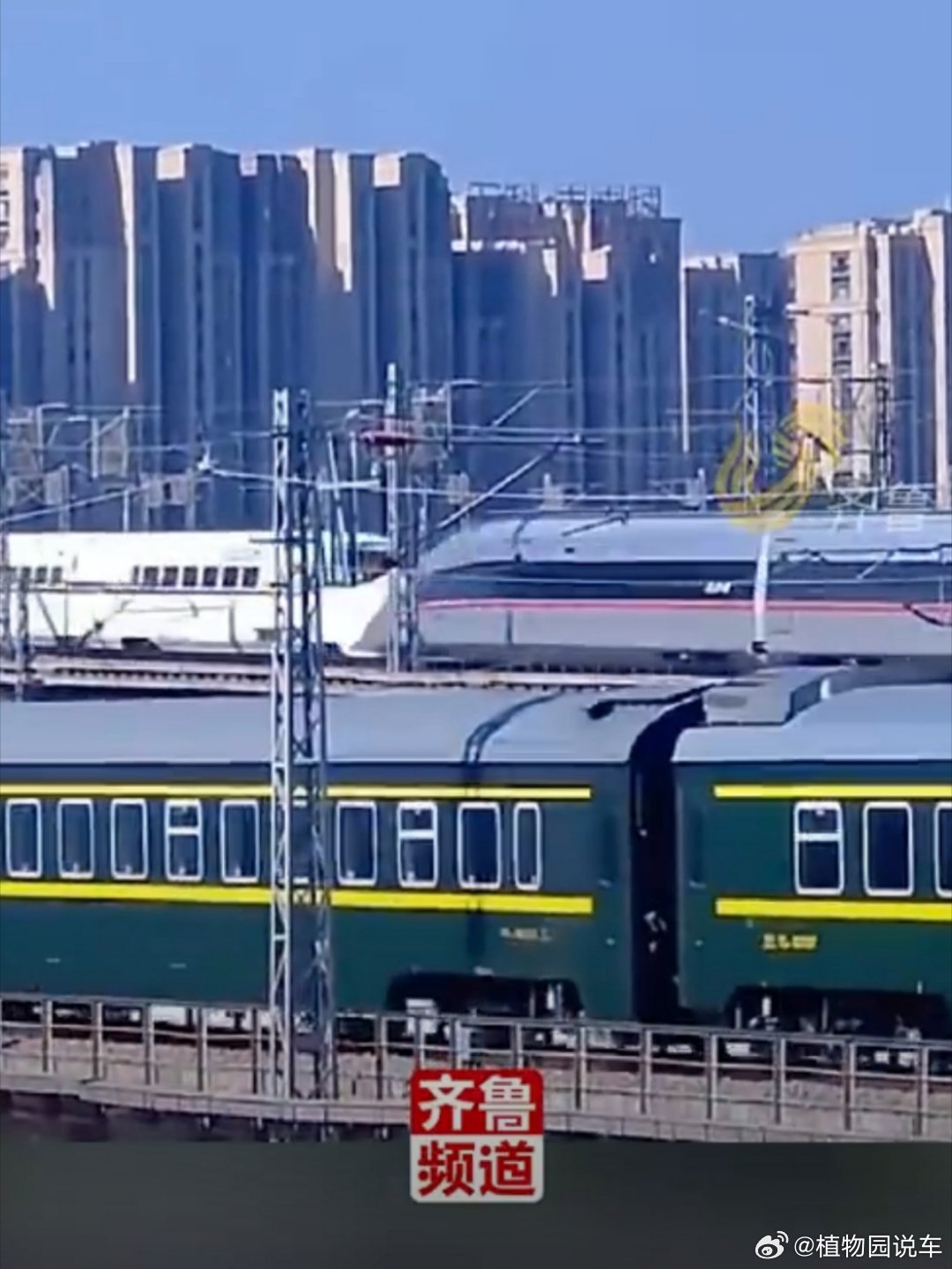
The viral video has sparked a wave of nostalgia among Chinese netizens, with many sharing their own experiences and stories of traveling by train. For some, the juxtaposition of old and new trains serves as a testament to China's rapid development and its pursuit of innovation. "I remember when I was a kid, traveling from Chongqing to Beijing took 33 hours on a green-skin train," reminisced one netizen. "Now, with the high-speed rail, it takes just six hours. That's the speed of China." Others recalled the struggles of traveling in cramped and crowded trains, and the freedom that comes with the advent of high-speed rail.
The trains featured in the video each represent a different era of China's railway development. The green-skin train, introduced in the 1950s, was the backbone of China's railway network for decades. The "Harmony" bullet train, launched in 2007, marked a significant upgrade in speed and comfort. Meanwhile, the "Fuxing" high-speed train, developed domestically and launched in 2017, boasts a top speed of 350 kilometers per hour and represents the cutting edge of Chinese railway technology.
The recent rare sighting of three generations of Chinese trains - the classic green skin, the Harmonious Express, and the Fuxing Hao - running parallel to each other in Qingdao, Shandong Province, has sparked a wave of nostalgia and admiration for the country's remarkable progress in railway development. The green skin trains, which have been the backbone of China's rail network, have been in operation for decades, ferrying both passengers and goods across the country. Although they may seem outdated compared to their modern counterparts, they hold a special place in the hearts of many Chinese people.
For instance, @大脸猫律律 reminisced about his childhood experience of taking a 33-hour green skin train journey from Chongqing to Beijing, a trip that has since been reduced to a mere six hours thanks to the introduction of high-speed rail. The Harmonious Express, a joint venture between China and Germany, marked a significant upgrade in China's rail capabilities, boasting a top speed of 300 kilometers per hour. However, its reign was short-lived, as the homegrown Fuxing Hao soon took over as the country's flagship high-speed train, reaching speeds of up to 350 kilometers per hour and redefining the concept of speed in China.
While the Fuxing Hao has been hailed as a symbol of China's engineering prowess and economic rise, not everyone is convinced that speed is the only metric of progress. @花甲老头 lamented that the faster trains may have brought convenience, but also seemed to have lost some of the nostalgic charm of the old green skin trains. Despite these differing opinions, one thing is clear - the evolution of China's railway system has been nothing short of remarkable.
As the country continues to push the boundaries of speed and innovation, it is undeniable that the development of its rail network has had a profound impact on the lives of its citizens, transforming the way they travel, work, and live. The three generations of trains running side by side serve as a poignant reminder of China's incredible journey from a relatively slow and laborious transportation network to a world-class, high-speed rail system that is the envy of many countries around the world.
The breathtaking scene of three generations of trains running in parallel has sparked widespread awe and nostalgia among Chinese citizens. Behind this striking image lies a story of China's relentless pursuit of innovation and self-reliance in railway technology. Over the past four decades, China has transformed from a country reliant on foreign technology to a global leader in high-speed rail.
The journey began in the 1980s, when China introduced the "green skin" trains, which played a crucial role in the country's economic development by facilitating the transportation of goods and people. However, these trains were slow and lacked comfort, reflecting the limitations of China's railway technology at the time. In the 1990s, China took a significant step forward by partnering with German companies to develop the "Harmony" series of trains, which boasted a top speed of 300 kilometers per hour.
This collaboration marked an important milestone in China's efforts to modernize its rail network. However, it was the development of the "Fuxing" series of trains, with a top speed of 350 kilometers per hour, that truly showcased China's capabilities in railway technology. Designed and manufactured entirely by Chinese companies, the Fuxing series represents a major breakthrough in the country's quest for self-reliance.
Today, China's high-speed rail network is one of the most extensive and advanced in the world, with trains running at speeds of over 350 kilometers per hour. The transformation has been nothing short of remarkable, with journey times slashed and passenger comfort greatly enhanced. The "China speed" phenomenon is not just about the speed of its trains; it is also about the country's unyielding commitment to innovation and self-improvement.
As the three generations of trains - the old green trains, the Harmony, and the Fuxing - appeared together on the tracks, a wave of nostalgia swept across the nation. For many, the image evoked memories of a bygone era, when train travel was a laborious yet charming experience. For one 60-year-old man, the sight brought back memories of a simpler time. "Speed may have increased, but happiness hasn't necessarily followed," he said. "I miss the old green trains, where journeys were long and stories were plentiful."
Others shared similar sentiments. A user named "Big Face Cat" reminisced about her childhood trips from Chongqing to Beijing, which took a grueling 33 hours on the old green trains. "There were no seats, and my parents would push me through the window to get a spot," she recalled. "Now, with the high-speed rail, the same journey takes just six hours. That's China's speed for you!" However, not everyone is nostalgic for the past.
As one user, "Plant Garden," pointed out, the development of high-speed rail has been a remarkable achievement, with each generation of trains building upon the last. The Fuxing, in particular, is a testament to China's self-developed technology, with a top speed of 350 kilometers per hour. For some, like the Liaoning Fire Department, the emphasis is on safety and speed. "That's China's speed!" they exclaimed, while reminding followers to check their luggage for flammable materials before boarding the high-speed trains.
As the nation continues to marvel at the sight of the three generations of trains together, it's clear that the high-speed rail era has brought about a mix of emotions - happiness, nostalgia, and a sense of pride in China's rapid progress.