Trump Declassifies JFK Assassination Files
In a shocking move, President Trump has withdrawn security protection for three high-ranking former officials, including former Secretary of State Mike Pompeo, former senior aide Brian Hook, and former National Security Adviser John Bolton. Despite being provided with security protection by the US government during the Biden administration, the Trump administration has terminated their security details, citing "no need for lifetime protection".
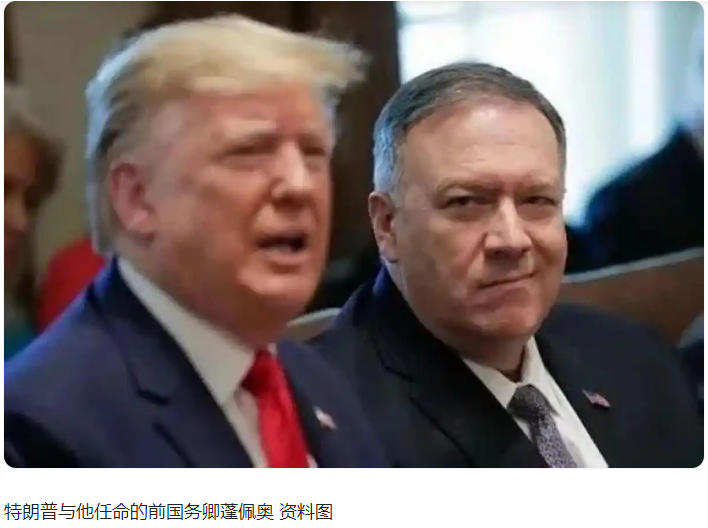
According to sources, Pompeo and Hook were previously protected by security personnel from the US State Department, but this arrangement was terminated on January 21. Bolton's Secret Service protection was also cancelled on January 20. Under US government regulations, only former presidents and their spouses are automatically eligible for lifetime security protection. The Biden administration had continued to provide security protection to these three individuals, but the Trump administration has chosen not to extend this benefit.
When asked about the cancellation of security protection for former officials, Trump remarked on January 23, "You can't be protected for the rest of your life. You want a whole group of people to guard you for life? Everything has risks." The move has been met with dissatisfaction from many former government officials, with one former national security official describing Trump's decision as motivated by "pure spite". The New York Times noted that the relationships between Trump and these three individuals vary, with Bolton having publicly criticized Trump and written a tell-all book about his time in the White House, while Pompeo and Hook remain supportive of Trump. However, Trump has recently made it clear that he will not reappoint officials from the "Pompeo faction" and has revoked Hook's appointment to a think tank via social media.
The decision by President Trump to declassify documents related to the JFK assassination has sparked controversy and criticism from former government officials. Some have viewed this move as a personal vendetta by Trump, particularly in light of his recent actions against former high-ranking officials. Notably, Trump has withdrawn security protection for several individuals who served in his first administration, including former Secretary of State Mike Pompeo, former senior aide Brian Hook, and former National Security Adviser John Bolton.
Pompeo and Hook were previously under the protection of security personnel dispatched by the U.S. State Department, but this arrangement was terminated. Bolton's protection by the Secret Service was also canceled. These moves have been met with dissatisfaction from many former government officials, with one anonymous former national security official describing Trump's actions as driven by "pure spite."
The relationships between Trump and these former officials vary, but the decision to end their security protection has been seen as a reflection of Trump's personal grievances. Bolton, in particular, has been a vocal critic of Trump, having written a book revealing White House secrets and publicly criticized the president on multiple occasions. Pompeo and Hook, while still supportive of Trump, have also faced his ire, with Trump explicitly stating his refusal to reappoint "Pompeo loyalists" and revoking Hook's appointment at a think tank through a social media post.
This development comes amidst a flurry of executive orders signed by Trump, including the withdrawal from the World Health Organization, the exit from the Paris Climate Agreement, and the imposition of a 25% tariff on goods imported from Canada and Mexico. The move to declassify JFK assassination documents adds to the list of controversial decisions made by the Trump administration, sparking debate about the motivations behind these actions and their potential impact on national security and international relations.
When asked about his decision to revoke the security clearances of former high-ranking officials, including Mike Pompeo, Trump stated, "You can't be protected forever." He emphasized that security protection is not a lifelong entitlement, sparking speculation about his motives and scrutiny of his policies. This statement has led to questions about the reasoning behind Trump's actions, with some suggesting that it may be driven by personal grievances rather than a genuine concern for national security or the principles of protection.
Trump's comments were made in the context of his decision to withdraw security protections from Pompeo, Brian Hook, and John Bolton, all of whom served in his first administration. Despite the Biden administration's continuation of their security clearances, Trump chose to terminate them, citing the idea that protection cannot be perpetual. The move has been met with dissatisfaction from former government officials, with one anonymous former national security official describing it as an act of "pure spite" on Trump's part.
The decision to revoke security clearances has also highlighted the complex relationships between Trump and his former officials. While Pompeo and Hook have maintained their support for Trump, Bolton has been openly critical, publishing a book that revealed behind-the-scenes details of the Trump White House and publicly criticizing the president on multiple occasions. Trump, meanwhile, has made it clear that he will not reappoint officials from the "Pompeo faction" and has already withdrawn Hook's appointment to a think tank position.
The article is discussing the potential impact of Donald Trump's decision to sign an executive order declassifying files related to the assassination of John F. Kennedy on American politics. The decision may affect the relationship between conservatives and liberals, as well as the role of national security and intelligence agencies. Additionally, the declassification of historical events like the Kennedy assassination may spark new controversies and debates.
The move could lead to a re-examination of historical events and potentially shed new light on previously unknown information. This, in turn, may influence public opinion and political discourse, potentially leading to shifts in the political landscape. The declassification of sensitive documents may also have implications for national security and intelligence agencies, potentially revealing previously classified information about their operations and methods. This could lead to calls for greater transparency and accountability within these agencies.
The decision may exacerbate existing partisan tensions, with conservatives potentially viewing the move as a necessary step towards transparency and liberals potentially seeing it as a politically motivated attempt to undermine the integrity of national security and intelligence agencies. The declassification of files related to the Kennedy assassination may lead to new investigations and inquiries, potentially uncovering new information and reigniting public interest in the case.
The decision may have significant implications for Trump's presidency, potentially shaping his legacy and influencing the way his administration is perceived by the public and historians. As the situation continues to unfold, attention will be focused on the implications of Trump's actions and the potential consequences for national security and the protection of former officials. With the motivations behind Trump's decision still unclear, the controversy surrounding the revocation of security clearances is likely to remain a topic of debate and speculation in the coming days.