Trump's Unification Bombshell: Taiwan Caught in the Crosshairs of US-China Tensions
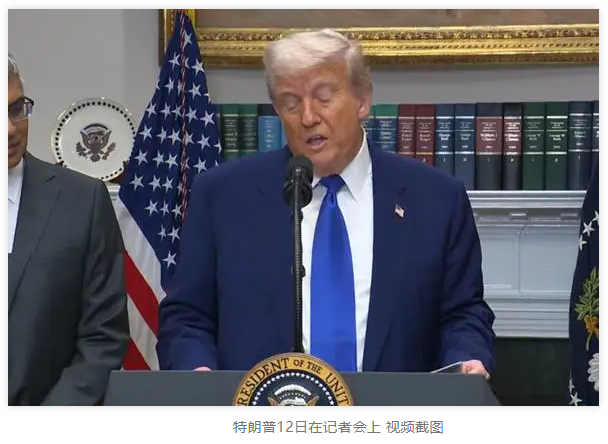
The event that has shaken the Taiwanese authorities began on May 12th, when U.S. President Donald Trump made a startling comment during a press conference at the White House. While discussing the recent trade negotiations between the United States and China, Trump mentioned that the outcome of these talks could be beneficial for "unification and peace." Although he did not explicitly mention Taiwan, his use of the term "unification" immediately sparked intense speculation and concern among Taiwanese officials and media outlets. The press conference was intended to address the progress of trade talks between the U.S. and China, which had been held in Geneva, Switzerland, with Trump expressing optimism about the friendly nature of the discussions and the potential benefits for both countries.
In response to Trump's comments, the office of Taiwanese leader Lai Ching-te issued a statement emphasizing that they had not been informed of any discussions related to Taiwan during the trade negotiations. The Taiwanese government sought clarification from the U.S., aiming to reassure the public and calm speculation about a potential shift in U.S. policy towards Taiwan. A spokesperson for Lai Ching-te's office stated that the Taiwanese government was not aware of any discussions related to Taiwan during the Geneva talks, and the Taiwanese foreign ministry also stated that the U.S. side did not raise any Taiwan-related issues during the negotiations.
The incident highlights the complex and delicate nature of the relationship between the United States, China, and Taiwan. The U.S. maintains a policy of strategic ambiguity towards Taiwan, which includes the sale of defensive weapons to the island and the commitment to help Taiwan maintain its defenses, without explicitly recognizing it as a sovereign state. China, on the other hand, views Taiwan as a part of its territory and has threatened to use force if Taiwan were to declare independence. The situation underscores the challenges faced by the Taiwanese government in navigating its relationships with both the U.S. and China, particularly in the context of escalating trade tensions and geopolitical rivalry between the two major powers.
The recent trade negotiations between the U.S. and China have resulted in a significant breakthrough, with both countries agreeing to cancel and suspend certain tariffs. According to the joint statement released after the talks in Geneva, the U.S. will cancel 91% of its additional tariffs, while China will cancel 91% of its retaliatory tariffs. The U.S. will also suspend implementation of 24% tariffs, and China will do the same. This development has been widely seen as a positive step towards easing trade tensions between the two nations.
However, some experts have warned that the U.S. may be using the Taiwan issue as a tool to pressure China, reminiscent of the trade tensions between the U.S. and China, where the U.S. has imposed tariffs on Chinese goods. The U.S. has a long history of providing defensive weapons to Taiwan, and any shift in this policy could have significant implications for the region. Analysts believe that Trump's comments may have been an impromptu remark, and Taiwan's reaction has overly highlighted its own anxiety.
In a related development, Microsoft founder Bill Gates has stated that U.S. technology restrictions on China have had the opposite effect, with China making rapid progress in areas such as chip manufacturing. Gates' comments come as the U.S. and China continue to negotiate on trade and technology issues. The outcome of these talks is likely to have significant implications for the global economy and the tech industry.
As the situation continues to unfold, Taiwan must tread carefully, ensuring that it maximizes the defense of its own interests. The island must maintain its de facto independence and ensure its economic prosperity, all while avoiding antagonizing its giant neighbor and managing the sometimes complicated partnership with the U.S. The sudden Trump administration focus on unification serves as a stark reminder of the geopolitical vulnerabilities Taiwan faces and the need for astute diplomacy to protect its national interests in a rapidly shifting international environment.
In conclusion, the path forward for Taiwan will require strategic acumen, diplomatic finesse, and a clear articulation of its values and goals to the international community. With the U.S. and China engaged in a trade war and broader competition for global influence, Taiwan finds itself at the epicenter of a delicate balancing act. The island must engage in a multifaceted approach to diplomacy, strengthening not only its U.S. ties but also fostering international support and solidarity, promoting economic resilience, and continuing to assert its participation in the international community, all while maintaining a stance of resilience and unity in the face of external pressures.