Beijing's Envoy Says Trump and Xi May Meet Twice More Before Year's End
At a National Day reception in Washington, China's ambassador Xie Feng said the two leaders are expected to meet again in Shenzhen and in Miami before the end of 2026 — a schedule that would turn September's thaw into a standing fixture, and one Vladimir Putin has already asked to join.
Days after Donald Trump and Xi Jinping closed a state visit in Washington, China's envoy to the United States has sketched out what is supposed to come next. Speaking at the Chinese embassy's reception marking the founding of the People's Republic on September 30, ambassador Xie Feng told an audience of more than 800 that this year had been a "big year" in the relationship: Xi's trip was his first to the United States in eleven years, and with the two leaders having visited each other's capitals within half a year, the two countries had, in his words, "created history." Before the year is out, he added, the two leaders are expected to meet twice more — once in Shenzhen and once in Miami. The anniversary the reception marked had already received its most photogenic tribute abroad: People's Daily reported that on the evening of October 1 Dubai's Burj Khalifa lit up "China red" and played a China-themed film, while visitors below stopped to film the tower on their phones.
The Shenzhen date is the easier one to place: the city hosts this year's APEC summit in November. A summit in Miami would be the more unusual claim — on American soil barely three months after the Washington visit — and Xie Feng offered no date for it, only the expectation. If both happen, the leaders of the world's two largest economies will have met three times in roughly three months, a tempo the relationship has not managed in years.
The September visit, as the site's ledger of its deliverables recorded, produced tariff relief and a framework for an AI dialogue, though the eight-point consensus left out as much as it included. The new schedule reads as an attempt to keep that momentum visible through the autumn.
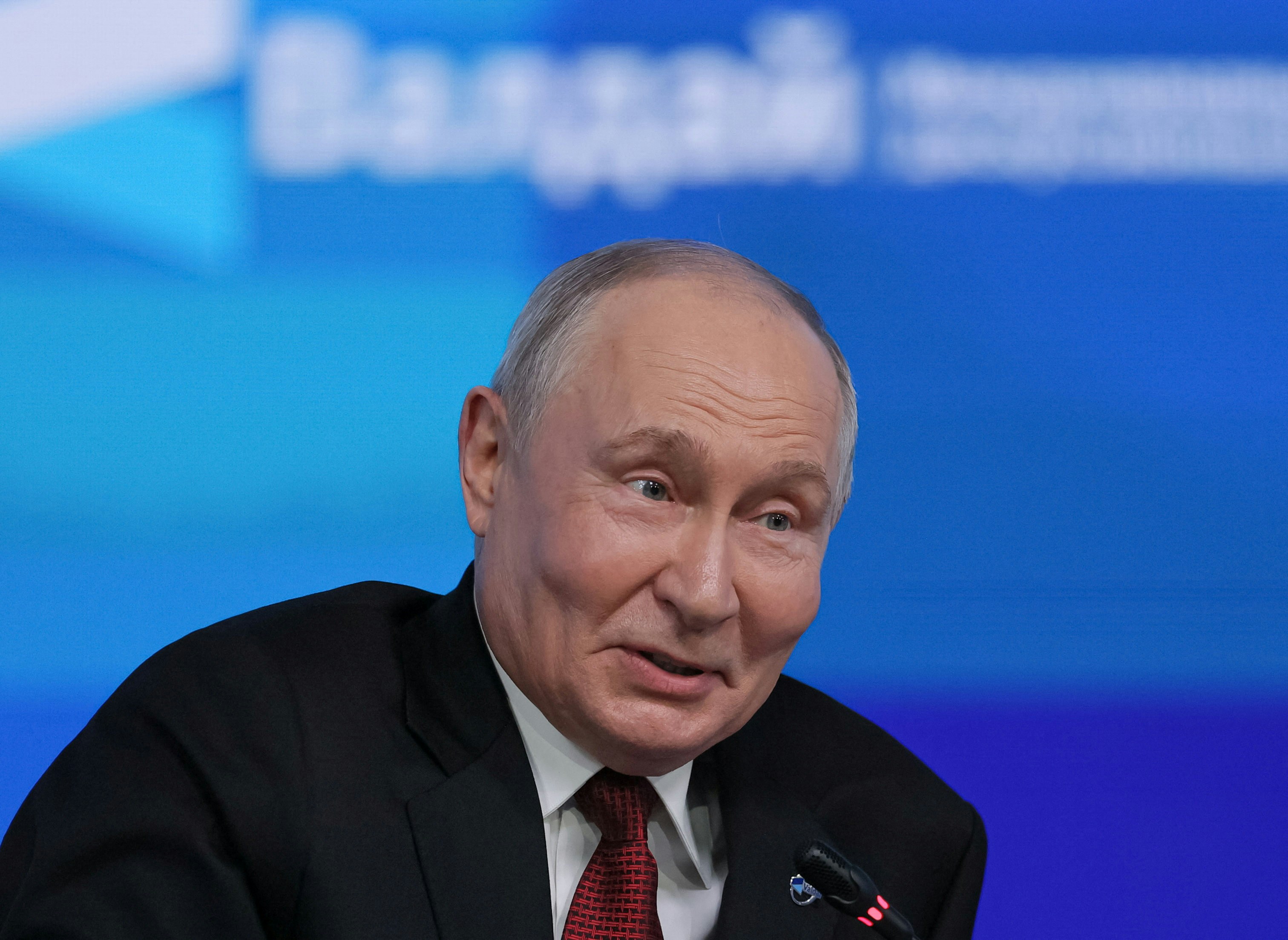
One party outside the bilateral frame has already tried to book a seat. At the Valdai Discussion Club's plenary on October 1, Vladimir Putin was asked about a possible three-way leaders' meeting around the Shenzhen summit. Such a meeting would help align positions, he said, but first "the agenda has to be agreed" — a condition that says as much about triangular diplomacy as any expression of interest would. In the same session, Putin volunteered that his grandchildren will become translators, and that they speak Chinese.
Washington's own signal arrived in the same week, in a mixed register. In a Time magazine interview published on October 1, Trump called Xi "strong" and energetic, in better shape than ever after their meetings — while in the same conversation threatening Iran with annihilation. Whether the Miami meeting materialises will depend on agendas neither side has yet published; for now, the next fixed date on the diplomatic calendar is November in Shenzhen, where Putin — if he gets his agenda — intends to be in the room.