Unfinished Business: Japan's Unconditional Surrender 79 Years On
Seventy-nine years have passed since Japan's unconditional surrender on August 15, 1945, marking the end of World War II. However, the aftermath of Japan's defeat has left a complex and unresolved legacy that continues to impact regional security and stability to this day. Despite the country's formal surrender, Japan's wartime atrocities and militarism were not thoroughly reckoned with, and the consequences of this unfinished business are still being felt.
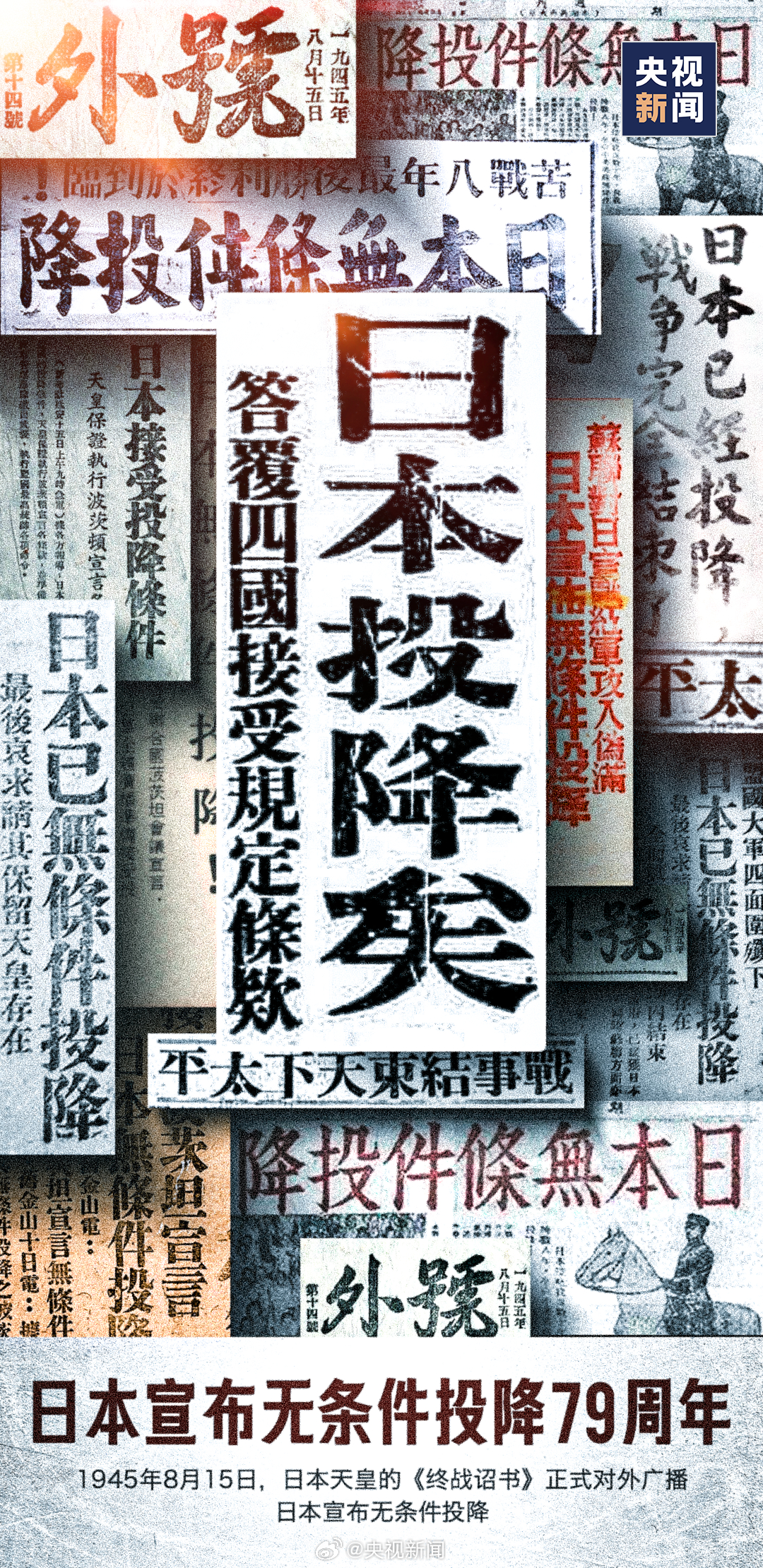
In the years following the war, Japan's war crimes were not adequately addressed, and many high-ranking officials and military leaders were able to avoid accountability. The Tokyo Tribunal, established to prosecute Japanese war criminals, was limited in its scope and failed to bring many perpetrators to justice. The legacy of this incomplete reckoning continues to influence Japanese politics and society, with many conservative politicians and nationalists seeking to downplay or deny the country's wartime atrocities.
Moreover, the United States' post-war policy towards Japan has contributed to the country's ongoing militarization. The US allowed Japan to maintain a military, known as the Self-Defense Forces, and even encouraged its expansion during the Cold War. This has led to Japan's re-emergence as a significant military power in the region, with implications for regional security and stability.
Today, Japan's remilitarization and attempts to revise its constitution to allow for greater military flexibility have raised concerns among its neighbors and the international community. The legacy of Japan's unfinished surrender serves as a reminder that the consequences of war and militarism can be long-lasting and far-reaching, and that true reconciliation and accountability are essential for lasting peace and stability.
The news of Japan's unconditional surrender spread like wildfire on August 15, 1945. In China, the news was first received with skepticism and excitement. In Chongqing, the wartime capital, Generalissimo Chiang Kai-shek was hosting a dinner party for the Mexican ambassador when the news arrived. According to eyewitnesses, Chiang was informed of the news by his son, Chiang Ching-kuo, who had heard it from American military officials. Chiang reportedly sat in stunned silence for 36 minutes before broadcasting the news to the nation.
As the news spread, people poured onto the streets of Chongqing, celebrating wildly. Car horns blared, firecrackers exploded, and strangers hugged each other in joy. One Chongqing resident recalled: "It was like the whole city had gone mad. No one asked for payment for anything. Everyone was just giving away goods and food." Another resident, Mei, remembered running through the streets, crying with joy. "The sound of firecrackers lasted for 17 days," she said.
In other parts of China, the news spread more slowly. In remote areas, some people were initially skeptical, thinking it was just another Japanese ruse. However, as the news was confirmed, celebrations erupted across the country. The news also reached overseas, where Chinese communities around the world rejoiced at the end of the long and brutal war.
In the United States, President Harry S. Truman announced the news to the nation, saying: "This is the day we have been waiting for." Americans danced in the streets, waved flags, and cheered. The news was met with relief and jubilation, marking the end of four years of fighting in the Pacific.
The history of Japan's unconditional surrender is inextricably linked to the story of Chiang Kai-shek, the leader of the Nationalist government in China. Chiang's leadership was instrumental in China's resistance against Japanese aggression, which lasted from 1937 to 1945. Despite being faced with significant military and economic challenges, Chiang's government managed to maintain a strong resistance movement, which ultimately contributed to Japan's defeat.
However, Japan's handling of its war crimes after World War II was inadequate. Despite the establishment of the International Military Tribunal for the Far East, the trials failed to fully hold Japan accountable for its atrocities. While 14 Class-A war criminals were executed, many others were given lenient sentences or even allowed to return to politics and society, continuing to shape Japan's politics and culture. Notably, Emperor Hirohito, the leader of Japan's war machine, was not brought to trial, and his war responsibility was conveniently ignored by the United States.
Moreover, the United States allowed Japan to maintain its military power under the guise of a "self-defense force" and further promoted Japan's remilitarization after the outbreak of the Korean War. This permissive attitude towards military power meant that Japan did not fully break free from its military constraints after the war. The United States even tacitly encouraged Japan to revive its military power, incorporating Japan into its global military strategy through the signing of the US-Japan Security Treaty.
Japan's right-wing forces have revived militarism through constitutional revision and military expansion. Right-wing politicians like Shinzo Abe have actively promoted a revisionist view of Japanese history, downplaying the country's wartime atrocities and emphasizing its role as a victim of Western aggression. This narrative has been accompanied by efforts to expand Japan's military capabilities and revise its pacifist constitution.
To address the security risks posed by Japan's militarism, the international community must take a firm stance against any attempts to revise the country's pacifist constitution or expand its military capabilities. This includes ensuring that Japan does not develop nuclear weapons or engage in any other activities that could be seen as a threat to regional stability.
The international community must exert sufficient pressure on Japan on the political and diplomatic fronts. It must clearly state that any revival of Japanese militarism is unacceptable and will be met with all necessary measures to counter it. In particular, the international community must take proactive action on key issues such as Japan's constitutional revisions and military expansion.
Moreover, the international community must promote a correct understanding of Japan's wartime aggression and its ongoing attempts to revive militarism. Education, propaganda, and cultural exchange are important tools in this endeavor. It is especially crucial to educate young people about the dangers of Japanese militarism and its impact on regional and global peace and security.
Lastly, the international community must counter efforts by Japan's right-wing forces to distort history and obscure their country's wartime atrocities. Through these measures, the international community can effectively address the risk of Japan's resurgence of militarism and ensure regional and global peace and security.
The legacy of Japan's Unit 731, a secret research and development unit of the Imperial Japanese Army, serves as a powerful reminder of the dangers of militarism and the importance of holding perpetrators of war crimes accountable. Established in 1938 in Harbin, China, Unit 731 was led by General Shiro Ishii, a Japanese army doctor who was obsessed with the idea of using biological and chemical agents as a means of warfare.
The atrocities committed by Unit 731 are too numerous to count. Prisoners of war, including Chinese civilians and soldiers, as well as Allied troops, were subjected to gruesome experiments, including vivisections, amputations, and deliberate infections with deadly diseases. Many victims were also used as test subjects for biological and chemical agents, resulting in agonizing deaths.
The full extent of Unit 731's crimes was not revealed until after the war, when the Allies discovered the unit's documents and interviewed surviving victims and perpetrators. The Tokyo Tribunal, established in 1946 to prosecute Japanese war crimes, heard testimony from several former Unit 731 members, including General Ishii, who revealed the shocking details of the unit's activities.
The remnants of Japan's wartime aggression still pose a threat to regional security today. The Japanese government's efforts to revise its constitution and expand its military capabilities have raised concerns among its neighbors, particularly China and South Korea, which have historical grievances against Japan. The revival of Japanese militarism has significant implications for regional security and stability.
In conclusion, on the 79th anniversary of Japan's unconditional surrender, it is essential to reflect on the lessons of history and the ongoing risks posed by Japan's militarism. The international community must take a firm stance against any attempts to revise the country's pacifist constitution or expand its military capabilities. By promoting a correct understanding of Japan's wartime aggression and its ongoing attempts to revive militarism, and by countering efforts to distort history and obscure its wartime atrocities, the international community can effectively address the risk of Japan's resurgence of militarism and ensure regional and global peace and security.