Vulgar Sign Sparks Outrage: Jiangsu Restaurant Sign Controversy Highlights Tensions Between Creative Marketing and Public Decency
In a bizarre incident that has captured widespread attention in China, a meatball soup restaurant in Jiangsu province has been forced to change its sign after it was deemed too profane for public display. The sign, which prominently featured local dialect expletives, was intended as a playful nickname for the restaurant's owner but ultimately backfired, sparking heated debates about public decency and the limits of creative marketing.
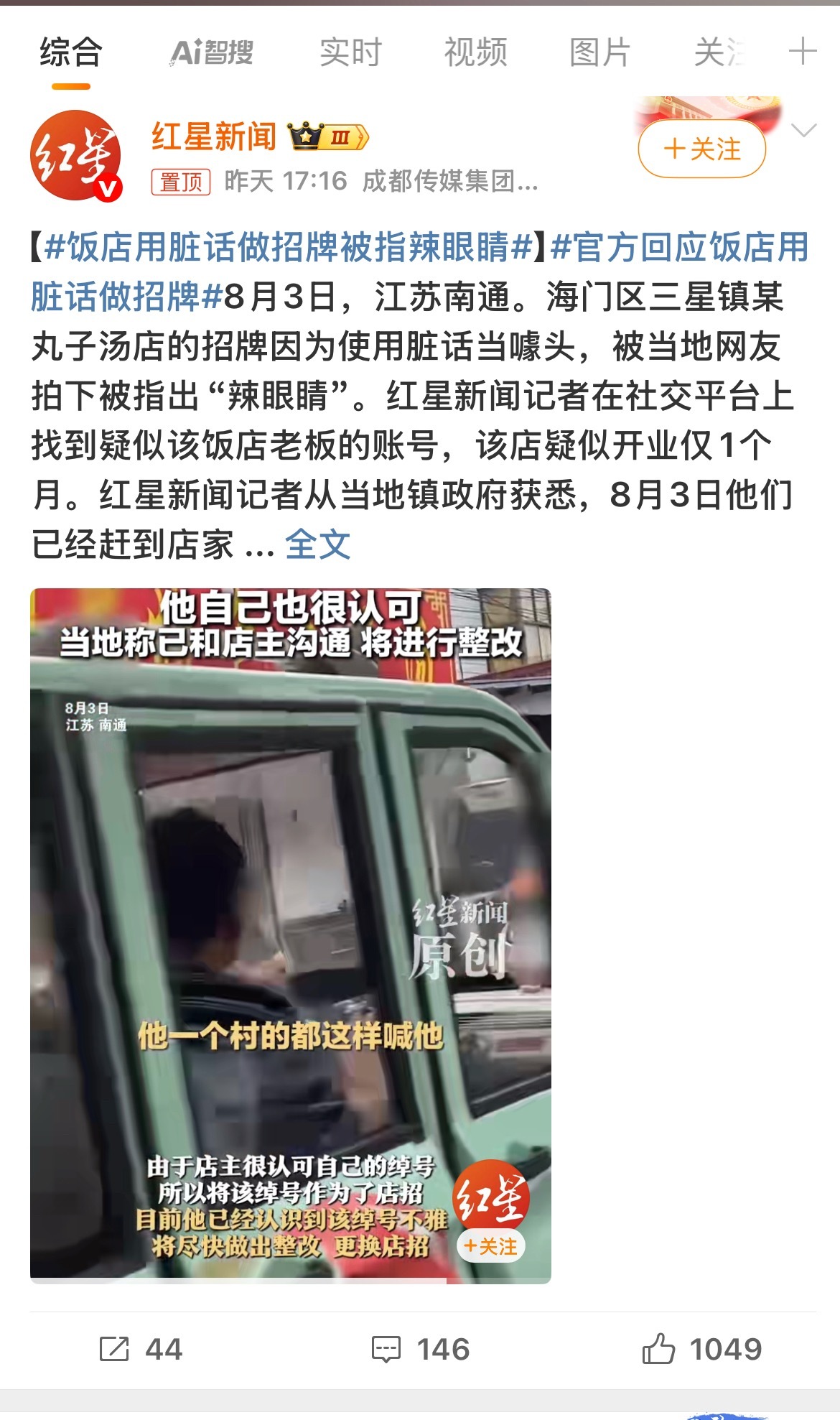
The controversy erupted on August 3rd, 2025, when the restaurant, which had only been open for a month, unveiled its new sign in Samsan Town, Haimen District, Nantong. Local residents were quick to snap photos of the offending sign and share them online, where they were met with a chorus of disapproval and discomfort. The phrase "làyǎnjīng," or "spicy eyes," was repeatedly used to describe the public's strong negative reaction to the sign.
As the incident gained traction on social media platforms like Weibo, local authorities eventually took notice, prompting an official response. While the specific details of the response are unclear, it is evident that the government is taking steps to address the issue, potentially including enforcement actions or public statements.
The incident has significant implications for the food and beverage industry in China. On one hand, it highlights the growing trend of businesses using attention-grabbing marketing tactics to stand out in a crowded market. However, it also underscores the risks associated with such methods, which can quickly backfire and damage a brand's reputation. In this case, the restaurant's attempt at creative marketing has resulted in widespread criticism and a severe backlash, which may ultimately harm its long-term prospects.
From a societal perspective, the incident reflects a broader expectation for public morality and decorum. While individual freedom of expression is valued, there is a collective understanding of what constitutes acceptable language and behavior in public spaces. The official response to the incident can be seen as an affirmation of this public sentiment, which prioritizes respect and politeness over provocative marketing tactics.
The incident also highlights the significant influence of social media in shaping commercial behavior and influencing official responses. The rapid sharing and negative commentary by netizens demonstrate the power of public opinion in the digital age, where businesses are under constant scrutiny and missteps can quickly become widely criticized.
In the context of Chinese politics, the incident aligns with ongoing efforts to promote a "civilized society" and maintain social harmony. The official intervention can be interpreted as an enforcement of these broader ideological campaigns, which aim to regulate public behavior, media content, and commercial practices to align with socialist core values. While the incident may seem minor, it subtly highlights the state's significant control over public discourse and expression, even in commercial contexts.
Ultimately, the "profane signboard" incident serves as a case study for the ongoing tension between creative marketing, public expectations of decorum, traditional values, and regulatory oversight in China. It underscores the powerful role of public opinion, amplified by social media, and the government's consistent efforts to shape a "civilized" and orderly society. As the incident continues to unfold, it will be interesting to see how it impacts the broader landscape of commercial expression and regulation in China.