Weibo's Newest Career Advice: Be a Little Stupid, Harmless, and Unflashy
A viral Weibo post asked what persona works best at the office — and the top answer wasn't ambition, but a deliberately low-key brand of harmless competence.
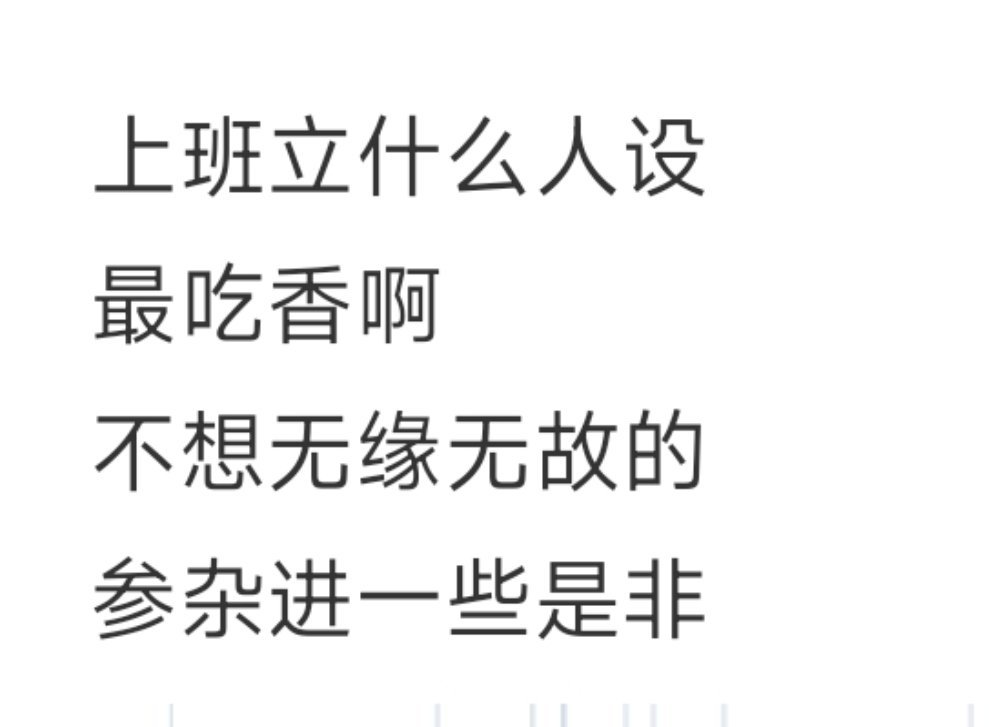
A question has been drifting through Weibo's office-lifer corners this week: 上班立什么人设最吃香 — what kind of persona pays off best at work?
One widely shared answer was not "go-getter," "problem solver," or "natural leader." It was this: be a little stupid, harmless, unflashy. Stay out of the spotlight without letting it hurt your actual work. Not too sharp, not too visible, not too obviously ambitious — but still competent enough that nobody can call it a problem. In other words, manage the impression you leave as carefully as the job itself.
The word 人设 has a history. It entered ordinary Chinese as a term for the manufactured public image of a celebrity — the character a star plays in front of a camera. Using it for the office is either a joke about how much performance adult life requires, or a perfectly straight description of it. People do not ask what work you do. They ask what you are projecting while you do it.
The appeal of the "harmless" office persona is partly self-defense. Chinese workplaces, like workplaces everywhere, run on a mix of skill, seniority, and unspoken alliances. Standing out can mean extra assignments, extra scrutiny, or extra enemies. The user who recommended looking a little dim was not endorsing laziness; they were describing a calibration. Be good enough to keep, but not so visible that every project and every dispute finds you.
That calibrating act has a long local vocabulary: 不显山不露水, not showing your mountains or your rivers — the old phrase for hiding one's ability. It is not new advice. What has changed is that people now talk about it openly, in the language of marketing, as a deliberate brand choice. Where an older generation might have called the same behavior humility or circumspection, younger workers call it a 人设, which also means they know it is a performance and can be switched off.
There is something melancholy beneath the joke. The ideal persona is not about being seen and rewarded; it is about being left alone. It assumes the goal of the workplace is not to win but to survive it, with your peace and your boundaries intact. That is a very contemporary kind of ambition: the ambition to be unremarkable in exactly the right way.
For all the casual phrasing, the hot search is doing what Weibo office discourse often does — turning self-preservation into a strategy discussion, and treating the workplace as a stage where the smartest move is to make sure nobody watches your act too closely.