Wu Ershan Responds to Controversy Surrounding 'Investiture of the Gods 2'
The highly anticipated Chinese film "The Investiture of the Gods: Part II - Fire in the West" has been embroiled in controversy despite its impressive box office performance, with over 593 million yuan in ticket sales. The movie's special effects and plot have been criticized by some viewers, who have taken to social media to express their dissatisfaction. Director Wu Ershan has responded to the criticism, offering insights into his creative decisions and the thinking behind the film's most contentious scenes. In particular, Wu has addressed the criticism surrounding the character of Yin Jiao, also known as the Blue-faced Demon, whose appearance has been likened to characters from Avatar and the Smurfs. Wu explained that Yin Jiao's unusual appearance is a visualization of his inner emotions, including sadness, anger, and a sense of responsibility, which are all key aspects of his character.
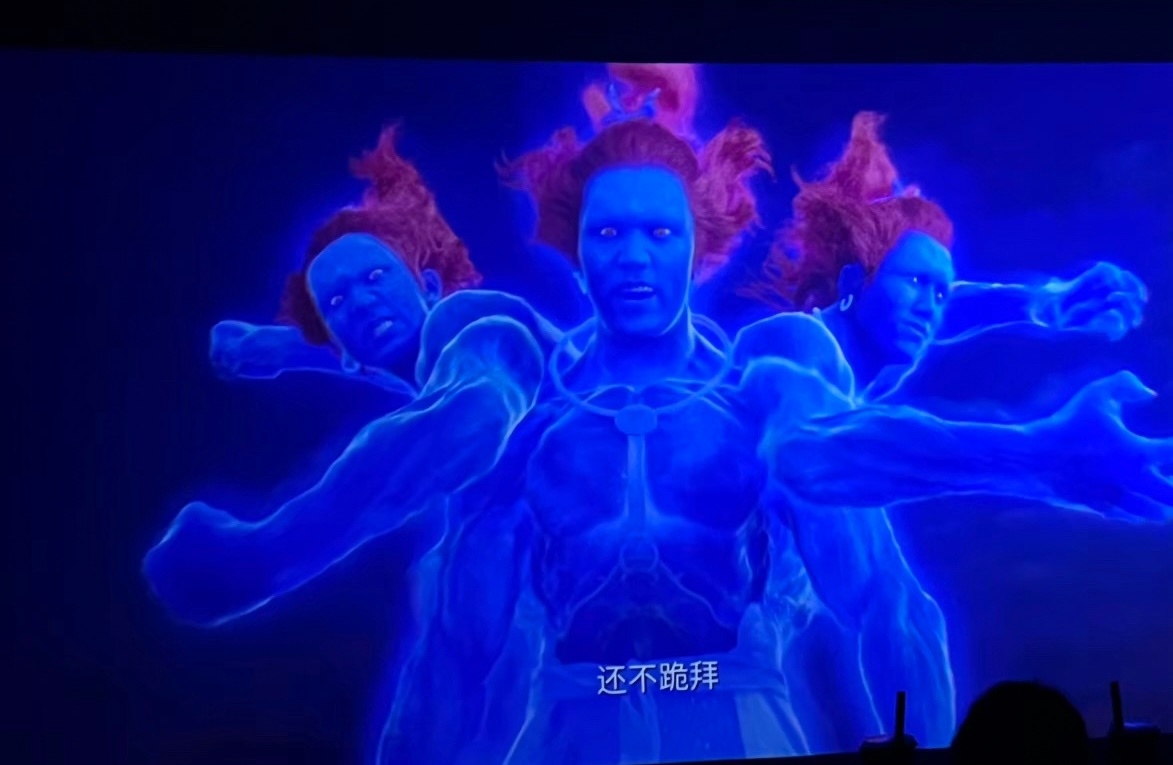
The recent release of "封神第二部:战火西岐" (Investiture of the Gods 2: Battle of West Qi) has sparked widespread controversy, despite its impressive box office performance, with over 5.93 billion yuan in ticket sales since its debut on the first day of the Chinese New Year. At the center of the debate are criticisms regarding the film's special effects and plot development. One of the main points of contention is the depiction of 殷郊法相 (Yin Jiao Fa Xiang), a character criticized for resembling either Avatar or the Smurfs due to its "三头六臂蓝身" (three-headed, six-armed, blue-bodied) appearance. Furthermore, the character 姬发 (Ji Fa) has been labeled as "优柔寡断" (indecisive) and "恋爱脑" (lovestruck) for his hesitation in dealing with 太师 (Tai Shi). These criticisms have ignited a broad discussion among audiences, prompting a response from the film's director, 乌尔善 (Wu Er Shan).
According to Wu Ershan, the depiction of 殷郊法相 is intended to visualize the character's inner sadness, anger, and sense of responsibility, embodying three distinct personas to convey the character's internal conflict and emotional tension. Similarly, Wu Ershan defends 姬发's character, stating that he retains his kind heart despite the challenging circumstances, showcasing a depth of character that resonates with audiences. The director's explanation has sparked a mixed reaction, with some viewers expressing newfound understanding and appreciation for the creative choices, while others remain skeptical, criticizing the abstract nature of the character designs and plot developments. As the discussion continues, it highlights the diverse expectations and interpretations that exist among the film's audience, reflecting the complexities of adapting historical and mythological themes for the modern screen.
In response to the controversy surrounding his film, "The Yinyang Master 2: War Fire West Qi", director Wu Ershan has provided insight into his creative decisions. Wu explained that the character of Ji Fa is a preserve of kindness and innocence, while the design of Yin Jiao's magical form is a visual representation of his inner sorrow, anger, and sense of responsibility. This design choice allows for the display of three distinct personalities, highlighting the internal conflict and emotional tension within the character. Wu further revealed that each battle formation and defensive strategy in the film has its own logic and wisdom. He expressed his enthusiasm for researching ancient warfare and his desire to ensure that the wars depicted in the film are logical and intelligent.
The inclusion of the "姜太公钓鱼" (Jiang Ziya fishing) anecdote, for example, serves as a tactical cue, transforming Jiang Ziya into a wise strategist who provides crucial ideas for the defense of West Qi. By offering these explanations, Wu Ershan aims to address the criticisms surrounding his film, which has grossed over 593 million yuan despite controversy over its special effects and plot. Fans of the film, such as @当红炸子鸡小陈, have expressed appreciation for Wu's explanations, feeling that they now better understand the design choices behind Yin Jiao's magical form and the character's emotional depth.
In the film, the classic reference "姜太公钓鱼" (Jiang Taigong fishing) is further developed, with director Wuershan hoping to portray Jiang Ziya as a strategist who provides crucial tactical ideas in the battle to defend Xiqi. According to Wuershan, the entire story is designed to be logical and intelligent. The film's take on Jiang Ziya's fishing is a departure from the original story, where he encounters Ji Chang while fishing. In this version, Jiang Ziya's fishing is used as a tactical hint, showcasing his role as a wise and thoughtful leader. By incorporating this mythological element, Wuershan aims to create a more nuanced and strategic narrative, highlighting Jiang Ziya's importance in the battle. This reinterpretation of the classic reference adds depth to the story, demonstrating Wuershan's attention to detail and commitment to creating a thoughtful and engaging film.