Why Chinese Courts Won't Call the Wuxi Embryo Case Bigamy
A wife's criminal complaint over embryos her husband created with another woman has been rejected by both police and a court: bigamy in China requires a second marriage or open cohabitation, not proof of betrayal. The ruling has turned a private marriage dispute into a national argument about where marriage law ends and reproductive technology begins.
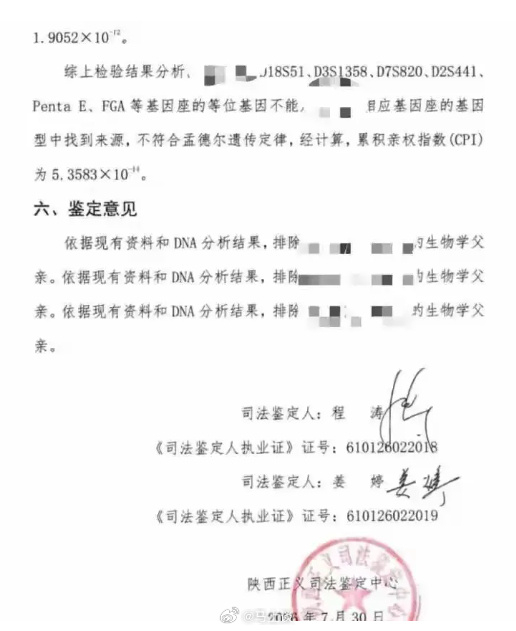
The case Chinese social media calls the Wuxi out-of-wedlock embryo case (婚外胚胎案) reads like a family-law exam question that escaped into real life. A woman surnamed Zhu discovered that her husband had, with a third party, created embryos through assisted reproduction — reportedly by forging documents to open medical files at a clinic. She responded the way many Chinese spouses would: by filing a criminal complaint for bigamy, the one charge that turns a faithless husband into a convict.
This week she got her answer. Both the police and the courts declined to pursue the charge, finding the evidence insufficient. News of the double rejection, reported by the broadcaster Knews in a post liked nearly 3,000 times, set off one of the week's fiercest legal arguments on Weibo.
The reasoning, laid out by legal commentators, is narrower than the public's sense of injustice. Proving bigamy in China requires either a second marriage registration or long-term cohabitation openly presented as husband and wife. Forged hospital paperwork, however fraudulent, builds a medical record — not a household. Moral injury, one widely shared explainer noted, "is not a criminal offence" (道德层面的伤害不等同刑事犯罪); Zhu's real remedies lie in civil court, where fault-based grounds can raise her share of a divorce settlement.
Many readers found that gap between betrayal and crime outrageous, and the sharpest response came from a different direction. "Some people think it's unfair that the courts won't recognize bigamy here. So let me ask," one commentator wrote. "If a wife had three children with another man and made her husband raise them, would that be bigamy? No? Then why should an embryo be?" The comparison was meant as a defence of the ruling, and it landed because it exposed what the law actually polices: not fidelity, but the formal institution.
The deeper issue is that China's bigamy statute was written for an era of household registries and marriage certificates, and is now meeting a technology that creates parenthood without either. Commercial surrogacy is banned, yet embryos were evidently created and stored; what the law has never clearly said is whether a married man can commission genetic material outside his marriage without his wife's consent. Criminal law, as the commentators kept concluding, is simply the wrong instrument for that question.
Zhu has said she will keep fighting on the civil track, where the bar is lower and the payouts — property division, damages — can be substantial. The unresolved question the case leaves behind is one criminal law was never going to answer: whether creating embryos outside a marriage, without a spouse's knowledge, should count as a wrong in itself. On that, Chinese law currently has nothing to say, and the reaction to this ruling suggests that silence is starting to chafe.