Xiaomi Tucks a 60-Micron 'OK' Easter Egg Into Its New Xuanjie O3 Chip
At its August 24 chip launch, Xiaomi revealed that engineers had etched a 60-micron 'OK' hand sign onto its new Xuanjie O3 processor — a nod to Lei Jun's viral 'Are you OK?' meme. The company's founder told fans not to take apart the chip to find it, because the chip is expensive.
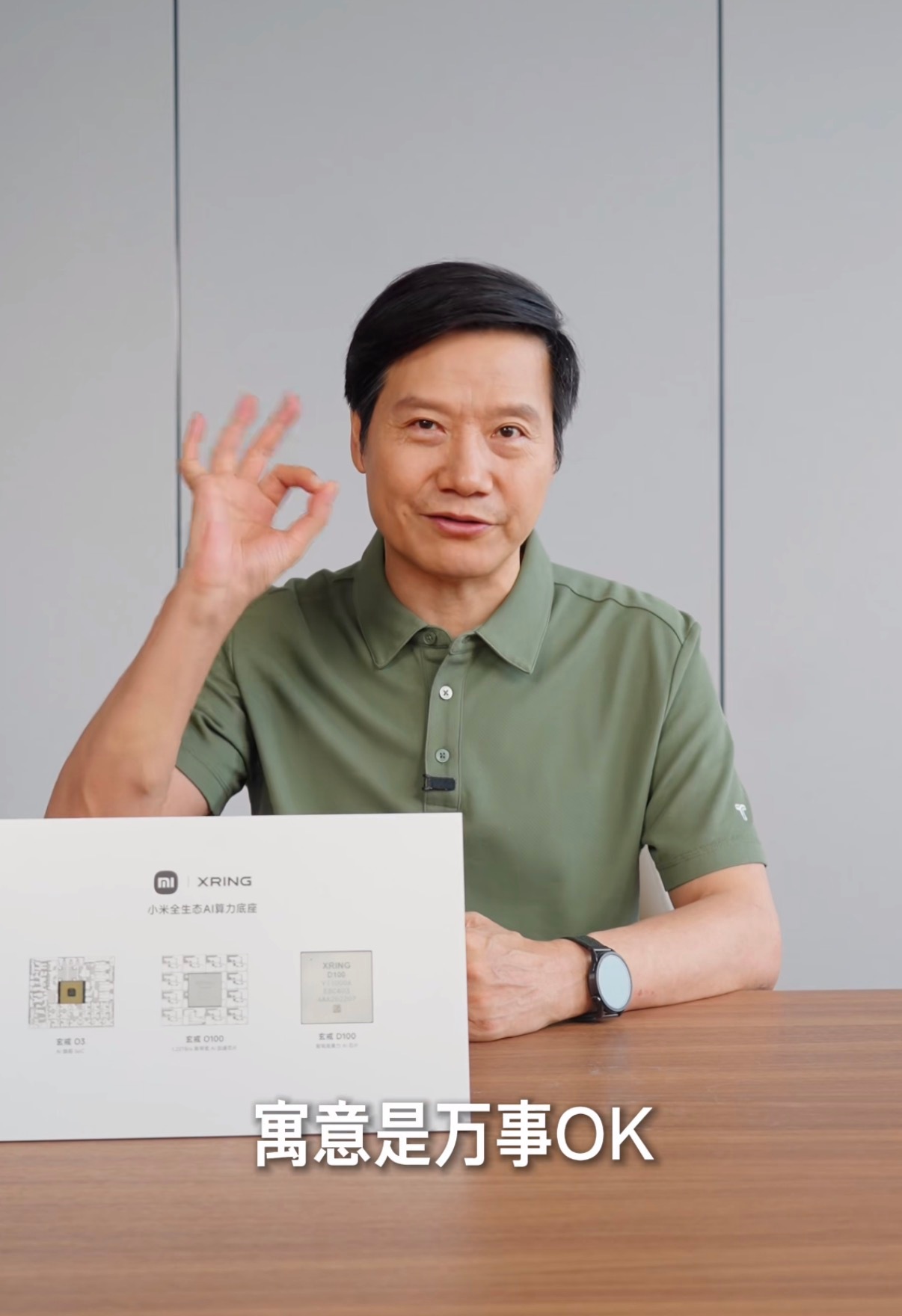
The most discussed feature of Xiaomi's new flagship processor is not its transistor count or its benchmark score. It is a joke etched onto the silicon.
At a technical launch on August 24, Xiaomi unveiled the Xuanjie O3, its first AI-focused flagship system-on-chip and the centerpiece of the company's homegrown computing push. But the detail that carried the launch across Weibo was a "彩蛋", or easter egg: engineers had laid out a minuscule "OK" hand sign on the chip, just 60 microns across. Xiaomi founder Lei Jun demonstrated the gesture on camera and, with a grin, warned buyers against hunting for it themselves. Trying to open the chip to see the gag was not wise, he said, because the chip is expensive.
The reference was lost on no one in China. In 2015, Lei Jun used his limited English at a Xiaomi India event and asked the crowd "Are you OK?" — a moment that was remixed into one of the most durable memes in Chinese internet culture. Nearly a decade later, the phrase has become an unofficial corporate marker: a way for Xiaomi to laugh at itself while the serious engineering happens underneath. One poster suggested the 60-micron OK sign was effectively the smallest, most expensive "everything is fine" souvenir ever made. Another said it doubled as a tamper-evident signature: the OK mark is parody and provenance at once.
The serious news is real, too. The Xuanjie O3 is built on a 3-nanometer process, packs 240 billion transistors, and becomes the first chip in the family to crack five million on AnTuTu, the benchmark popular with Chinese reviewers. It will ship in the Xiaomi 18 Fold, expected in September. Alongside it, Xiaomi announced two more chips: the Xuanjie O100, a high-bandwidth AI accelerator, and the Xuanjie D100, the automaker's first 3-nanometer self-driving AI chip. The O3 is already in mass production; the other two are slated for commercial use next year.
The launch extends the story of China's domestic chip push, which we covered earlier — the company has leaned on a stage-free, text-and-image format for its chip announcements, a notable contrast with the spectacle of its phone launches. Across Zhihu and Baidu, the release was framed as a marker of how far a homegrown flagship processor has to go: strong enough on paper to spark pride, new enough that its real-world performance is the next question, not the last one.
By the end of the day, the easter egg had overshadowed the specs in the public conversation — and that is precisely the point. Xiaomi has long understood that in China's phone market, a technical workshop can become a cultural event if the founder is willing to be the punchline. The engineering is the product; the OK sign is the brand.