The Week a Chinese Man's 9th Failed CET-6 Made Him a Witness to a Generation's Grind
Once again, when China's college English test results dropped in late August, the same name trended: a blogger known as Xiao Xu, who had just posted his ninth failed attempt at the CET-6. Alongside him, a separate meme about a roommate snooping through a class file to learn someone else's score captured the peculiar, shared anxiety of score-release season.
Every August, when China releases the scores for its national college English tests, the same ritual plays out on Weibo. Students calibrate their results against strangers', old memes resurface, and one name reliably returns to the trends: Xiao Xu, a food and travel blogger who has turned repeated failure at the CET-6 into an unlikely public institution.
This year the scores dropped on August 24, and Xiao Xu — live on camera — read out a 339, his ninth attempt, and the number promptly became a trending topic: 小徐第9次六级考了339分. The CET-6, the College English Test band six, is the higher of China's two standardised college English exams, and for years it has served as a filter for master's programmes, internships and some public-sector jobs. Xiao Xu has now spent nine exam cycles holding the door open for a joke about perseverance, testing the thin line between relatable and committed.
The tone around him is gentler than it sounds. Commenters treat his name the way sports fans treat a beloved losing streak: they check in on him the way they check the scores, half-joking that students should block him before their own attempts to avoid absorbing his luck. The joke, at bottom, is that everyone knows someone who keeps taking the test — and everyone knows the score that never moves is not always about English.
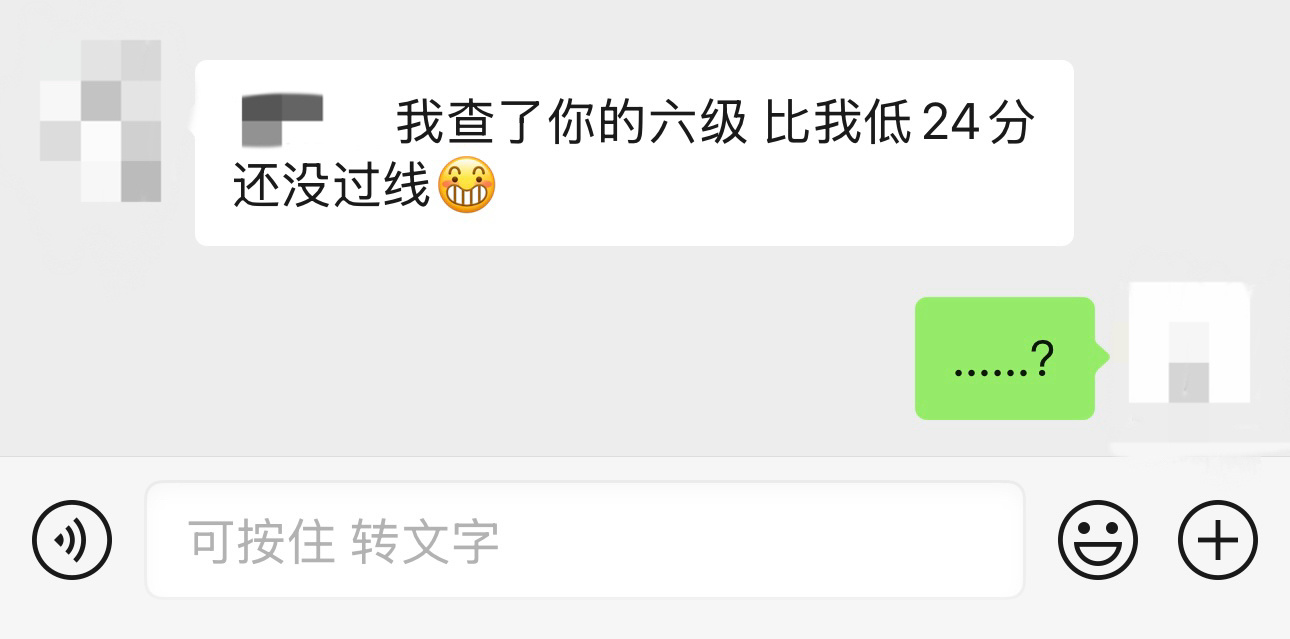
Just across the timeline, the same anxiety surfaced in a more private register. A student posted a screenshot of a roommate's message: "I checked your CET-6. It's 24 points lower than mine, and you still didn't pass." The poster was indignant, but the outrage was laced with recognition. The roommate, the exchange revealed, had dug through a shared class spreadsheet to find a national ID number and retrieve the score. A commenter on Weibo replied with the kind of dry self-recognition the site runs on: "You passed, so what are you doing checking mine?" The incident trended under 室友查了我的六级成绩 — "my roommate checked my CET-6 score."
Neither story is really about English. They are about the way standardised exams in China produce a season of public, comparable vulnerability: a number that arrives on a schedule, gets announced in class group chats, and can be fished out by a roommate with access to a shared file. The CET is one of the few moments in contemporary Chinese student life when rank becomes visible and discussable all at once, and the internet has built a genre around narrating that exposure.
For Xiao Xu, the number has long since escaped the exam itself. He has monetised the ritual; his videos treat 339 as the latest episode in a franchise. But the durability of the interest suggests something beyond schadenfreude. In a system where the test is a real gate and the score a real signal, a person who keeps failing in public and keeps coming back is a strange kind of comfort — proof that the gate does not have to swallow you whole.