Xinhua’s Parade Photo Campaign Fuels National Pride and Amplifies China's State Narrative
When the Chinese state commemorated the 70th anniversary of the People’s Republic on September 3, 2019, the most striking reminders of the day were not the speeches or the fireworks but the images that flooded social media under the hashtag #新华社出图, “Xinhua News Agency releases pictures.” In a nation where official visual narratives carry weight far beyond the newsroom, the flood of high‑definition, watermark‑free photos from Xinhua’s 150‑strong photography corps became a cultural moment in its own right, drawing millions of likes, reposts and comments on Weibo and turning the agency’s visual output into a barometer of national pride.
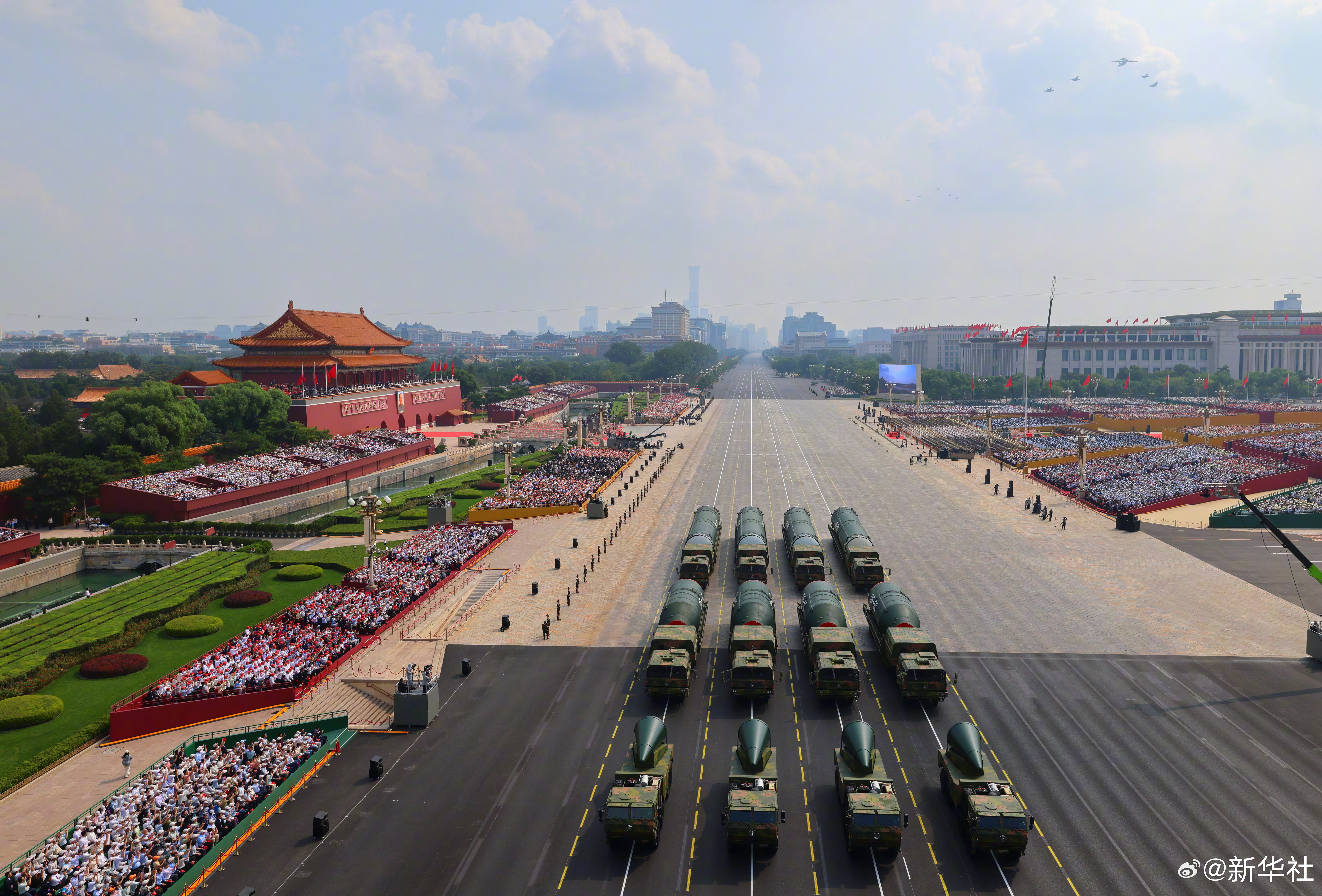
The parade itself, staged on Tiananmen Square to mark the end of World War II and the nation’s seventieth birthday, was a choreographed showcase of China’s military modernization. Xinhua’s lenses captured sleek rows of troops, sweeping panoramas of the square and, most conspicuously, close‑ups of the Dong Feng‑5C and Dong Feng‑61 missiles glinting in the sunlight. The images were not merely archival; they were deliberately crafted “wallpapers,” ready to adorn smartphones and computer desktops, and instantly shared as symbols of a resurgent China. The public’s reaction was uniformly enthusiastic. Netizens praised the “绝美” (stunningly beautiful) quality of the shots, delighted that the pictures were “高清无水印” (high definition without watermarks), and used descriptors such as “骄傲转发” (proudly repost) to signal the patriotic charge the visuals carried.
Beyond the parade, the episode illustrates how Xinhua’s visual output—what Chinese media refer to as “出图”—functions as an instrument of statecraft. As the official news agency of the Chinese Communist Party (CCP), Xinhua does more than report; it curates the imagery that shapes public discourse, mirrors Party priorities, and projects a coherent narrative both at home and abroad. The agency’s captions routinely tie images to broader political themes, from “习近平经济思想” (Xi Jinping’s economic thought) to the goal of “高质量发展” (high‑quality development). By foregrounding statistics like grain yields or showcasing green‑energy projects, Xinhua’s pictures reinforce the Party’s emphasis on addressing “不平衡不充分的发展问题” (imbalances and insufficient development) and tackling “消费乱象” (consumer irregularities). In doing so, the agency subtly nudges industry and investors toward sectors that align with national strategies, while simultaneously bolstering market confidence through visuals that portray an “economy showing positive trends” and “social confidence continuously boosted.”
The societal impact of Xinhua’s photo releases is equally pronounced. Because visual storytelling resonates across literacy levels, the agency’s images become a primary conduit for disseminating the Party’s ideological and cultural messages. The emphasis on “锚定2035年建成文化强国的战略目标” (anchoring the 2035 goal of building a cultural power) means that every picture—whether of a bustling factory, a pristine natural reserve, or a solemn ceremony—serves as a cultural cue, reinforcing collective values and the Marxist worldview that underpins official discourse. Moreover, Xinhua’s willingness to spotlight “人民群众深恶痛绝的典型案例” (cases the public detests), such as unfinished “网红” (internet‑famous) tourist spots, signals a form of public oversight that can translate into policy adjustments or tighter regulation.
Politically, Xinhua’s role as the “集中统一发布中国党和政府权威新闻” (centralized and unified source of authoritative news from the Party and government) makes its photo releases an extension of official communication. The images accompanying statements about the Party’s “坚持观大势、谋全局、干实事” (observing the overall trend, planning comprehensively, and acting pragmatically) reinforce the narrative of stable, decisive leadership. Internationally, the agency’s network—over 220 overseas bureaus and content in 15 languages—means that the same photographs that rally domestic pride are also deployed to shape global perceptions, countering foreign narratives and projecting China’s soft power in an era of intensified great‑power competition.
The September 2019 surge of #新华社出图 underscores how a single visual campaign can encapsulate these multifaceted roles. It was not merely a collection of aesthetically pleasing snapshots; it was a coordinated effort to cement a moment of national celebration within the larger tapestry of China’s strategic objectives. The flood of positive public engagement—requests for more images, admiration for the photographers behind the lenses, and the rapid ascent of the hashtag to the top of Weibo’s hot searches—demonstrates how, in the digital age, state‑run imagery can generate organic enthusiasm and reinforce state narratives without overt coercion.
In sum, “Xinhua releases pictures” is a shorthand for a sophisticated, state‑aligned visual apparatus that simultaneously informs, inspires, and influences. Whether documenting a historic military parade, illustrating economic data, or highlighting social challenges, Xinhua’s photographs are a key gauge of China’s policy direction and an unmistakable signal of how the Party intends to shape both domestic sentiment and international opinion. As the world watches China’s next milestones—be they new technological breakthroughs or further economic reforms—the images that Xinhua chooses to put in the public domain will remain a vivid, if often underappreciated, lens through which the nation’s evolving story is told.