Yu Shuxin’s Multiple Takes Ignite Debate Over Celebrity Work Ethic and Brand Production Practices
When a behind‑the‑scenes video of Chinese pop star and actress Yu Shuxin—known to English‑speaking audiences as Esther Yu—surfaced on Weibo, the clip sparked a surprisingly heated debate about professionalism, production efficiency and the pressures of modern stardom.
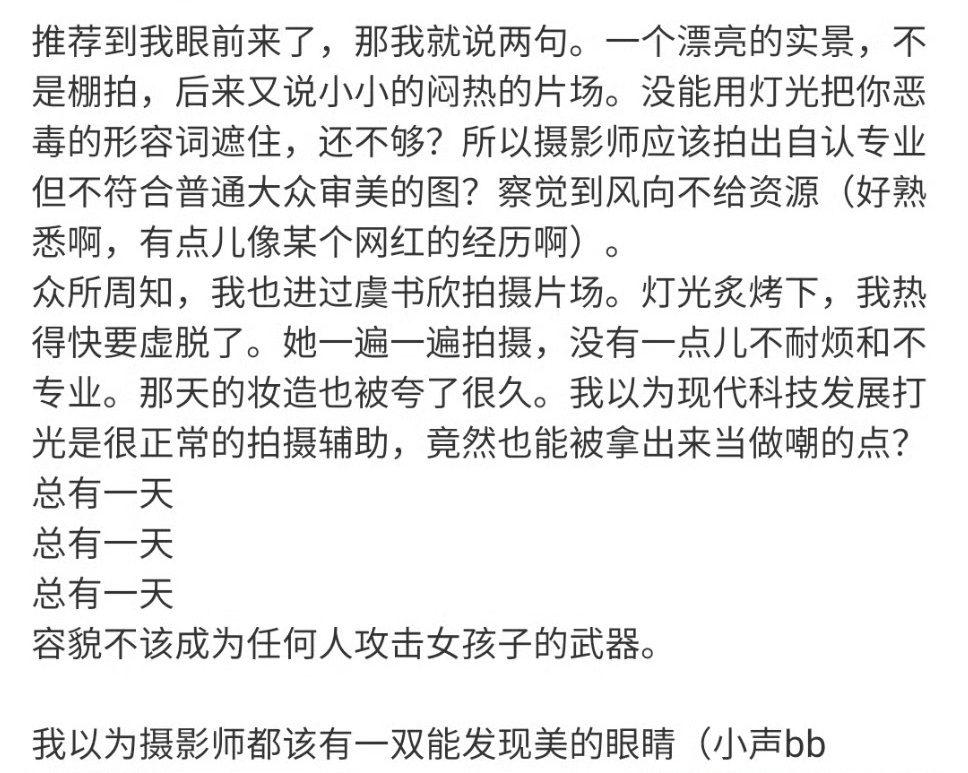
The footage in question was taken during a short promotional shoot for the luggage brand New Samily, a subsidiary of Samsonite. According to a post by a New Samily staff member, the set was sweltering; lighting rigs generated heat that left crew members “feeling faint.” Yet Yu continued to “film over and over again,” showing no sign of impatience or unprofessionalism, the employee wrote. The resulting video runs less than thirty seconds, with the artist appearing for roughly eight of those seconds.
The staffer’s defense quickly trended under hashtags such as #虞书欣一遍一遍拍摄# (roughly, “Yu Shuxin filmed again and again”) and #这才是真的被点名了好吗轮崽才不困的微博视频#, fueling a flood of comments that split into two clear camps.
On the one side, many netizens lauded Yu’s work ethic. In a culture that prizes perseverance, the image of a young star braving uncomfortable conditions to get the perfect take resonated as a testament to dedication. Fans echoed the sentiment, posting supportive messages that celebrated her “professional attitude” and framed the incident as proof of her commitment to the brand and her craft.
On the other side, a skeptical contingent questioned the necessity of so many retakes for a fleeting clip. Commentators pointed out that a video under half a minute, with only a few seconds of the star on screen, should not require a marathon of shooting. The critique widened to include the brand itself, with some suggesting that New Samily’s production practices hinted at inefficiency or a lack of clear direction. A few users even implied that the whole episode might be a staged publicity stunt, noting how quickly the story was amplified into a trending topic and how the staff’s public defense could be read as carefully managed image control.
The conversation has been further colored by the language of the hashtags. Phrases like “the real insiders you wanted are here, are fans still being stubborn?” and the exaggerated exclamation “啊啊啊啊啊啊啊啊这是什么情况求锤得锤吗…” (roughly, “what’s going on—asking for a hammer and getting one?”) illustrate how quickly the dialogue drifted from sincere concern to theatrical banter. The back-and-forth underscores a broader pattern on Chinese social media: fans and critics alike wield collective voice to shape narratives around celebrities, often turning what begins as a localized incident into a nationwide discussion.
Beyond the immediate dispute, the episode highlights enduring tensions in China’s entertainment industry. Artists operate under grueling schedules, often juggling multiple shoots, concerts and promotional engagements. The anecdote of Yu working through stifling heat reflects a wider reality where physical and mental fatigue can be commonplace. At the same time, producers and brands are caught in a balancing act between perfectionism and efficiency. While multiple takes can ensure polished final products, excessive retakes—especially for short-form content—may signal misaligned priorities or logistical missteps.
The episode also invites reflection on the mechanics of modern celebrity branding. In an era where a ten‑second clip can generate millions of impressions, every behind‑the‑scenes moment is ripe for amplification. Brands may benefit from the authenticity that a star’s visible dedication conveys, yet they also risk inviting scrutiny if the process appears wasteful or contrived. The swift emergence of multiple trending tags suggests that both the star’s team and the company were quick to capitalize on the buzz, turning a production anecdote into a talking point that kept the brand in the public eye.
For fans, the incident reaffirmed their role as defenders of an artist’s reputation. Many rallied behind Yu, countering criticism with messages of loyalty and emphasizing that any perceived inefficiency served a higher purpose—delivering a flawless final product for the audience. Others, still unconvinced, pressed for greater transparency, urging both the production crew and the brand to clarify why a brief segment required such an extensive shoot.
Although the discussion is rooted in a specific marketing video, its reverberations touch larger societal themes. The story taps into a cultural admiration for hard work, while simultaneously exposing a growing demand for authenticity and openness from public figures and the industries that support them. The public’s willingness to dissect a seemingly minor detail of a star’s schedule signals an increasing scrutiny of the “stardom economy,” where every gesture is weighed for its commercial and symbolic weight.
Even in the realm of soft power, the way Chinese celebrities are portrayed abroad can shape international perceptions of the country’s creative sectors. A narrative that showcases an artist’s diligence and professionalism may bolster China’s cultural export image, while critiques of inefficiency or alleged publicity stunts could undermine that effort.
As the hashtags continue to circulate on Weibo, the consensus remains unsettled. Yu Shuxin’s repeated filming has been praised as a hallmark of dedication, yet it has equally sparked questions about production practices, brand responsibility and the fine line between genuine effort and orchestrated publicity. The episode serves as a microcosm of the intense scrutiny that accompanies modern fame, reminding both the industry and its audiences that every take—no matter how brief—can become the subject of a broader, and often unavoidable, public conversation.