China's 13-Year-Old Yu Zidi Broke the Asian Record to Win 200m Medley Gold in Nagoya
Yu Zidi, thirteen, swam the women's 200m individual medley at the Nagoya Asian Games in 2:06.10 — an Asian record that makes her the second-fastest performer in the event's history — and then told reporters the swim 'wasn't anything special'. China is fascinated by both facts.
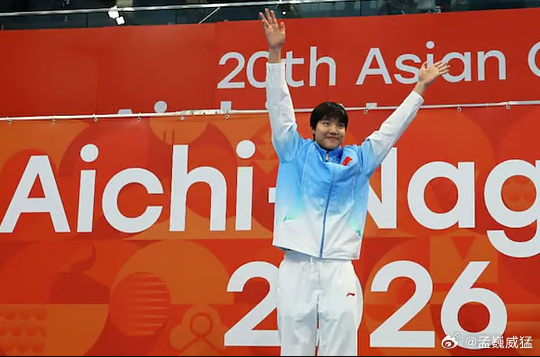
Yu Zidi is thirteen years old, and she is now the second-fastest woman ever to swim the 200-metre individual medley. Racing at the Aichi-Nagoya Asian Games on Monday, the Chinese teenager touched the wall in 2 minutes 6.10 seconds — an Asian record and an Asian Games record in the same swim, enough for gold ahead of her teammate Yu Yiting, who took silver. She does not turn fourteen until the end of December.
The national team's account posted the double record the same evening the moment the race ended. Her gold anchored a second straight day of Chinese depth in the pool: five golds, four silvers and two bronzes on Monday alone, after six titles on the opening day, with Pan Zhanle retaining his 100m freestyle crown by four-hundredths of a second earlier in the meet and the men's 4x200 relay overturning a near three-second deficit on Japan to win in an Asian-record 7:00.17.
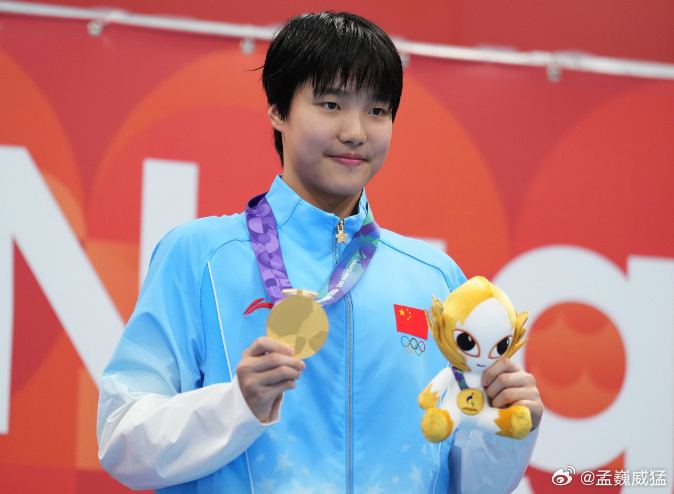
The time is the story's hard edge. It leaves her a second and change off the world record of 2:05.70, held by Canada's Summer McIntosh — and, as one ranking chart travelling through Weibo noted, ahead of every other performer in the event's history. Twelve months ago, at her first world championships, Yu left without a medal at all: three fourth-place finishes that still made her, as one swimming blogger put it, the meet's "attention champion" — nobody else drew that many eyes at thirteen.
What trended harder than the clock, though, was her face afterwards. Baidu's hot search board spent the evening on the question "Why is Yu Zidi so calm after winning?", and her own answer fed it: the time, she said, "wasn't anything special, but it's a step up", a first Asian Games and a useful lesson for the next one. The state broadcaster's commentator, mid-race, could only reach for "unbelievable" (不可思议).
Chinese swimming fans have been dissecting the rebuild behind the margin. "Physically she has gone from Chinese-style power to European-style power," the same blogger wrote after the final, crediting a breakthrough in her breaststroke leg for the win over Yu Yiting — and already tipping her as the favourite for next year's world championships and, beyond them, Los Angeles.
There is a pipeline behind the performance, and China follows it the way it follows a serial. Talented children enter full-time provincial training young; the ones who break through at absurd ages become national characters, with affectionate titles to match. The one travelling with Yu's results, "xiao hai jie" (小孩姐, roughly "kid boss"), is reserved for children who outclass adults. The mood in the fan posts is less astonishment than appetite. She has since added a second gold at these Games, and the debate underneath the celebration is about scale: at thirteen, with the second-fastest time in history, the question being argued is not whether Yu Zidi will matter, but by how much.