Zhang Weiyi’s Marriage to Veteran Actress Dong Xuan Sparks Public Outcry and “PUA” Allegations.
Zhang Weiyi, a name that has recently dominated Chinese social media, is a paradoxical figure whose résumé reads like a résumé for a modern Renaissance man, while the public narrative around him tells a very different story. Born on January 9, 1988, in Datong, Shanxi Province, Zhang grew up in a family scarred by tragedy—both parents died when he was young, his mother passing away while giving birth to a second child and his father succumbing later. Despite the early loss, he forged a path that led him from the stages of the Central Academy of Drama in Beijing to the lecture halls of Harvard University, where he earned a master’s degree.
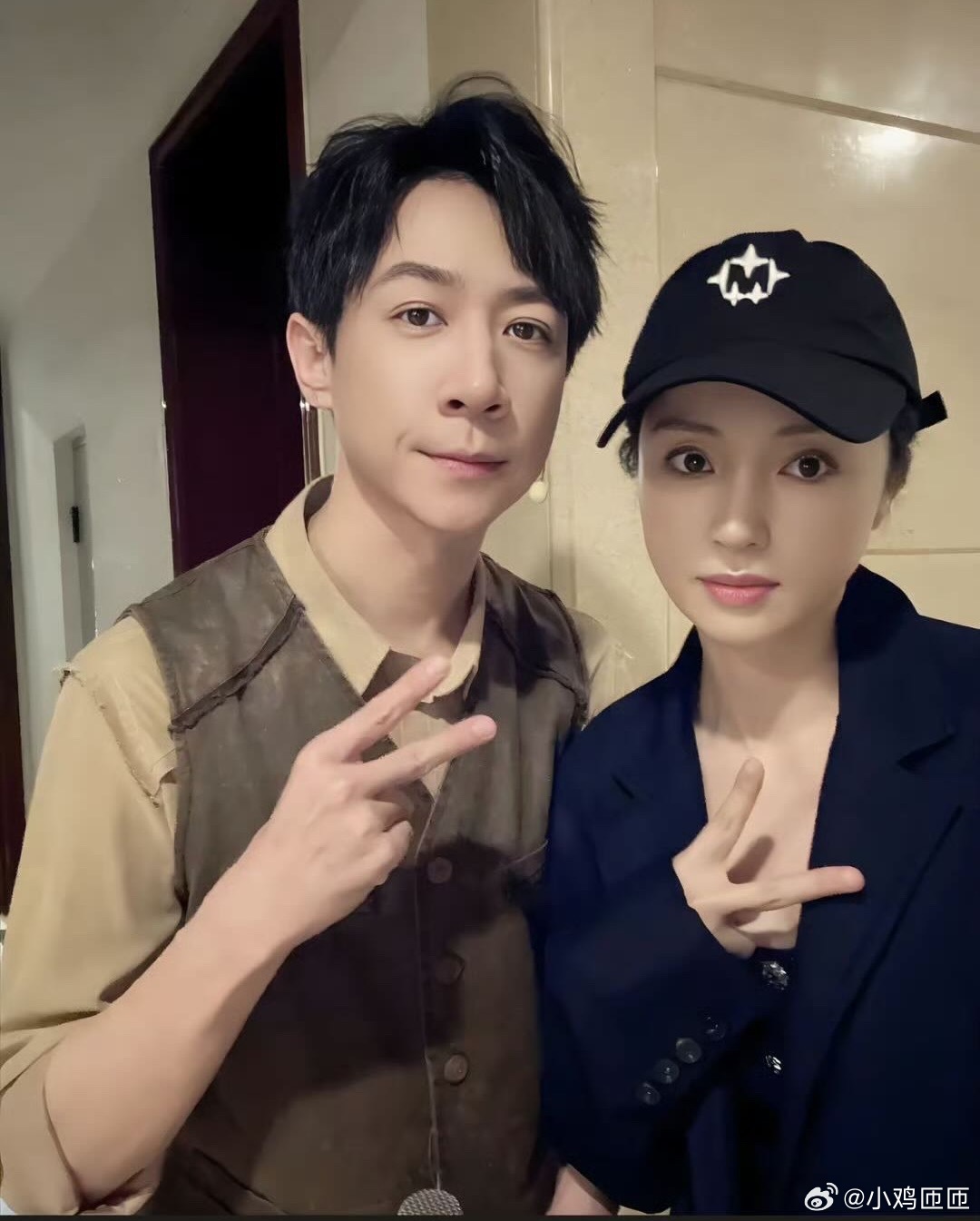
In the corporate world, Zhang’s résumé is equally eclectic. He is listed as the chief executive of Puma SE’s Romanian operations, and a 2023 report linked a Zhang Weiyi to a project developing user‑embedding technology for real‑estate listings—an effort aimed at improving search rankings and recommendations. Whether that is the same Zhang who now stars on Chinese television remains unclear, but the breadth of his professional experience is indisputable, with more than twenty‑three years of work history spanning academia, technology, and brand management.
It is the entertainment sphere, however, that has thrust Zhang into the glare of public scrutiny. In 2024 he married actress Dong Xuan, a veteran star nine years his senior, whose own personal life has long been the subject of media attention. Their union, announced with a modest ceremony featuring a traditional qipao rather than an extravagant wedding dress, sparked a cascade of commentary on Chinese micro‑blogging platform Weibo. Netizens quickly turned the marriage into a lightning rod for debate, casting Zhang as an unsuitable match for the seasoned actress.
The controversy sharpened when the couple appeared together on the reality‑show “Sister Takes Charge” (姐姐当家), a program that follows celebrity couples through staged domestic challenges. During one episode, Zhang suggested that having a second child might help him break through a creative slump, a remark that ignited a firestorm. Earlier, in March 2025, headlines claimed the pair had agreed not to have another child; Zhang’s later statement seemed to contradict that, prompting accusations that he was emotionally manipulative and dismissive of Dong’s existing daughter, Xiao Jiuwo. Critics labeled his behavior “PUA”—a shorthand for “pick‑up artist” tactics—implying that he was subtly coercing his partner into decisions that served his own interests.
The public’s disapproval was not limited to his remarks about parenthood. Viewers complained about a televised argument in which Zhang allegedly balked at paying a bill due to insufficient funds, portraying him as financially irresponsible and overly self‑absorbed. Some commentators went as far as to suggest he suffered from “daddy issues” or a “big‑boy” mentality, citing his frequent emotional outbursts and what they described as an inflated sense of self‑respect. In the wake of these episodes, many netizens expressed sympathy for Dong Xuan, urging her to prioritize her own wellbeing and that of her daughter over what they framed as a “love‑struck” decision.
The backlash also resurfaced old comparisons with Dong’s ex‑husband, actor Gao Yunxiang. While Gao is praised for his looks and apparently more harmonious relationship with his own child, Zhang is repeatedly portrayed as the inferior rival—“not as handsome,” “not as good to the daughter,” and unfit for a woman of Dong’s stature. Such judgments, while subjective, reflect a broader cultural sentiment that prizes stability and paternal responsibility, especially in the context of remarriage.
Complicating the narrative are tangential references that appear in online search results but bear little relevance to Zhang’s personal saga. Names such as Cui Yi, founder of the U.S. lithium‑ion battery firm Amprius Technologies, and companies like Loongson Technology and the Main Stage ESP Shopping Center surface alongside Zhang’s profile, suggesting the breadth of his digital footprint but adding little to the core story of his public image.
Despite the torrent of criticism, Zhang has not entirely retreated from the spotlight. In a recent interview, he remarked that “it’s fine for everyone to criticize,” a statement that could be read as a measured acknowledgment of the onslaught or as a defiant stance against his detractors. Whether this reflects genuine confidence or an attempt to temper the rising tide of negativity remains to be seen.
What is clear, however, is that Zhang Weiyi exists at the intersection of multiple worlds—high‑profile academia, multinational corporate leadership, and China’s celebrity media circuit. His personal journey, marked by early loss and ambitious achievement, is now being filtered through a lens of public opinion that is unforgiving and swift. As discussions continue on Weibo and beyond, the debate over his suitability as Dong Xuan’s partner, his financial and emotional stability, and his future both in business and entertainment will likely persist, offering a vivid illustration of how modern Chinese fame can be both constructed and dismantled in the span of a single television episode.