From 'Light of Humanity' to 'Regional Dregs': The Fight Over a Chinese Film's Flipped Reputation
A Chaoshan family film praised without irony in May is now the center of a gender-politics fight on Weibo, and the hashtag asking why its reputation flipped has become an argument over paid reviews, regional stereotypes and who gets to judge a film about Chinese women.
When it opened in theaters in late April, the Chaoshan-set family film "A Love Letter to Grandma" (《给阿嬷的情书》) was being called "the light of humanity" (人类之光) — a label its Weibo admirers used without irony. Five months later, the same film trends under a hashtag that asks, flatly, why its reputation flipped (给阿嬷的情书为何口碑反转). The fight underneath the hashtag is less about the movie than about who gets to judge it.
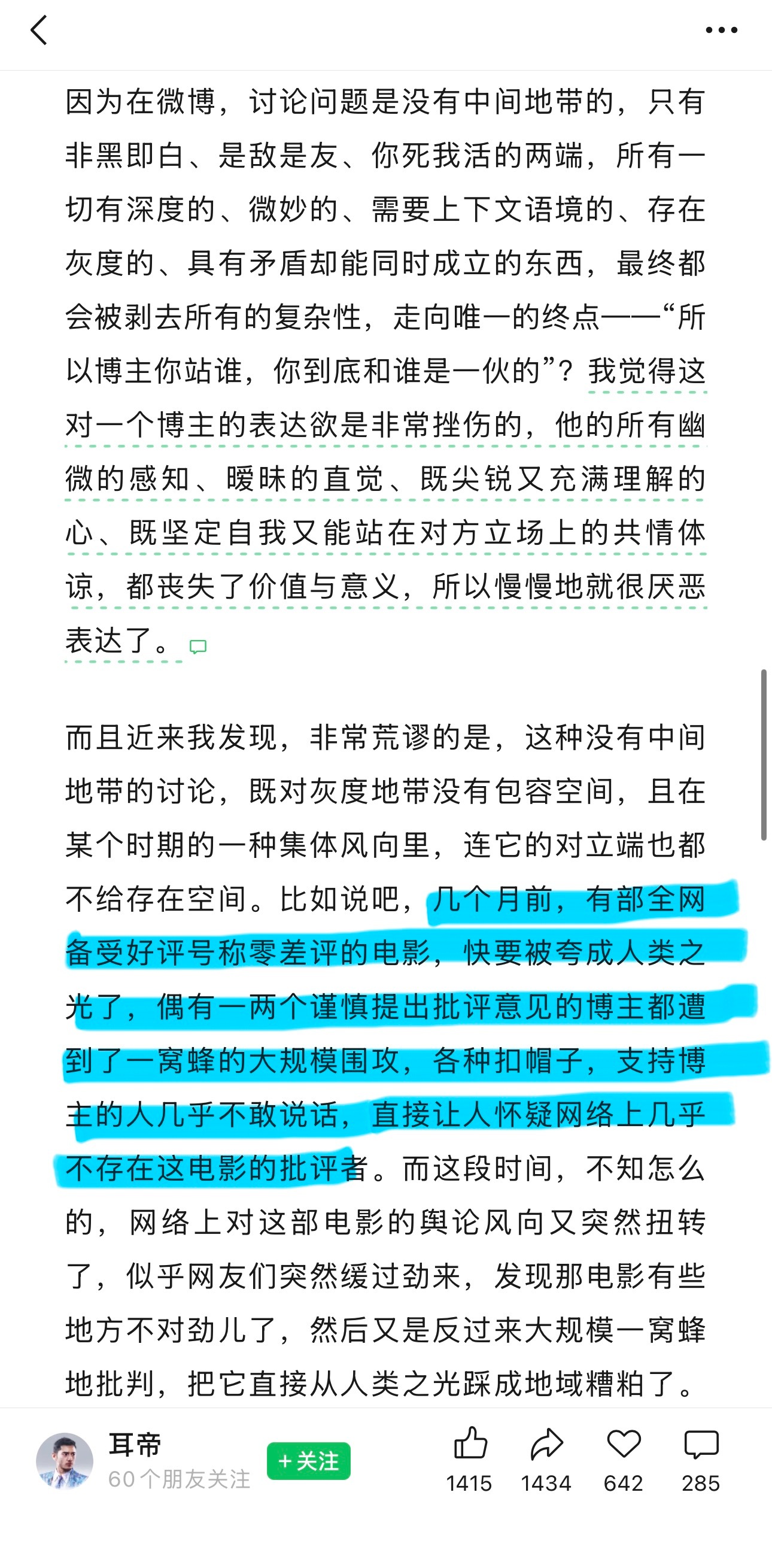
The May reception was close to unanimous. Culture blogger Erdi, in a screenshot that has circulated widely this week, recalled a film with "zero bad reviews across the whole internet" that was "almost hyped into the light of humanity" before being "stomped down to regional dregs" (地域糟粕) — a phrase that carries a double edge, since the film's Chaoshan setting is exactly what the new critics put on trial. A single fan post from June about finally catching the film, screened alongside a fellow fan, drew more than 100,000 likes; devotion of that scale was the film's early word of mouth.
The October criticism is specifically about gender. The post that reopened the argument, liked more than 20,000 times since October 28, holds that the film wraps "women's endurance, sacrifice and obedience to traditional gender norms" in the costume of a great female character — and that the only thing which changed since May is that criticism finally has room to breathe. "I don't think the people criticizing it now are piling on," its author, who posts as 泰美丽发大财, writes. "It was regional dregs to begin with." She dates her own doubts early: "In early May, when I saw men praising it in unison, I sensed something was off."
But "reversal" is not a word everyone accepts. A popular rejoinder refuses the premise altogether: "I never saw a reputation reversal — I saw certain people set up a topic and then stage a debate about it." In that reading, the flip is not a public coming-around but an artifact of how Weibo argues now, with hashtags functioning as verdicts that arrive pre-written.
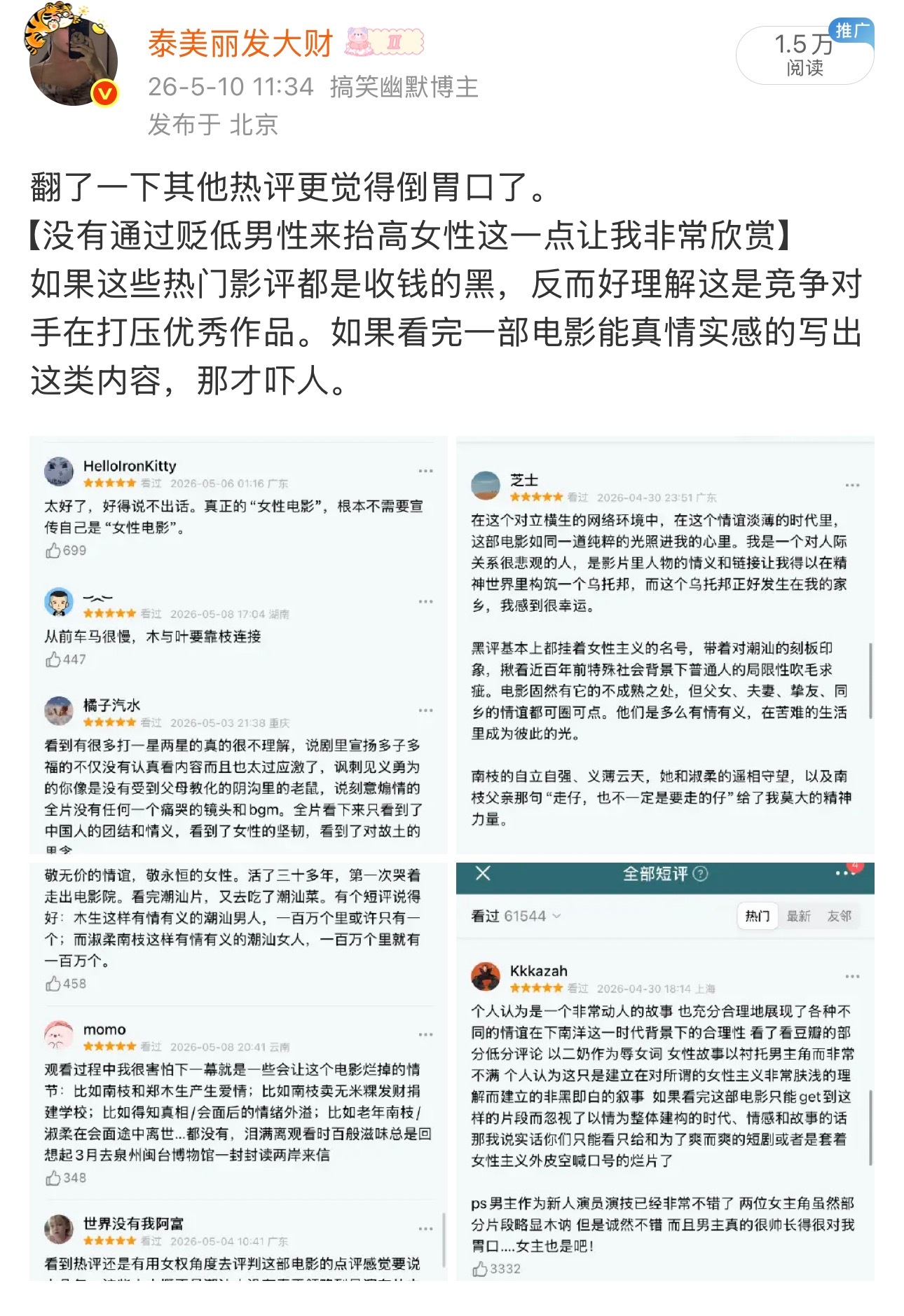
Screenshots attached to the main post show why trust in the earlier verdict eroded. One scrolls the film's "hot reviews" feed, where several of the gushing May-era entries carry a "promoted" tag — the platform's label for paid placement. Another embeds a resurfaced May 1 five-star review arguing that feminism should not be used to belittle women "constrained by the background of the times" — the exact tone of the praise that built the halo. The same author says in a separate post that she was once misled by a high Douban score on another film, and now checks who is reviewing before she buys a ticket.
What the hashtag is really testing is whether a verdict can be revised without looking like a mob. The institutions built for revision — Douban ratings, hot-review feeds, word-of-mouth trackers — now each carry a paid-placement tag, or the suspicion of one. The film's theatrical run is months behind it; the argument over whose review counts is not.