Seven Months After Calling Patriotism a Responsibility, Anta's Ex-CEO Moves to Los Angeles
Xu Yang, the former chief executive of sportswear giant Anta, has moved his family to Los Angeles months after telling an industry audience that patriotism "is a sentiment, and above all a responsibility." The contrast has reignited a Weibo debate about the nationalist marketing that built China's biggest sportswear brand.
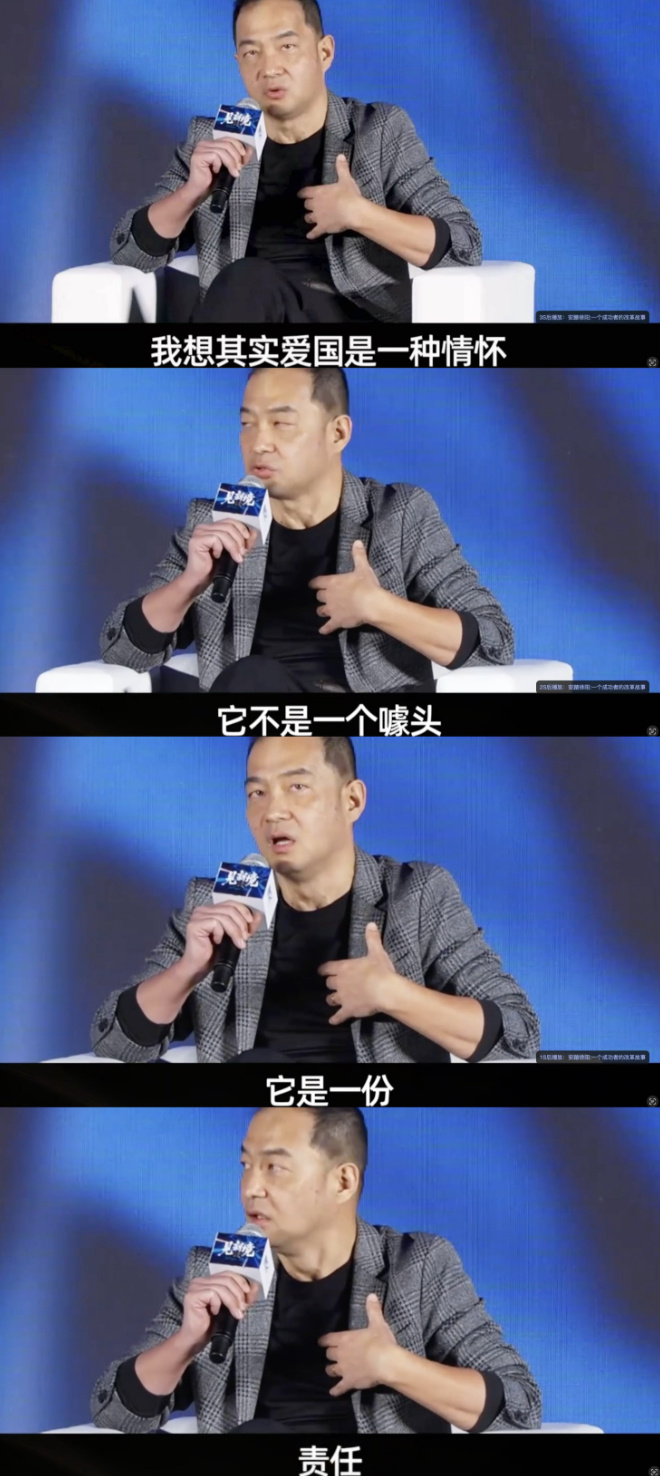
In January, Xu Yang stood before a sports-industry forum in China and delivered a sentence that quickly became a slogan. "Patriotism is not a marketing gimmick," he said. "It is a sentiment, and above all a responsibility" (爱国不是营销噱头,是一种情怀,更是一份责任). Seven months later, on August 18, an hour after a flight from Hong Kong to Los Angeles took off, he announced in a WeChat Moments post that he was stepping down from Anta and moving his family to the United States for a child's schooling.
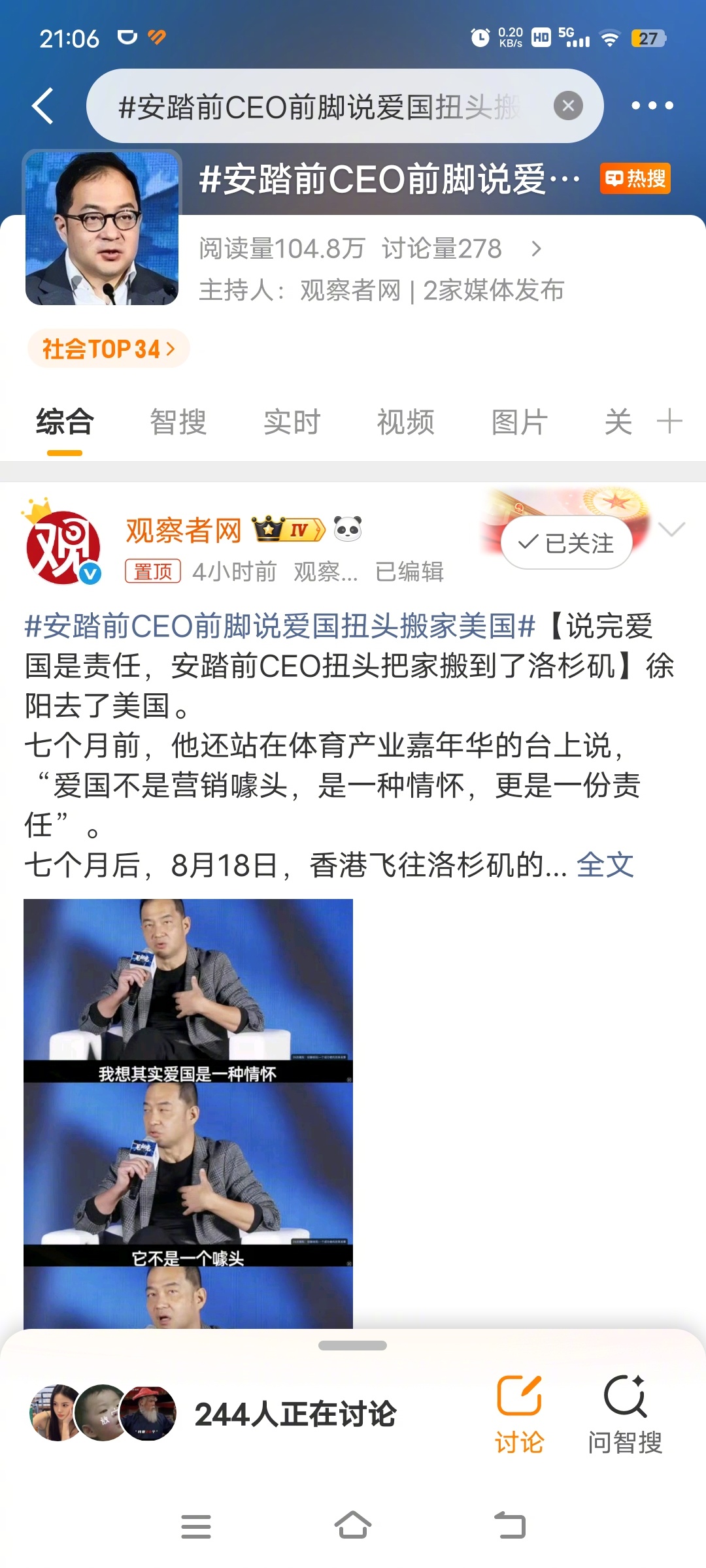
The two moments sit awkwardly together, and the Observer Network report that juxtaposed them drew a stream of Weibo comment. Xu wrote that he had left without arranging any farewells, because of "the guilt of betraying trust and the weakness I am unwilling to show." Whether that is contrition or self-awareness, the episode is more than a personal about-face: it pricks the main story Anta has told about itself for more than two decades.
The brand's rise is inseparable from a particular kind of national pride. It began as a small Jinjiang contract manufacturer before using a line delivered by the table-tennis champion Kong Linghui—"I choose, I like"—to become a household name on CCTV. From 2009 it replaced foreign labels as a partner of the Chinese Olympic Committee, putting its logo on podium moments and uniforms. After the 2021 Xinjiang cotton boycott pushed a wave of "support domestic brands" sentiment, Anta rode it to the top of China's sportswear market, at one point surpassing Nike China in revenue. Founder Ding Shizhong's stated ambition—"not China's Nike, but the world's Anta"—framed the company's growth as national accomplishment.
Xu Yang was one of the people who told that story. He joined Anta in 2006, led Greater China for Arc'teryx under Anta's umbrella, and became CEO of the main brand in 2023. The flag-print "champion" products and the Winter Olympic language around them belonged to his tenure.
The criticism now aimed at him is not that moving abroad is illegal—millions of Chinese professionals relocate for family reasons. It is that he built authority by speaking in a register of duty and country, then personally departed the bargain he was selling. That register is still powerful in China's consumer market, where a "domestic brand" is often sold not just as a product but as a form of loyalty. The episode raises the question of how long such appeals work when the people making them are seen as opting out.
The Weibo response was harsher than the facts alone would suggest, and it will fade. But the discomfort is structural: a company that makes patriotism a brand value has to live inside the expectations that value creates. Xu Yang's flight to Los Angeles took an hour to begin. The distance between a slogan and a life is sometimes harder to cover.