Shaoxing's 'Gourd Grandpa' Stops Waving to Tourists After Two Years of Viral Fame
Chen Jin'ao, 75, became a national attraction after a photo of the seven bottle gourds on his balcony spread online. On October 10 he hung a handwritten sign ending all interactions with visitors: 'From today, no more. Please understand. I love you.'

Visitors to the canal-side heritage quarter of Shaoxing known as the Calligraphy Sage's Hometown found a new sign on the morning of October 10, hung where the crowds usually gather. "From today, I am stopping interactions," it read. "Please understand. I love you, and we will always remember your love" (今起停止互动,敬请谅解,我爱你们). It was signed, with the date, "Gourd Grandpa, Chen Jin'ao."
The grandpa in question is a 75-year-old man who two years ago grew seven bottle gourds on the balcony of the old house where he and his wife live alone. A passerby's photograph of the balcony spread across Chinese platforms, and Chen became "Gourd Grandpa" — a nickname borrowed from the grandfather in "Calabash Brothers," the 1980s cartoon every Chinese millennial grew up with, in which an old man cultivates seven magical gourds that become boys with superpowers. The parallel was too neat to resist, and the real balcony became a destination.
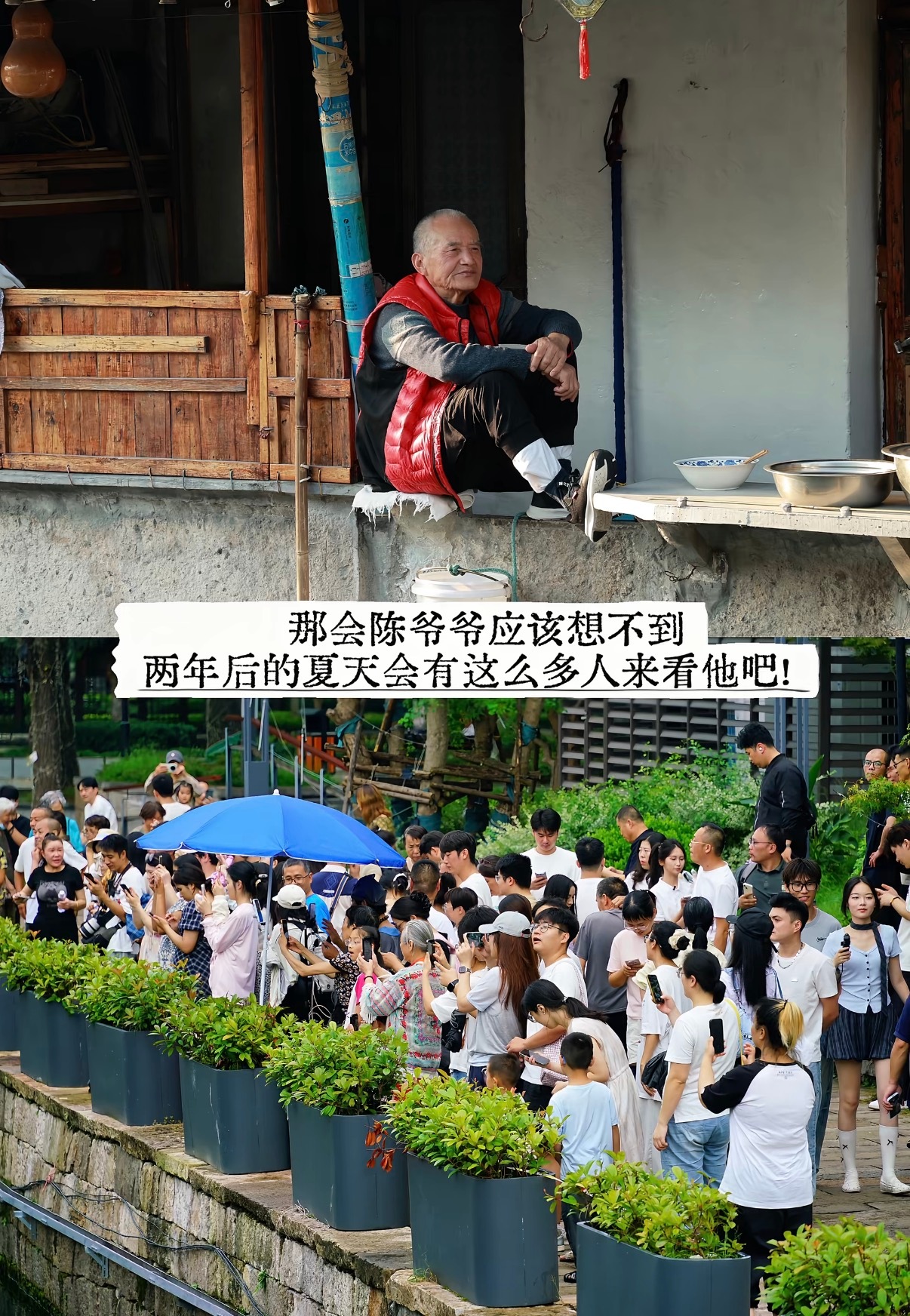
At first it worked like a small fable. The couple had lived quietly; now tourists waved to them from across the water, and Chen waved back, came out, and sang the Calabash Brothers theme song. Writers recapping the saga this week noted that the strangers' warmth had visibly eased the old man's loneliness — a lonely balcony, adopted by a city's affection.
Then the affection became a crowd, and the crowd became the problem. Visitors packed the lane, shouted up at the balcony and competed for his attention; livestreamers set up cameras and ran them for hours at a stretch. The noise, the recaps say, made Chen's wife unwell. On the night of September 5 the couple took the gourds down — a gesture that itself made news — citing the safety of the visitors and their own health. Six days later Chen rehung the seven gourds he had cut away, and the crowds returned with them. On October 10 he hung the sign.
The reaction this time, both on-site and under the trending topic, was mostly understanding. One visitor told local reporter outlet Xiaoxiang Morning Post that the couple had been "too quiet" before the fame, that people came meaning well, "but too much liveliness disrupts a normal life — it's a double-edged sword, there's no adjusting it to the perfect level, so it's understandable." Under the hashtag, the most common sentiment was a variation of "grandpa needs rest too" and "thanks for the joy he brought."
China's check-in tourism — 打卡, the practice of traveling to a spot for the photo rather than the place — and its livestream economy have made this a recurring national story: an ordinary person or thing becomes content, the content becomes crowds, and the crowds destroy the thing itself. Earlier this month, the same dynamic put a scenic-area pony in hospital with a broken spine, and prompted a national argument about what visitors owe the places they visit.
Chen's sign is gentler than most commentary about him. It does not close the lane or complain; it asks for understanding and signs off with love. Local reports said it was put up with the couple's health and visitors' safety in mind. Whether the waving ever resumes is not on any schedule but his — the sign, dated that morning, gives no date for a return.