Sixty Thousand Yuan a Night: China Reopens the Fight Over What a Mother's Rescue Costs
A viral account of an amniotic-fluid-embolism rescue — the deadliest obstetric emergency, billed at 60,000 yuan for one ICU night — has China arguing again about what a mother's life costs, and who in the family gets to decide.
The hashtag read like an itemized bill. A video post recounting one mother's rescue from amniotic-fluid embolism — a labour complication so lethal Chinese obstetricians call it the "obstetric grim reaper" (产科死神) — said the costliest single night in intensive care ran to 60,000 yuan, roughly US$8,500. Within hours the phrase "saving an amniotic-embolism patient takes a lot of money" was climbing the trending list, and under it China was having one of its periodic arguments about what a mother's life costs, and who in a family is expected to pay it.
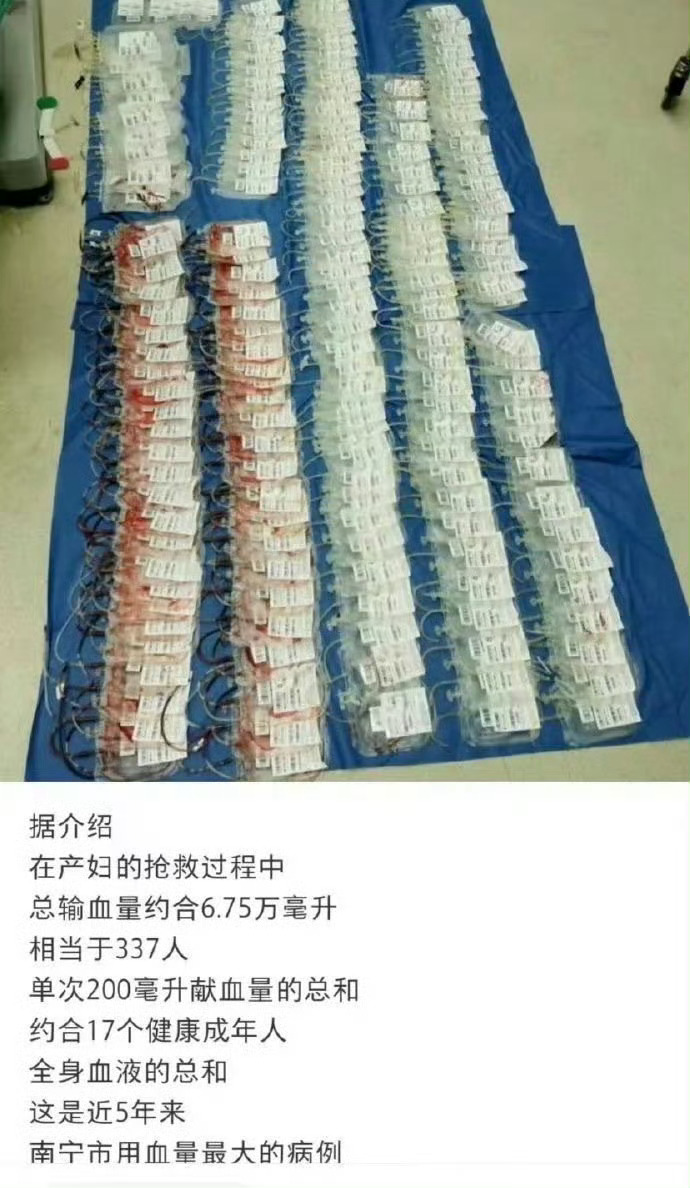
Amniotic-fluid embolism is rare and merciless: amniotic fluid enters the mother's bloodstream and triggers cascading heart failure, oxygen loss and multi-organ collapse. The doctor and Weibo personality Xu Chao put the incidence at 1.9 to 7.7 per 100,000 pregnancies, essentially unpredictable and with a high fatality rate — and illustrated his post with the photograph now circulating with it: dozens upon dozens of blood bags laid out on a blue sheet, the transfusion volume a single rescue can burn through.
What turned a medical explainer into a fight was a post liked more than 7,000 times quoting the argument already circulating in family group chats: that once the baby is delivered, "you can't spend the family's whole savings on saving the mother — think of the child's future." The poster's rebuttal — that couples accept childbirth's risks when they decide to have a child, and that nobody applies this arithmetic to any other patient — became the quotation of the day. And then the older case resurfaced beneath it: a 2023 post liked nearly 50,000 times describing two families who, after mothers died of amniotic-fluid embolism, demanded the wives' parents return the bride price. Its screenshots — one commenter asking a lawyer what law the grieving family had broken — still circulate whenever the topic trends.
That is why the debate lands harder here than a hospital-bill story would elsewhere. The rescue, doctors stress, is winnable: survival depends on minutes, massive transfusion and an ICU bill that can reach a Shanghai office worker's annual salary in a week. The argument underneath the hashtag is not about medicine but about the family ledger — whether a wife's survival is an expense her in-laws get a vote on, and why the question keeps getting asked at all. On Saturday's trending list, the doctors' posts and the bride-price screenshots sat a scroll apart, which may be the most precise picture of the debate China has produced yet.