Fight Poison With Poison: How China's Arsenic Protocol Became a Global Standard for Leukemia
A viral CCTV retrospective on China's acute promyelocytic leukemia research — including the 1986 case of a five-year-old girl, now 45 and healthy — has reminded Chinese social media that one of oncology's standard treatments was built in Shanghai from a compound better known as the poison in period dramas.
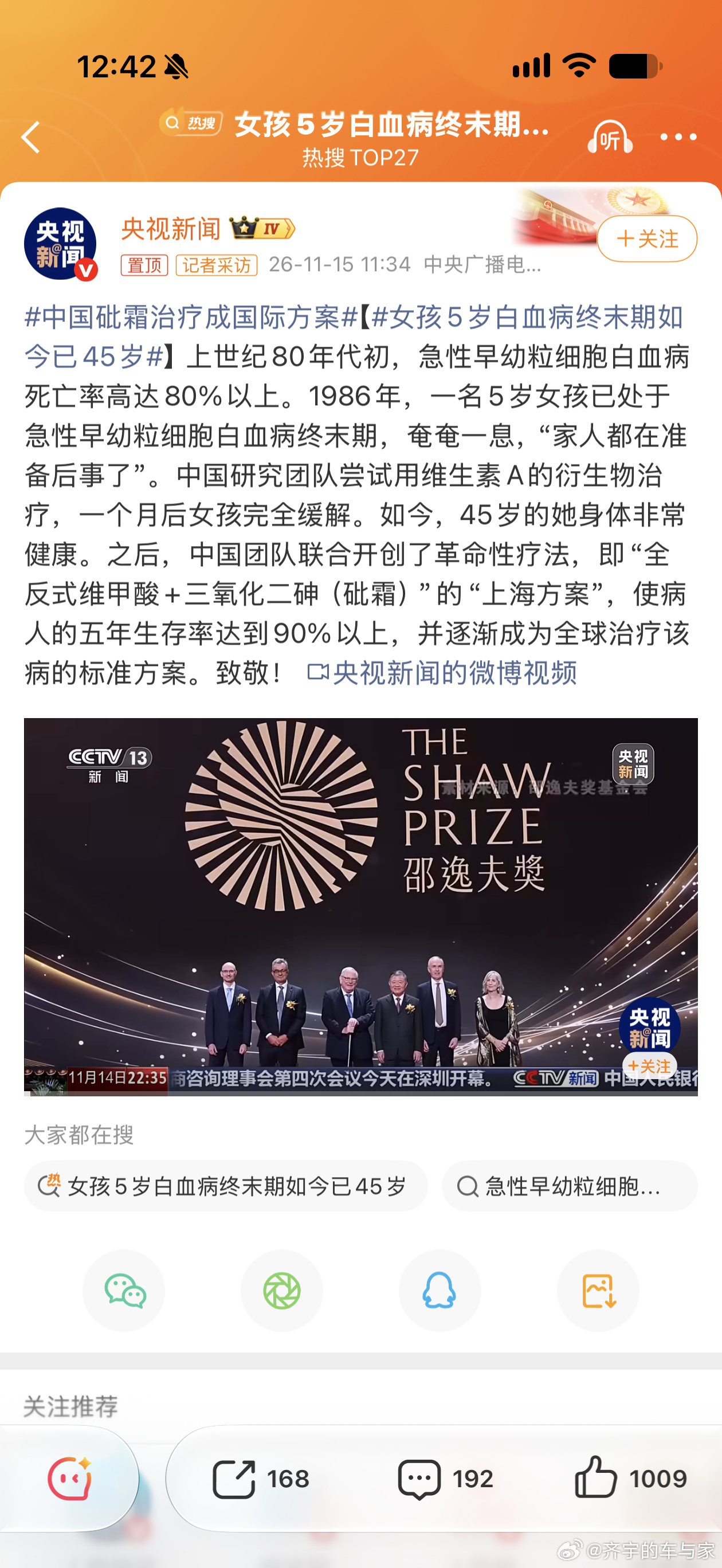
For one morning, the most discussed poison in China was not a scandal but a cure. A hashtag reading "China's arsenic treatment becomes an international protocol" (#中国砒霜治疗成国际方案#) sat near the top of Weibo on November 15, above a CCTV News retrospective on a leukemia therapy built from a compound most viewers knew only as the villain's tool in costume dramas: arsenic, or 砒霜. "I saw the topic and thought my eyes were playing tricks on me," one user wrote beneath the CCTV post. "Arsenic can actually rescue leukemia patients — the ancestors' 'fight poison with poison' was real all along."
The story behind the tag is one of Chinese medicine's most cited turnarounds. In the early 1980s, acute promyelocytic leukemia had a mortality rate above 80 percent. In 1986, a five-year-old girl arrived at a Shanghai hospital already in the disease's terminal stage, so close to death that, as CCTV put it, "the family was preparing funeral affairs." A team led by the physician Wang Zhenyi tried something unorthodox: not another round of chemotherapy but a derivative of vitamin A, all-trans retinoic acid. Within a month the girl was in complete remission. She is 45 now, and healthy.
The full "Shanghai protocol" combined that retinoid with arsenic trioxide — the refined pharmaceutical form of 砒霜 — to finish the malignant cells the vitamin derivative left behind. Five-year survival in the disease now exceeds 90 percent, CCTV's report noted, and the regimen has gradually become a global standard of care. A leukemia that was once among the fastest to kill is now among the most curable, and the two drugs that did it are a vitamin and a poison.
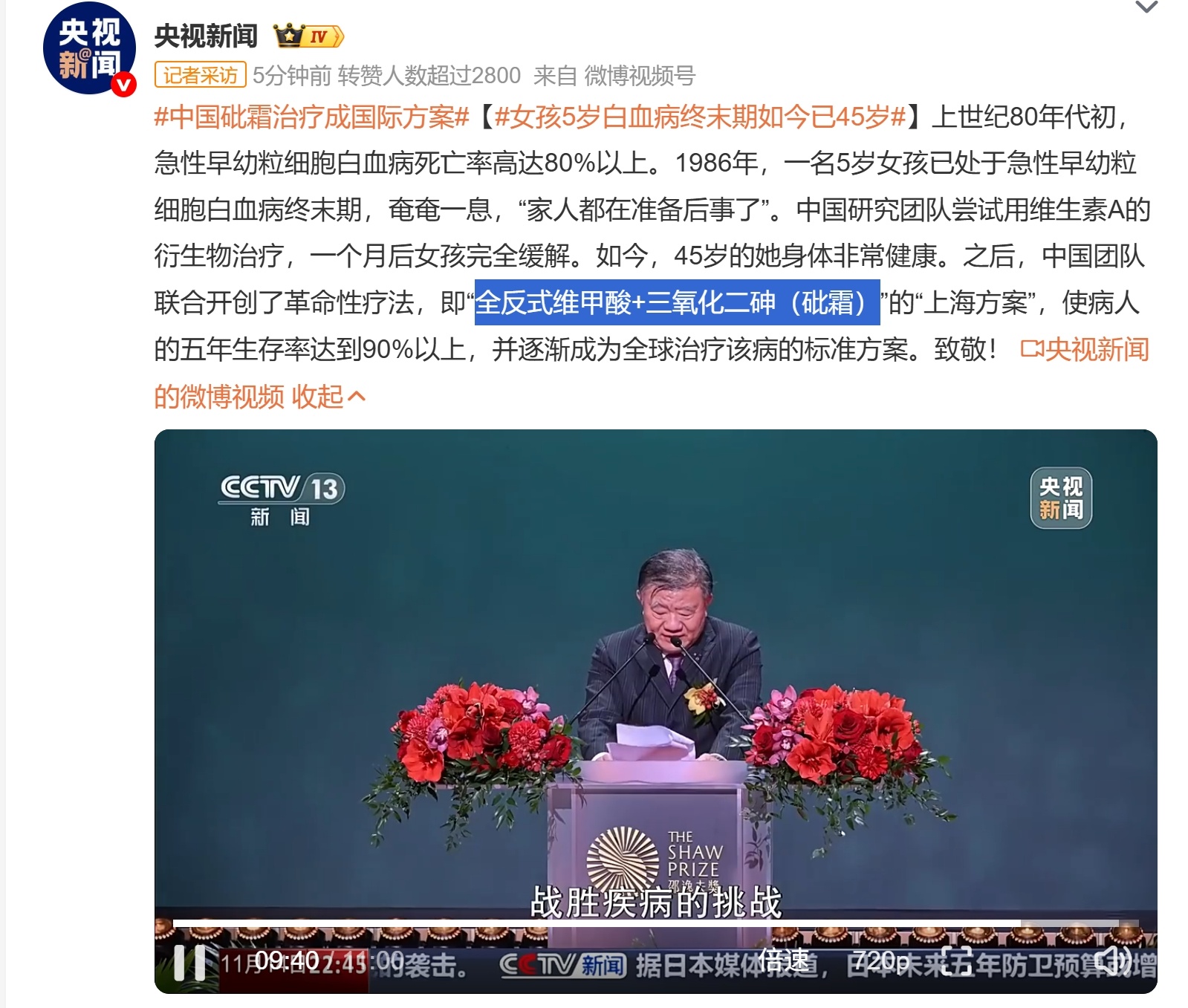
The reaction ran on the resonance the compound carries. "One man's honey is another man's arsenic" (汝之蜜糖,彼之砒霜) is a proverb about how the same thing can be a treasure or a poison depending on the hand that holds it, and one commenter declared the therapy that proverb "made concrete." Another posted about the old pharmacological logic of 以毒攻毒 — fighting poison with poison — noting with some astonishment that a folk phrase had ended up describing an internationally adopted treatment.
There is a quieter point under the pride, and it is the one worth carrying abroad: the protocol was not a moonshot but patient clinical work, assembled by Chinese teams on a disease too rare for most of the world's pharma industry to chase. The detail being reshared most is not the chemistry but the arithmetic — a child given up for dead in 1986 turned 45 this year, and by CCTV's account she is in perfect health.