China Tops the Asian Para Games Medal Table as Nagoya Games Close
China's 312 athletes collected 207 golds and 435 medals at the fifth Asian Para Games in Nagoya, setting 11 world records and 18 Asian records — and the closing coverage put the system, and the people, before the table.
The fifth Asian Para Games closed in Nagoya, Japan on Sunday, and the medal table was lopsided in the way it has been for two decades: China's 312 athletes collected 207 gold medals and 435 medals overall, setting 11 world records and 18 Asian records across seven days of competition against 3,000-plus athletes from 45 countries and regions (People's Daily's wrap of the Games).
The stories behind the numbers carried the coverage. The first Chinese gold of the Games went to Cui Zhe, a powerlifter in the women's 41-kilogram class, who smiled at the crowd before her first lift. The lift succeeded, and her story drew the profiles: a national champion at her first attempt in 2003, she was diagnosed with hyperthyroidism in 2006, a condition that would end most careers — and has been competing on medication for twenty years. Her smile before the winning lift, People's Daily's reporter noted, was its own answer to the question of what sport has given her.
The rest of the closing coverage ran on the same register: athletes who spent the Games craving a bowl of seafood noodles, another who arrived determined to break a world record, teammates who grew through finals together. That framing — medal counts as evidence of a system, with athletes as people — is the standard shape of Chinese para-sport coverage, and it is part of why the story is worth telling an international reader: China's para-sport system is a genuine institution, built since 1984, and Nagoya 2026 confirms it as the dominant force in Asian para-sport.
What an international reader might not expect is what the numbers describe. The Games closed on Sunday, and the medal table's lopsidedness is the visible surface of a system: a national para-sport administration that identifies athletes young, funds dedicated training centres, and stages national Games of its own — a pipeline no other country in Asia matches. The lopsidedness, in other words, is the least interesting part of the story, and the most honest way to read the closing coverage is as an institutional report card, not a triumphal one.
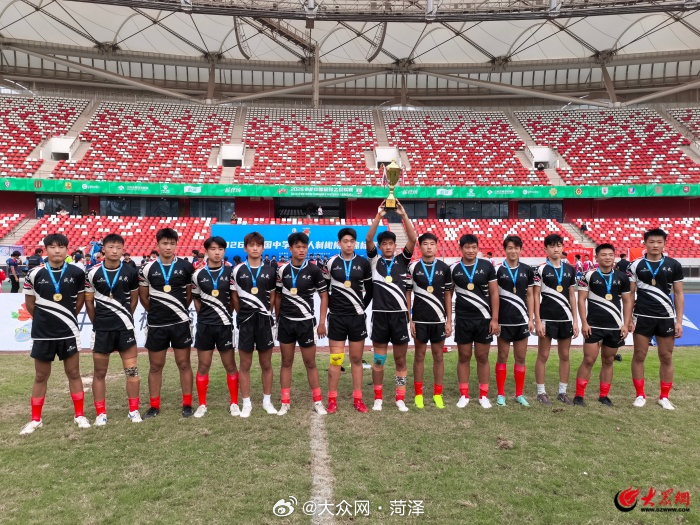
The Games also closed the week's other medal news: a county middle-school rugby team from Chengwu No. 1 Middle School in Heze, Shandong won the national middle-school sevens title in Zaozhuang, defeating 20 teams from across the country (Dazhong Net's report from the final) — a small story, but one that shows the same medal-and-training pipeline running at the school level.
The open question the Games leave: whether the pipeline that produces 207 golds also delivers for the athletes when competition ends — retirement support, employment, and healthcare for the para-athletes who leave the system. China's para-sport press is candid about this in the way it has been since 2008, and the Games' closing coverage is a snapshot of the system at its strongest: a system that works, for the athletes who make it work.