Broad-Based Rally Sweeps Chinese A‑Share Market as More Than 3,300 Stocks Climb】
Over 3,300 A‑share stocks rose on the Shanghai and Shenzhen exchanges this week, a surge that analysts say points to a broad‑based rally in China’s mainland market rather than a sector‑specific bounce. The phrase “A股逾3300只个股上涨” – literally “over 3,300 individual A‑share stocks rose” – has become shorthand for a wave of optimism that has swept through investors, brokers and fund managers alike.
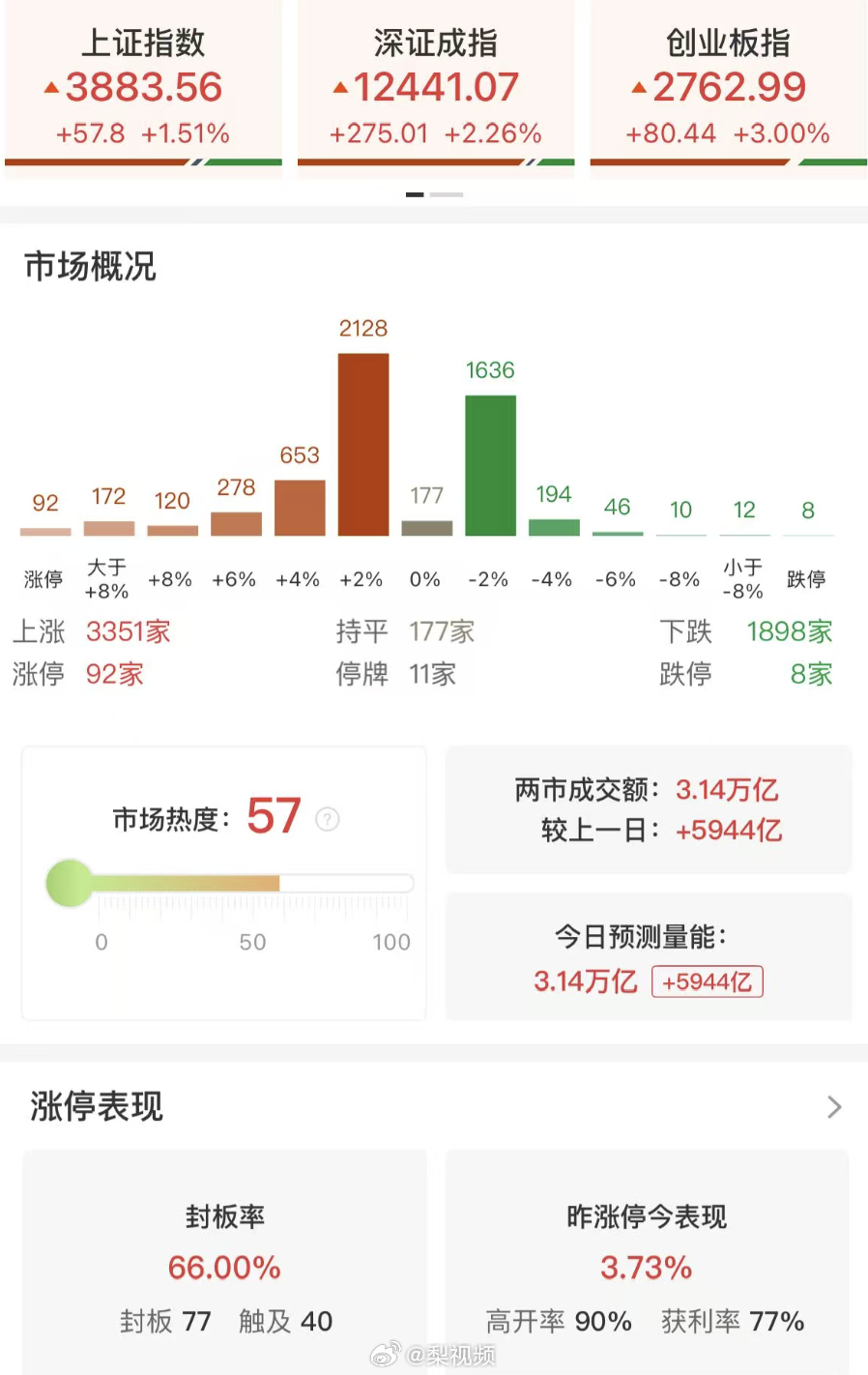
The latest uptick was recorded on August 25, 2025, when more than 90 stocks hit their daily price limits and computing‑power firms such as Zhongji Xuchuang reached all‑time highs. Rare‑earth and non‑ferrous metal companies, led by Northern Copper, also surged, adding to a basket of winners that stretched from beauty and personal‑care brands to innovative‑medicine firms. By the close of trading, the Shanghai Composite Index was up 1.45 percent, while the Shenzhen Component and ChiNext indices rose 2.07 percent and 3.36 percent respectively. Total turnover on both exchanges hit 2.55 trillion yuan, a clear sign that the market’s momentum is being fuelled by heavy trading activity.
The rally did not begin on a single day. A week earlier, on August 22, the Shanghai Composite breached the 3,800‑point mark and the STAR Market 50 Index surged past 1,200 points, posting an 8.59‑percent gain. Earlier in the month, on August 6, the main indices all closed higher, and more than 3,300 stocks turned positive as robotics, military‑technology and shipping stocks rallied in tandem. Even on August 5, when the Shanghai Composite was hovering at 3,602 points, the market’s breadth was evident: a handful of sectors posted modest gains while the overall sentiment remained bullish.
The pattern stretches back to the spring. On May 6, the A‑share market opened on a high note, with the Shanghai Composite up 0.72 percent and the ChiNext index climbing more than 2 percent. By mid‑morning, roughly 4,700 stocks were in the green, a figure echoed on the first trading day of May when the Shanghai Composite reclaimed the 3,300‑point threshold and nearly 4,900 stocks posted gains. The trading volume for that session topped 1.33 trillion yuan, underscoring the appetite of both institutional and retail investors.
Behind the numbers are the familiar players that shape China’s equity landscape. Major banks and fund companies have been quietly adjusting portfolios, while brokerage firms report a surge in new account openings, a sign that individual investors are eager to ride the wave. Fund managers, some of whom have spoken publicly about redemption pressures, are balancing inflows against the need to maintain diversified holdings. Exchanges themselves have provided the data that make these trends visible, and regulators have kept the market’s infrastructure steady, allowing the rally to unfold without major interruptions.
The sectors that have led the charge reveal a mix of traditional strength and emerging focus. Beauty and personal‑care stocks have benefited from a post‑pandemic consumer rebound, while precious‑metal companies have ridden higher commodity prices. The “football concept” stocks—companies linked to the sport’s growing commercial footprint in China—have also seen notable gains, as have firms in the innovative‑medicine arena, reflecting continued government encouragement of biotech development. Meanwhile, computing‑power and rare‑earth firms signal that China’s push for self‑sufficiency in high‑tech and strategic materials is translating into market enthusiasm.
The implications of such a widespread rally extend beyond the trading floor. A buoyant stock market can generate a “wealth effect,” where investors feel richer and may increase consumption, potentially giving a lift to the broader economy. Companies that see their market capitalisation rise can tap cheaper capital for expansion, which could translate into more hiring, higher research and development spending, and accelerated rollout of new technologies. In sectors that have been under pressure—such as traditional manufacturing or low‑margin consumer goods—a market upswing can provide the breathing room needed to restructure and innovate.
However, the benefits are unlikely to be evenly distributed. Wealth generated in equity markets tends to accrue to those who already own assets, a group that includes large institutional investors, affluent individuals and pension funds. As a result, the rally could exacerbate existing wealth gaps unless the gains filter through to broader segments of the population via higher wages or increased public investment. Moreover, the breadth of the rally does not guarantee that every sector will enjoy equal upside; some industries may ride the wave while others lag, potentially creating imbalances that regulators will need to monitor.
Politically, a strong market is a visible sign of economic stability and can be used by Beijing to showcase the success of recent policy measures aimed at stimulating growth. The government’s emphasis on high‑tech development, green transition and consumer‑driven recovery appears to be resonating with investors. Yet, policymakers remain wary. A rapid reversal—common in markets that have rallied sharply—could fuel public discontent and raise questions about the sustainability of current reforms. As such, authorities are likely to tread a careful line, using the rally’s momentum to reinforce confidence while keeping a watchful eye on credit growth and speculative excesses.
In sum, the recent surge of more than 3,300 rising A‑share stocks reflects a confluence of factors: robust investor sentiment, sectoral strengths in technology and consumer goods, supportive government policies, and a trading environment that encourages participation across the board. While the immediate outlook looks bright, analysts caution that the rally’s durability will depend on how well China can translate market enthusiasm into real‑economy growth, maintain equitable wealth distribution, and navigate any external shocks that could test the market’s resilience. The story of this rally is still unfolding, and its long‑term impact on China’s economy, society and political landscape will be watched closely by investors around the world.