200 Meters, 18 Overtakes: Chengdu Deploys AI Against Slow Drivers
Chengdu's traffic authority has turned an AI screening system on 'turtle-speed' drivers — cars crawling far below the flow, often because the driver is on the phone — after footage showed one sedan overtaken 18 times in 200 meters. Offenders face 100-yuan fines and three license points.
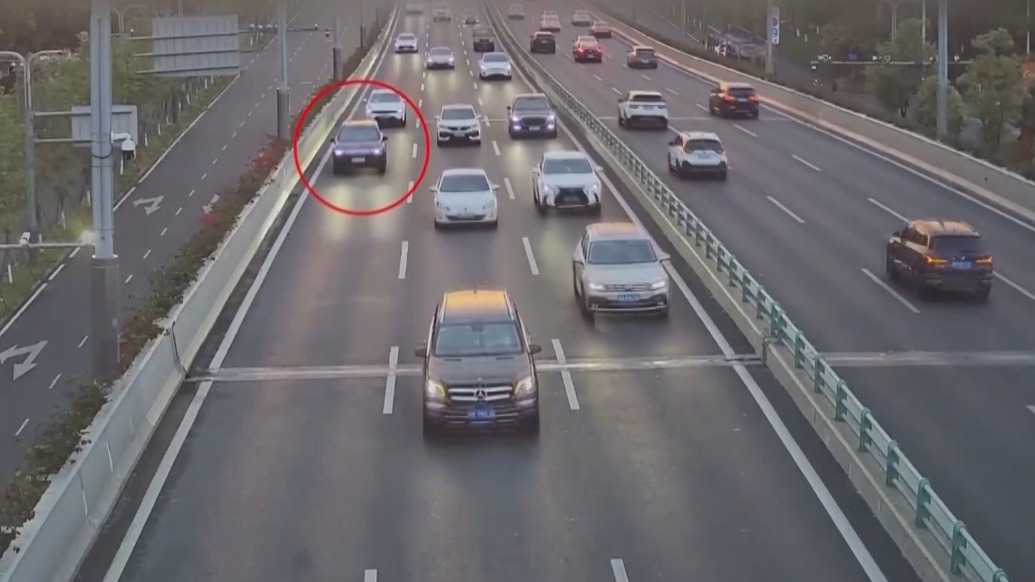
On a Chengdu expressway at three in the afternoon, a white sedan crawled along at 46 kilometers per hour — and was overtaken eighteen times in the space of 200 meters. Traffic police who pulled the surveillance footage found the driver had been on the phone the whole time, one of two slow-driving cases on the same stretch that ended the same way: a 100-yuan fine and three points off the offender's license.
The clip, aired by CCTV News, introduced a new enforcement target in the western city of 21 million: the "turtle-speed car" (龟速车), the driver who treats the fast lane as a personal cruise. Chengdu's traffic authority has deployed a smart screening system that automatically locks onto vehicles traveling well below the flow and nudges them along — reminders sent over multiple channels, plus a check of whether the driver was holding a phone at the wheel.
Why police care about slow driving is arithmetic, not aesthetics. Research cited by traffic authorities holds that every 10-kilometer slowdown in average speed cuts a road's carrying capacity by about 15 percent — a crawling car forces a chain of lane changes, braking, and honking behind it, and those are the merges where sideswipes happen. When slow driving turns lethal, the results are grim: CCTV's explainer recalled a Yunnan expressway accident from earlier this year in which a 23-kilometer-per-hour overloaded light truck became a moving roadblock, and a white sedan that could not avoid it crashed into it, killing the driver.
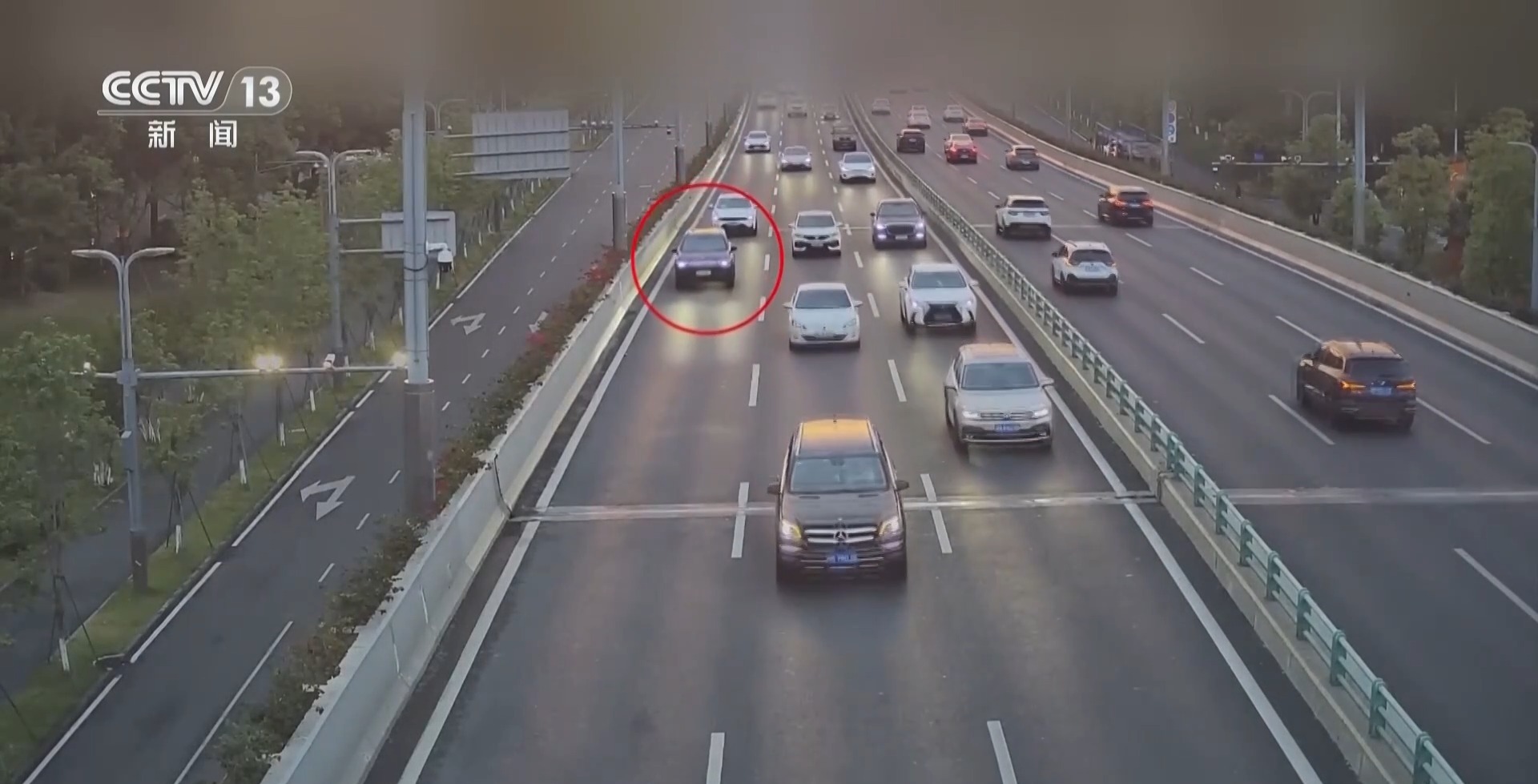
The reflexive belief being corrected — "the slower you drive, the safer you are" — is exactly what Chengdu's campaign is aimed at, and it is a familiar one anywhere speed limits are treated as moral minimums rather than flow management. Officers involved in the Chengdu cases have been blunt about the handling: officer Xu Haifeng told The Paper that after the footage was retraced, "we imposed the corresponding punishment on him — a 100-yuan fine and three points."
There is a second layer worth watching. The system does not merely detect slow cars; it cross-checks the driver's behavior, including phone use, automatically. That makes it part of a wider shift in how Chinese cities govern their roads — automated detection first, human adjudication after — the same logic that produced Beijing's red-light timers for delivery riders. The Chengdu version is gentler by design: a reminder before a penalty.
Whether turtle-speed screening spreads beyond Chengdu — CCTV's explainer noted that traffic police in a number of cities have begun adopting similar measures — will depend on what the fines do to the behavior. The eighteen-overtakes-in-200-meters statistic has already done the argumentative work on Weibo, where CCTV's posts drew thousands of likes from drivers who know the type well. For now, Chengdu has added one more machine to the roadside: one that watches not for speeders, but for anyone in too much of a hurry to keep up.