China Loosens Its Housing Fund Rules: Renovation, Rent and Property Fees Now Qualify
A sweeping revision of China's Housing Provident Fund Regulations took effect on September 20, expanding what the compulsory savings scheme can pay for from six scenarios to nine — renovation, property fees and easier rent withdrawals among them. It is the fund's biggest overhaul in years, and it signals how Beijing wants household money to move.
On September 20, a revised edition of China's Housing Provident Fund Regulations took effect, and with it the list of things the scheme's savings can legally pay for grew from six scenarios to nine. People's Daily marked the change as the regulation's most systematic adjustment since overhauls in 2002 and 2019, and its announcement was reposted almost a thousand times within hours. The fund, long caricatured on Chinese social media as money you can see but never touch, has just become considerably easier to spend.
The housing provident fund is an institution hundreds of millions of Chinese live inside but outsiders rarely notice. Created in the 1990s as the country privatized its cities, it takes a fixed slice of every participating urban employee's salary, matched by the employer, and parks it in a dedicated account. For most of its history that account could, in practice, be emptied for exactly one purpose: buying an apartment. Renters could tap it only in narrow cases, and everyday housing costs were out of bounds. That design fit the boom decades, when property was the main engine of household wealth. It fits far less well now that the market has cooled and household budgets are strained.
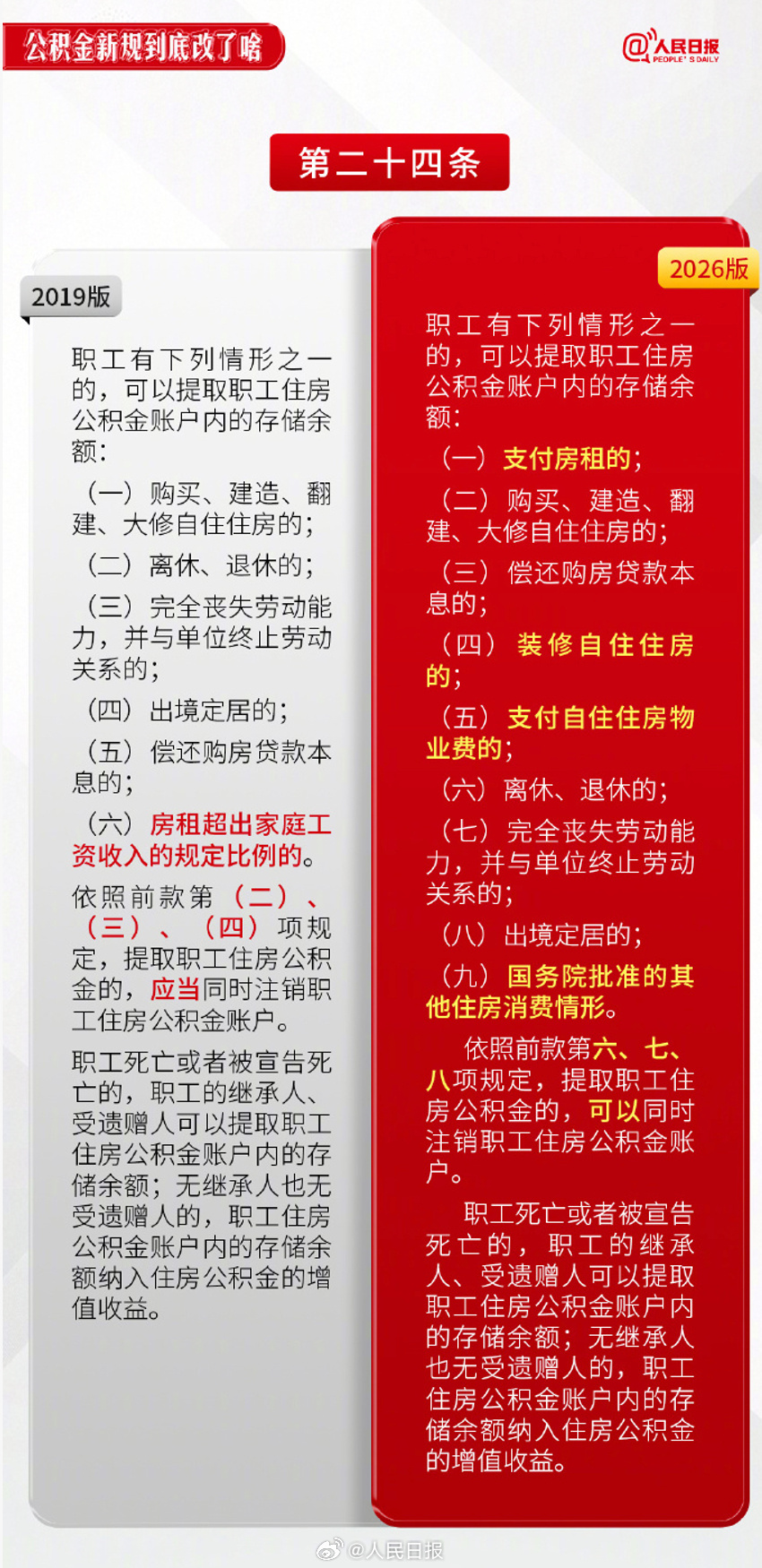
The new rules answer some of that. Withdrawal is opened up to cover renovation of a self-occupied home and property-management fees, while renters no longer face an income test to draw on their balance. People in gig and flexible work, who were long excluded, may now contribute voluntarily and gain access to the scheme's below-market housing loans. Commentaries circulating as the rules took effect also noted the plumbing has speeded up: withdrawal applications are to be decided within three days, loan approvals cut to ten, and balances recognized across provinces. A People's Daily graphic comparing the old and new rules shows the 2026 column listing renovation and property fees where the 2019 version did not.
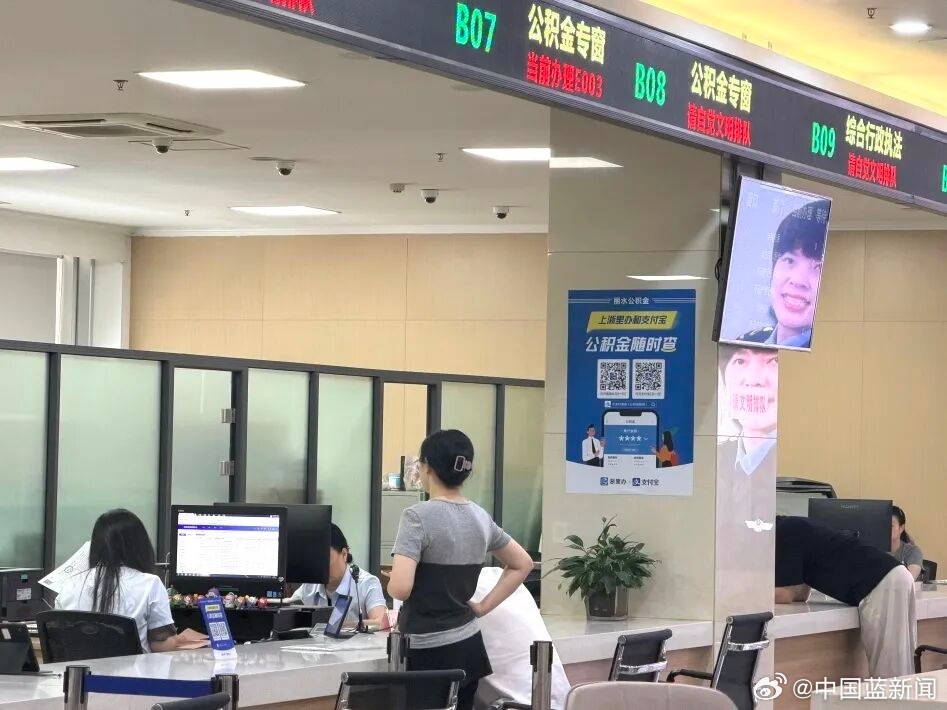
Some provinces got there first. China Blue News reported that several Zhejiang cities had already been piloting renovation withdrawals ahead of the national change: Lishui lets owners of homes held for at least ten years withdraw up to 2,000 yuan per square metre of actual renovation cost, while Shaoxing applies the same per-square-metre standard with a 250,000-yuan ceiling per home, one home per family. The national regulation now gives such schemes a uniform legal basis.
The reaction online has been less "finally" than "what else". Auto commentator Zhao Pu welcomed the three additions — rent, renovation, property fees — then asked when a car or a parking space might qualify. On Baidu, where the topic sat fourth on the day's board, the framing was similar: the fund is being reframed as "anju qian", settling-in money rather than house-buying money.
The revision also leaves a door open. Posts tracking the change note a catch-all clause that could extend withdrawals to things like elevator installation and aging-friendly refits in older buildings. City-level implementation rules are still being issued, and until they land, savers' real question — how much they can actually take out, and when — remains a local one.