Porsche Cuts the Cayenne by 300,000 Yuan in China as Domestic EVs Close In
A dealership poster for the Porsche Cayenne in China now carries a limited-time price of 618,000 yuan against a 918,000 guide price — a 300,000-yuan discount on one of the country's status-symbol cars, as Chinese premium electric SUVs rewrite what wealthy buyers expect.
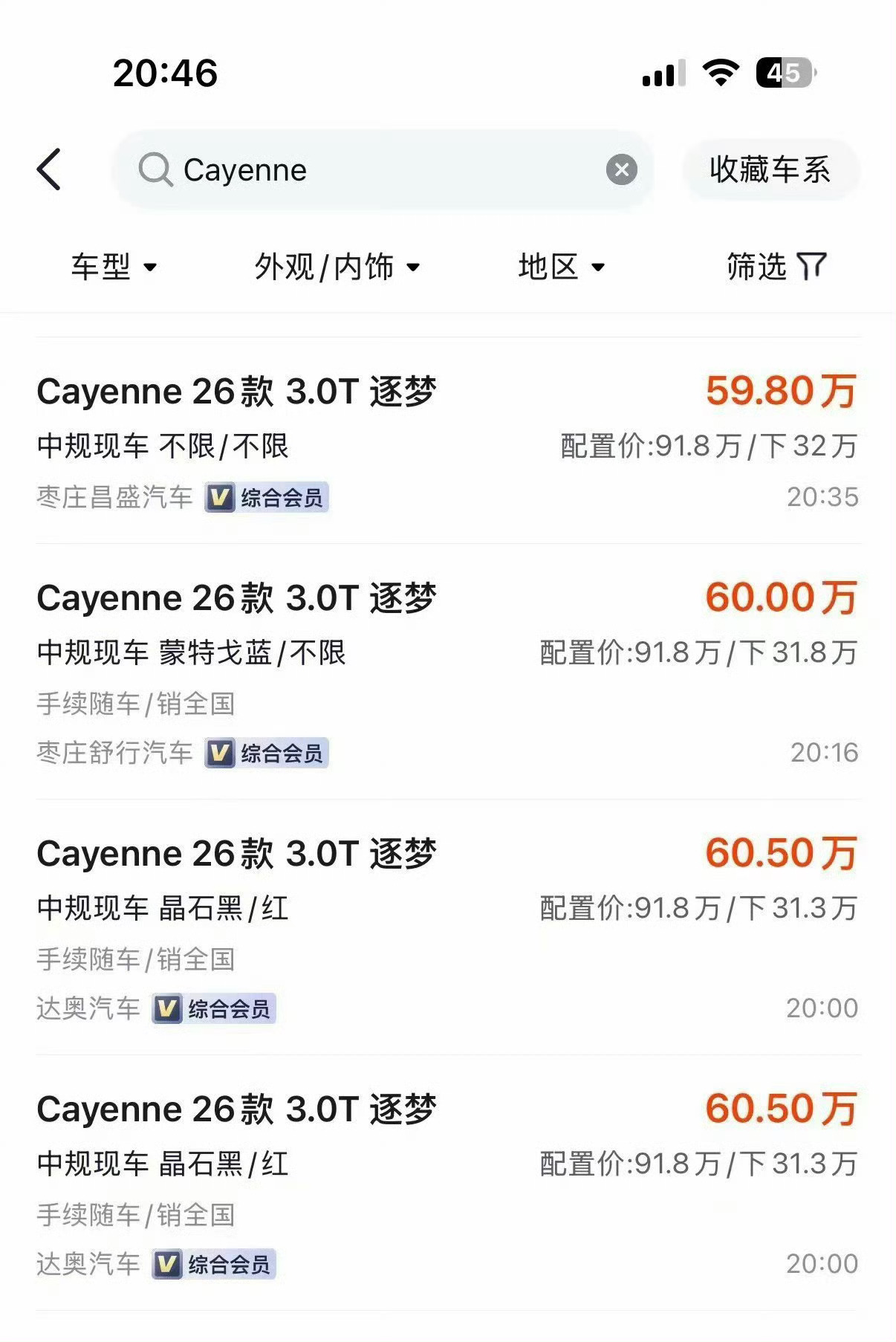
The arithmetic that trended on Weibo this week was stark: a Porsche Cayenne, discounted by 300,000 yuan, still costs 610,000. Auto commentator Han Lu's post — "the Cayenne is down 300,000. But then you look, and it's still 610,000…" — captured both ends of the surprise, and dealership material circulating with it made the numbers concrete. A promotional sheet for the 2026 Cayenne 3.0T listed the guide price at 918,000 yuan against a "limited-time special price" of 618,000, with five-year low-interest financing underneath; screenshots from a car-listing app showed dealers advertising the same model between 598,000 and 605,000 yuan.
To an outside reader the sums may read as ordinary luxury-discounting. In China's car market they mark a turning point. The Cayenne has spent two decades as one of the country's most reliable status signals — the SUV of choice for the newly rich in second-tier cities, a car that for most of that period sold at or above its sticker price, discounts being unthinkable. A third off, on a base-engine model, would until recently have been unthinkable for the brand.
The cause Chinese commenters point to is parked outside the showroom. The domestic premium market has filled with large, technologically aggressive electric SUVs — the AITO M9 developed with Huawei and the Li Auto L9 were the names one post singled out — that undercut German rivals on price while beating them on the features Chinese buyers weigh most heavily: driver-assistance software, cabin screens, rear-seat theatre. That post described the discount as a luxury brand's "underlying logic being quietly loosened" — Porsche no longer asking buyers to tense up before the badge, but conceding ground to keep a hand on the market.
The discounting is also a portrait of a market mid-squeeze. Imports of German luxury cars have slid for several years as Chinese buyers — younger than their European counterparts and unconcerned by old-world pedigree — redirect spending toward domestic brands whose flagships update software monthly rather than every model cycle. Porsche's own sales in China have been falling in recent years even as the company's global volumes held, a divergence industry watchers attribute above all to the domestic premium-EV surge.
What happens at 610,000 yuan is the open question. A six-figure discount protects volume in the short run and accelerates the erosion of the price umbrella that made imported luxury profitable — buyers who paid 900,000 for last year's Cayenne are, as the replies to Han Lu's post noted, now owners of a depreciated asset. For an international reader the datapoint is easiest to read this way: the price of a German badge in China is no longer set in Stuttgart, but by whatever a Shenzhen or Hefei assembly line can put on the road for less.