China's Internet Regulator Names 30 Apps Over Personal Data Violations
The Cyberspace Administration of China has named 30 apps — mostly small utility software, from a study-recitation tool to a farm-plot GPS calculator — for collecting personal information improperly, ordering fixes within fifteen working days under a three-agency privacy campaign.
China's internet regulator has named 30 apps for mishandling personal information — and the list says as much about how data enforcement now works as any single violation on it.
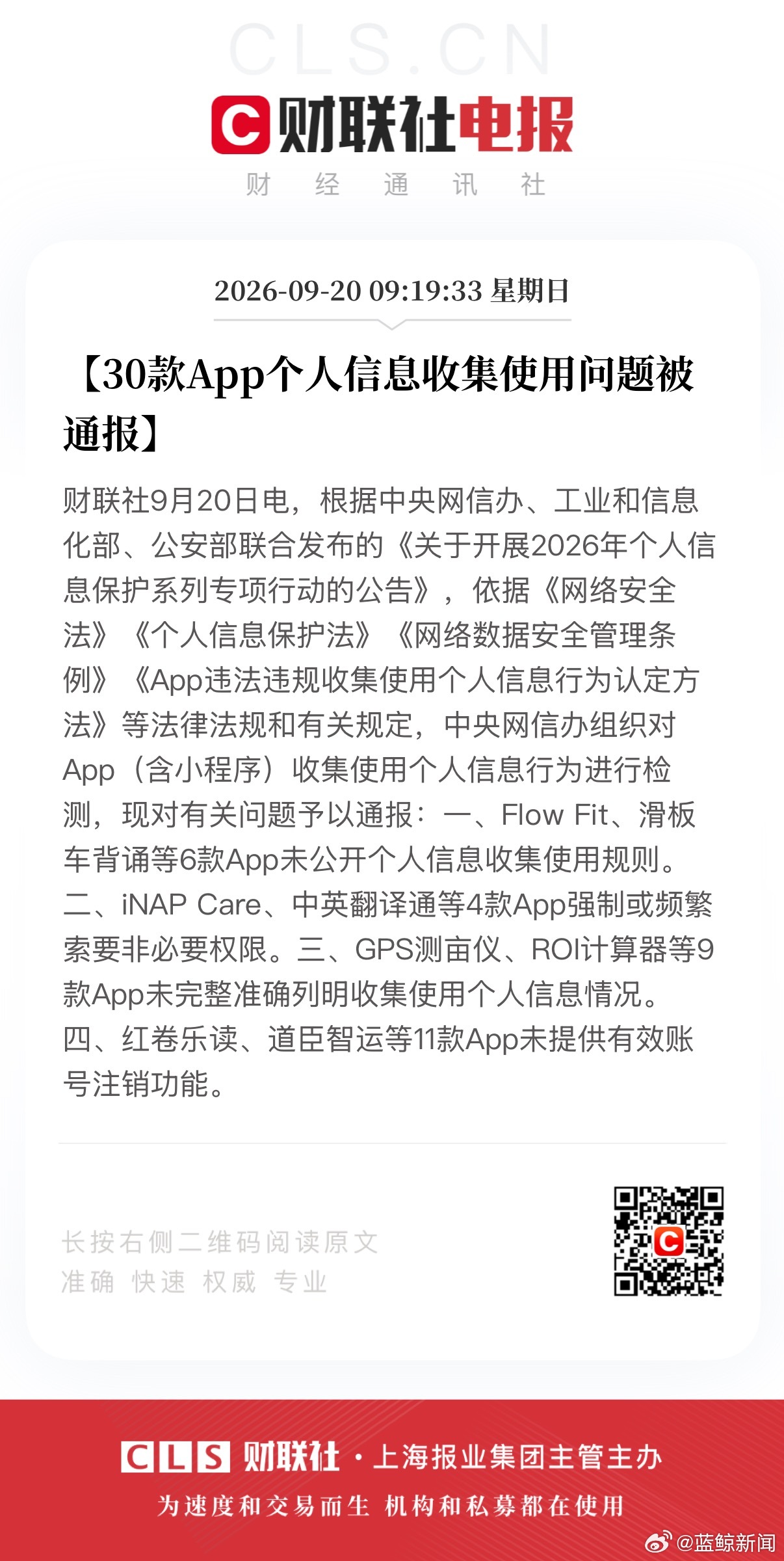
The notice, issued Sunday by the Cyberspace Administration of China under a personal-information protection campaign run jointly with the Ministry of Industry and Information Technology and the Ministry of Public Security, groups the offenders into four buckets. Six apps, among them Flow Fit and the recitation-study tool Huabanche Beisong, never published rules explaining what data they collect. Four, among them a Chinese–English translation app and the health service iNAP Care, demanded permissions they did not need, repeatedly or as a condition of use. Nine — a GPS tool for measuring farm plots and an ROI calculator among them — listed their data practices incompletely or inaccurately. The largest group, eleven apps including the reading service Hongjuan Ledu, gave users no working way to delete an account. All thirty were given fifteen working days to fix the problems, under the Personal Information Protection Law, the Cybersecurity Law and the Network Data Security Management Regulations.
Read the names and the story becomes clearer. Almost none of the thirty is a famous consumer platform; they are the long tail of Chinese app stores — utility software, niche readers, regional logistics tools — that a user would never think to audit and could not audit if they tried. The campaign that produced this notice has spent the past two years working up from the giants, and a translator app that quietly demands a permission it does not need is exactly the everyday case the law was written for. On Weibo, where the topic trended for part of the morning, the reaction was a shrug rather than an outcry — one tech blogger summed up the mood of the named-and-unbothered with "good thing I never downloaded a single one."
The bigger outlets treated the notice as routine but significant: CCTV News carried it twice on its site, and Yicai, the business daily, flashed the full breakdown within the hour. That routine quality is itself the story. Users who spent last week suspecting that WeChat's built-in AI was reading their chats — an accusation the company faced down without quite dispelling — are being shown that the machinery of app oversight does run, on a schedule, in public, even when the apps involved are small.
The fifteen-working-day clock is now running. What to watch is what happens when it expires: whether the follow-up names app-store removals, and which category of violation the next batch of notices goes after.