China Moves to Make Carmakers Liable When Self-Driving Cars Break Traffic Law
A draft amendment to China's Road Traffic Safety Law would hold manufacturers and importers responsible for traffic violations committed in autonomous mode, a shift with big implications for blame, insurance, and China's robotaxi rollout.
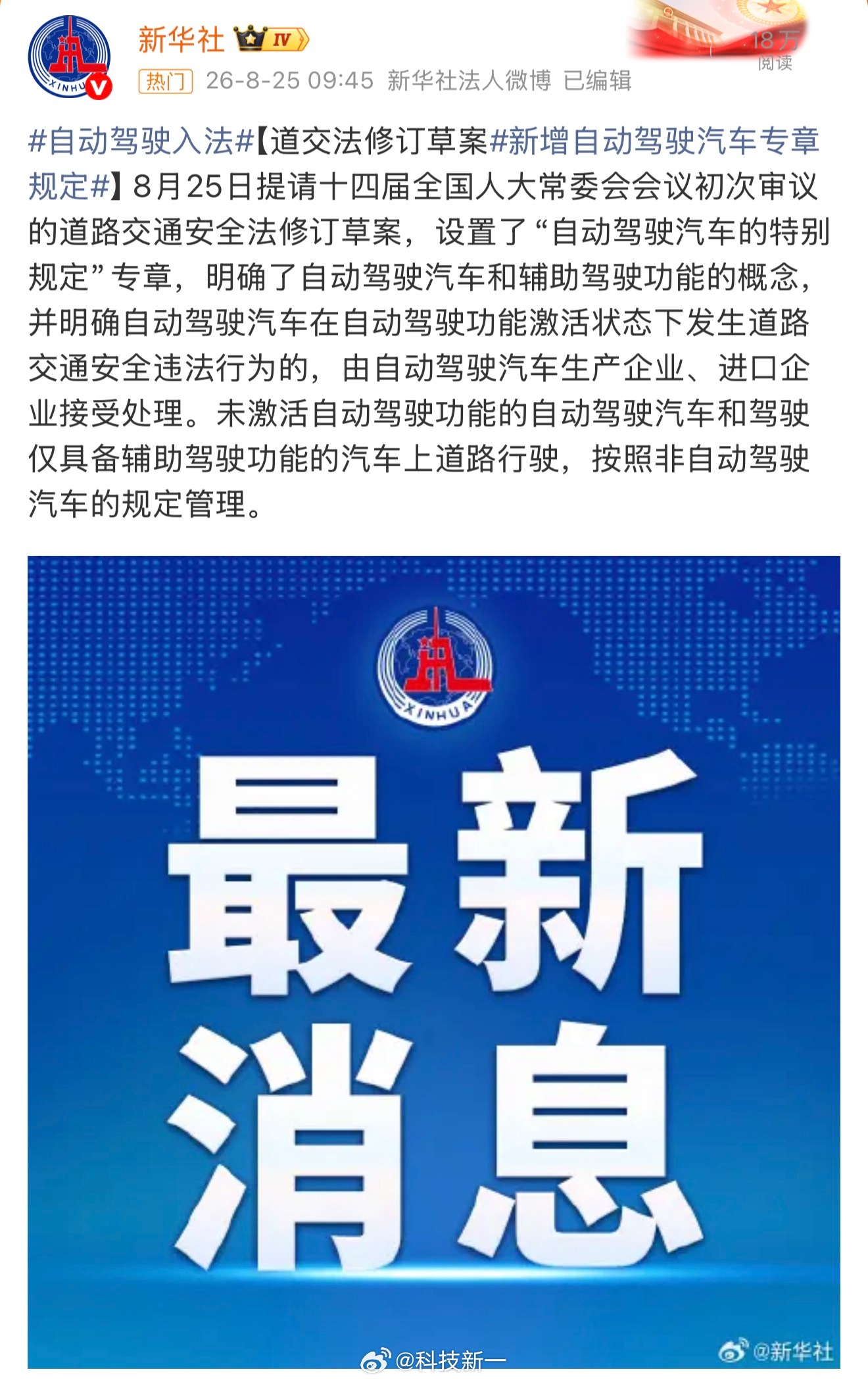
Under a draft rule reviewed by China's top legislature on Monday, the company that builds a self-driving car — not the driver behind the wheel, and not the software supplier — would answer for its traffic violations.
The proposal, an amendment to the Road Traffic Safety Law that entered another round of deliberation on August 25, would add a chapter defining autonomous vehicles and assisted-driving functions. Its central change is stark: when a violation happens while the autonomous system is actually in control, the manufacturer or importer must accept the handling of the case. The same car, driven with the function switched off, falls back under ordinary rules for human drivers.
The change was instantly parsed on Weibo, where practical questions followed the legal ones. One user spelled out the puzzle ahead: if the car commits the "driver's" infraction, who loses the points on the license? Points in China's driver-license system attach to a human operator, a model the new framework will have to reinvent. Another commenter translated the policy for non-regulation readers: in a Huawei-backed Aito car, the vehicle maker would take the hit, not the smart-driving unit that wrote the code. Auto blogger Han Lu, for his part, pointed to the gap between machinery and statute — the cars may be capable years before the law is ready, and maker liability is the bridge that lets the technology keep rolling.
The draft is the clearest sign yet that China is moving from treating advanced driving aids as gadgets to treating them as a liability regime — and it lands while Chinese cities are pushing high-level assisted driving and robotaxi trials as the legal ground firms up under them. Currently the human driver has tended to bear the consequences of any crash, a mismatch that has grown more awkward as "hands-off" systems inch toward real autonomy.
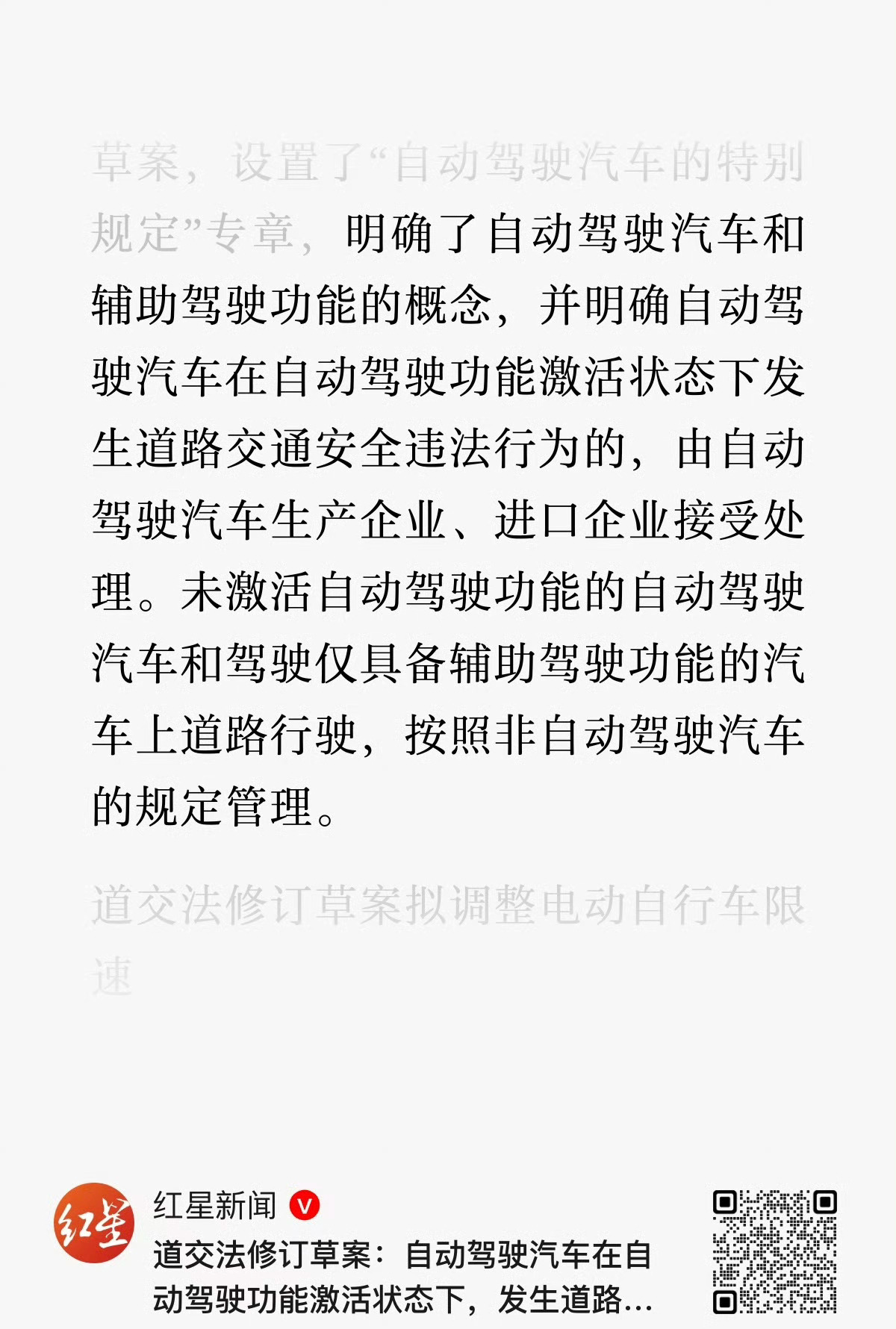
For regulators, putting fault on manufacturers is also a way to concentrate accountability. A driver who unknowingly trusts a flawed system is a weak enforcement target; the carmaker, with deep pockets and engineering data, is not. What remains unsettled is how the rule will interact with real-world accidents — what evidence counts, whether a maker can limit its exposure, and how insurance adapts when there is no human at fault at all. The answer matters to Chinese drivers now, which is why the subject has already climbed to the top of search lists on both Weibo and Baidu.