Oxytocin Instead of Progesterone: A Shanxi Pharmacy's Near-Miss Reopens China's Hospital Safety Debate
A Shanxi hospital handed a pregnant woman a labour-inducing drug instead of her pregnancy-supporting injection; she caught it at the window. The near-miss has reopened China's debate on pharmacy checks at county hospitals.
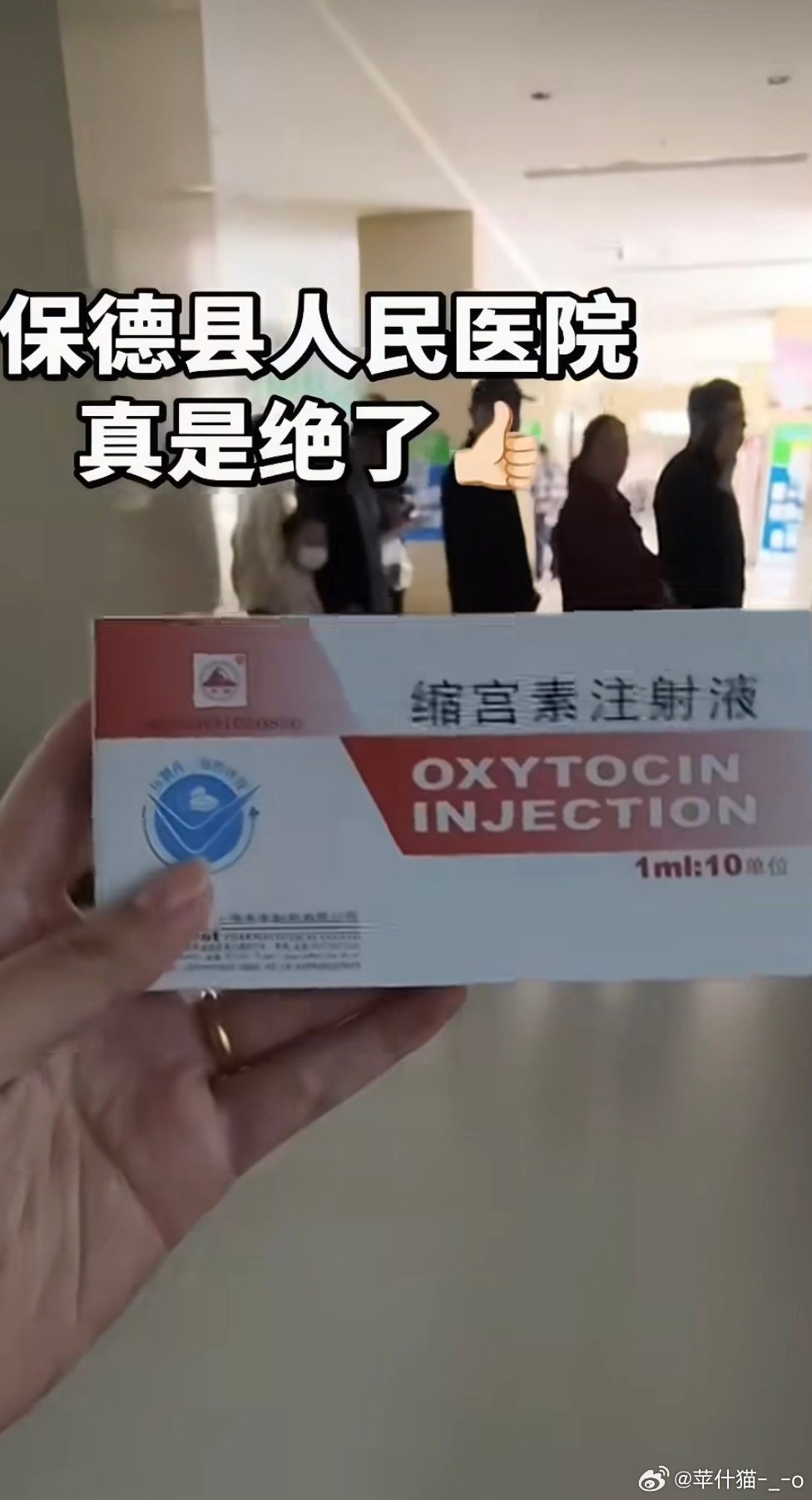
A pregnant woman in northern China picked up a prescription this week that should have protected her pregnancy — and found, in the bag, the drug that could end it. The case, at Baode County People's Hospital in Xinzhou, Shanxi, unfolded on October 5 and became national news four days later under a topic translating as "Hospital issues labour-inducing drug instead of pregnancy-preserving one" (山西一医院保胎药错发成引产药).
Her doctor had prescribed an injection of progesterone, the standard treatment to steady a threatened pregnancy. The pharmacy window handed over oxytocin instead — a drug that does the opposite work: it makes the uterus contract, and it is used to induce or augment labour. In the wrong patient, obstetricians note, it can trigger miscarriage. The patient noticed the label at the window, walked back, and exchanged it for the right drug; the other patient whose oxytocin it was, the hospital says, was never affected.
The hospital's account, given to the Straits-based Haixia Metropolitan Daily on Friday, is a story of one crowded window: with many people waiting to collect prescriptions, the worker handed the woman the bag prepared for another patient. On Friday morning the worker was suspended pending investigation and required to submit a written self-criticism; by the afternoon the hospital board had met and ordered a discipline overhaul of the pharmacy department.
The speed of the response — four days from video to suspension — tracks the pace at which such cases now travel on Chinese social media, but it has not settled the argument the case restarted. Chinese hospitals nominally run prescriptions through layered checks, and commenters went straight at the failure of the last one: the pharmacy is "the final line of defence for a patient's medication," as one post put it, "and the process absolutely cannot be this careless." Another, more abrasive: "A 'mix-up in the rush' is no exoneration" (一句"忙中出错"根本不足以洗白).
The case landed while Chinese social media was still digesting a fatal one. Only days earlier, a groom in Guizhou died after a hospital treated his sore throat with an IV drip on his wedding morning — a case this site covered here. Readers drawing the line between the two are less interested in the individual workers than in the pattern: county-level hospitals, where frontline staff are thin and the checking culture is weakest, keep supplying the country's medical-safety scares.
For Baode County the outcome was the rare best case: the error caught at the counter, no harm done, a worker suspended, a department under orders. What remains open is the question the commenters keep pressing — whether the fix is one worker's self-criticism or the staffing and double-check discipline at windows like the one in Xinzhou, which this week was simply too busy to read a label.