China's Table Tennis Association Will Ban Abusive Fans From Its Arenas
After a week in which fans heckled a national coach mid-tournament and harassed players online, the Chinese Table Tennis Association has announced a stadium ban list and police reports against extreme fans — its most concrete step yet against the 'fan circle' culture engulfing China's national sport.
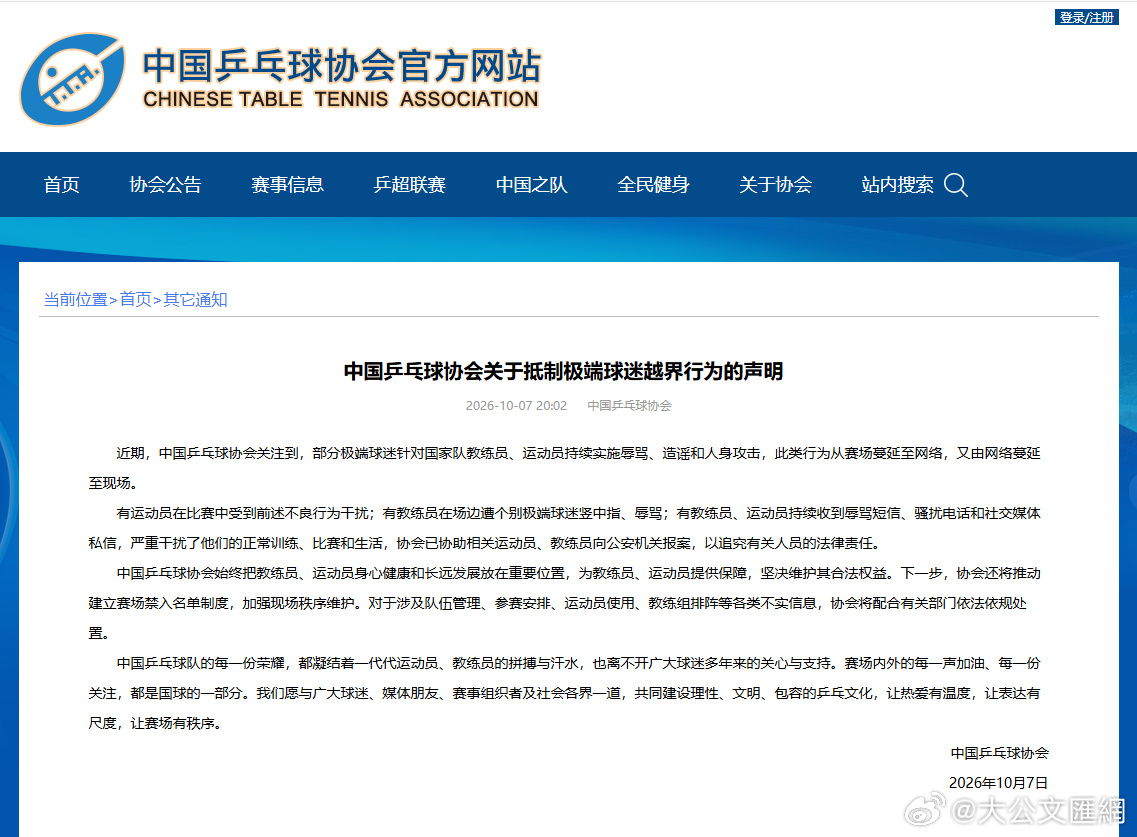
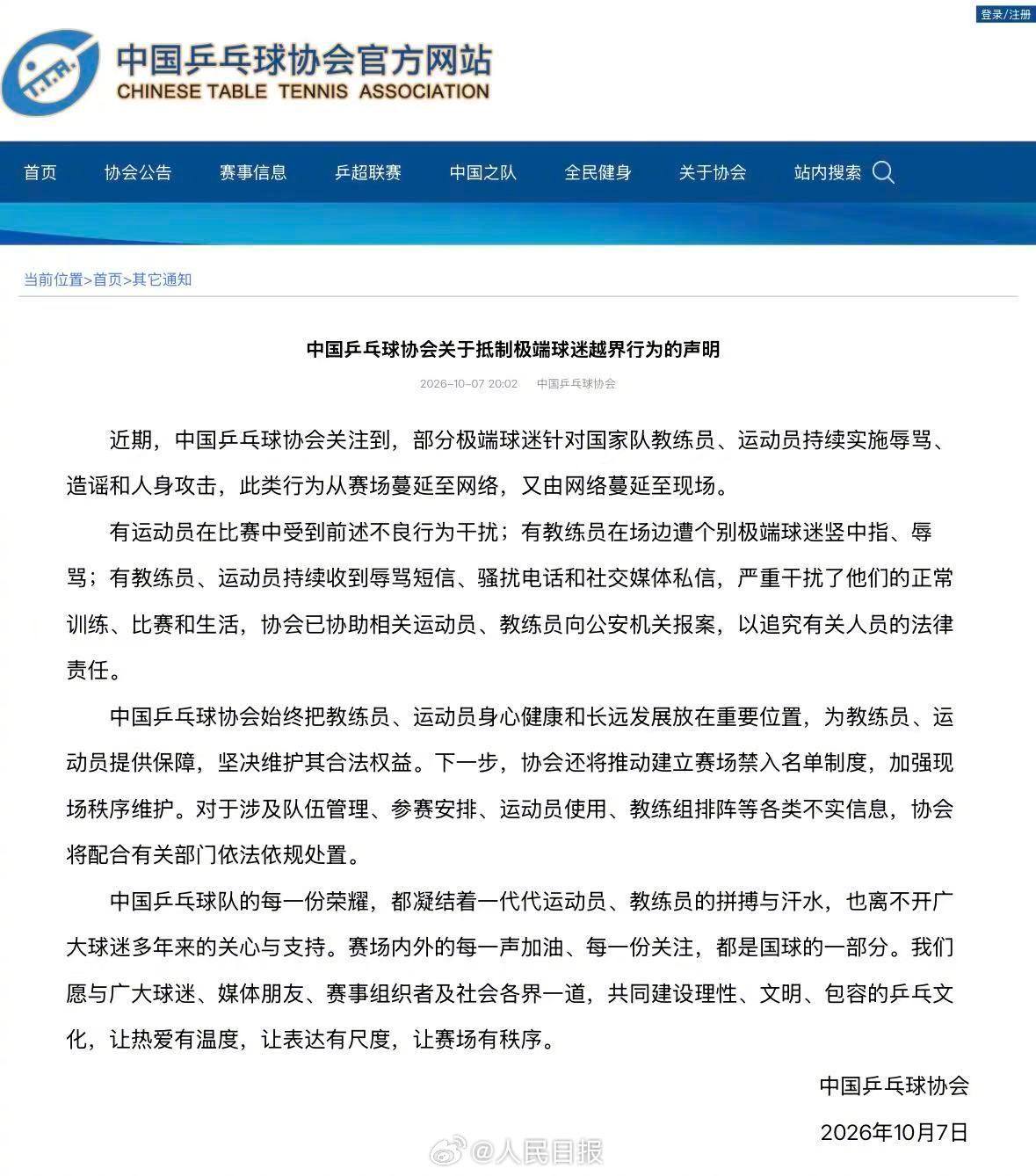
China's table tennis authorities have responded to a week of fan disorder with the sport's first formal policing mechanism: a stadium ban list. On the evening of October 7, the Chinese Table Tennis Association (CTTA) published a statement on its official website condemning "extreme fans' boundary-crossing behaviour" and announcing that it will push to establish a venue-ban system to keep offenders out of arenas, while helping players and coaches file police reports over the worst of the abuse.
The statement describes conduct that has moved from the stands to the internet and back again. It says some athletes have been disturbed by spectators during matches; that one coach had individual fans swear at him and flip him a middle finger courtside; and that players and coaches have been flooded with abusive text messages, phone calls and private messages. The association has already helped team members report the perpetrators to the police.
The immediate trigger was the WTT China Smash in Beijing, the tournament in which Sun Yingsha crashed out in the round of 32 while running a fever — an upset whose fallout the site covered earlier this week. During the same event, spectators heckled men's head coach Wang Hao, chanting for him to field Lin Shidong in singles and, according to reports, mixing in profanity. Wang photographed the crowd and called the police; his wife, Yan Boya, posted on social media: "I don't understand how competitive sport has come to this" (我不理解竞技体育怎么就变这样了). Her post circulated widely, as did screenshots of the association's statement.
For an international reader, the oddity is the scale on which a spectator sport's fandom became a governance problem. Table tennis is China's "national ball game" (国球), its stars are household names, and its fan base has in recent years absorbed the vocabulary of idol fandom — collecting cards, charting data, guarding reputations online. That shift has been building for a while: after the Asian Games in Nagoya, players and commentators were already complaining that the fan environment had soured, and crowd interference at Chinese sporting events became a running story this autumn, with Sun Yingsha herself asking spectators for quiet.
The ban list is the first institutional answer. Venue bans are familiar from football, where Chinese clubs have handed stadium exclusions to pitch invaders and pyrotechnics users; applying one to a sport whose arenas sit inside China's tightly managed elite system signals that the association treats "fan circle" (饭圈) behaviour as a matter of order, not enthusiasm. The statement also pledges to work with authorities against false information about team selection and coaching decisions — an acknowledgment that the online wars over who plays and who sits have become part of the problem.
Whether a ban list can actually change behaviour is the question Chinese commentators are already debating on Zhihu. The association's closing line — "let passion have warmth, let expression have limits, let the arena have order" (让热爱有温度,让表达有尺度,让赛场有秩序) — reads more like a hope than a policy. The mechanism that will test it has now been named.