'The Environment Isn't Pure Anymore': Chinese Table Tennis Pushes Back Against Its Fan Culture
After Wang Chuqin ended the Nagoya Asian Games with three silvers and no gold, the conversation turned from results to pressure — with players and commentators openly blaming fan culture for draining the sport's stars, and for chasing Fan Zhendong to Germany.
At the final table of the Nagoya Asian Games men's singles on Sunday night, Wang Chuqin — defending champion, world No. 1, competing in his first Games as the men's team captain — lost 0-4 to his own teammate, Lin Shidong. It completed a silver sweep of his last Asian Games: a runner-up medal in the mixed doubles, another in a team event Japan took after China's 36-year reign ended, and now a third in singles. The trending topic afterwards counted three matches in which he failed to win a single game.
The scoreline, though, is not what Chinese table tennis spent Monday arguing about. At the post-final press conference, Wang ticked off the official ledger — his half of two draws held, "the basic task" done — and then stopped being diplomatic. The environment he plays in, he said, is no longer pure; its effect is like a slow poison, taking energy to neutralize before he even reaches the table. He has carried the pain and the confusion for a long time. "I don't know why, I just feel tired," he said. "I can't quite find the feeling I used to have for the game." His remarks sat near the top of Baidu's trending board for much of Tuesday and among the hottest questions on Zhihu.
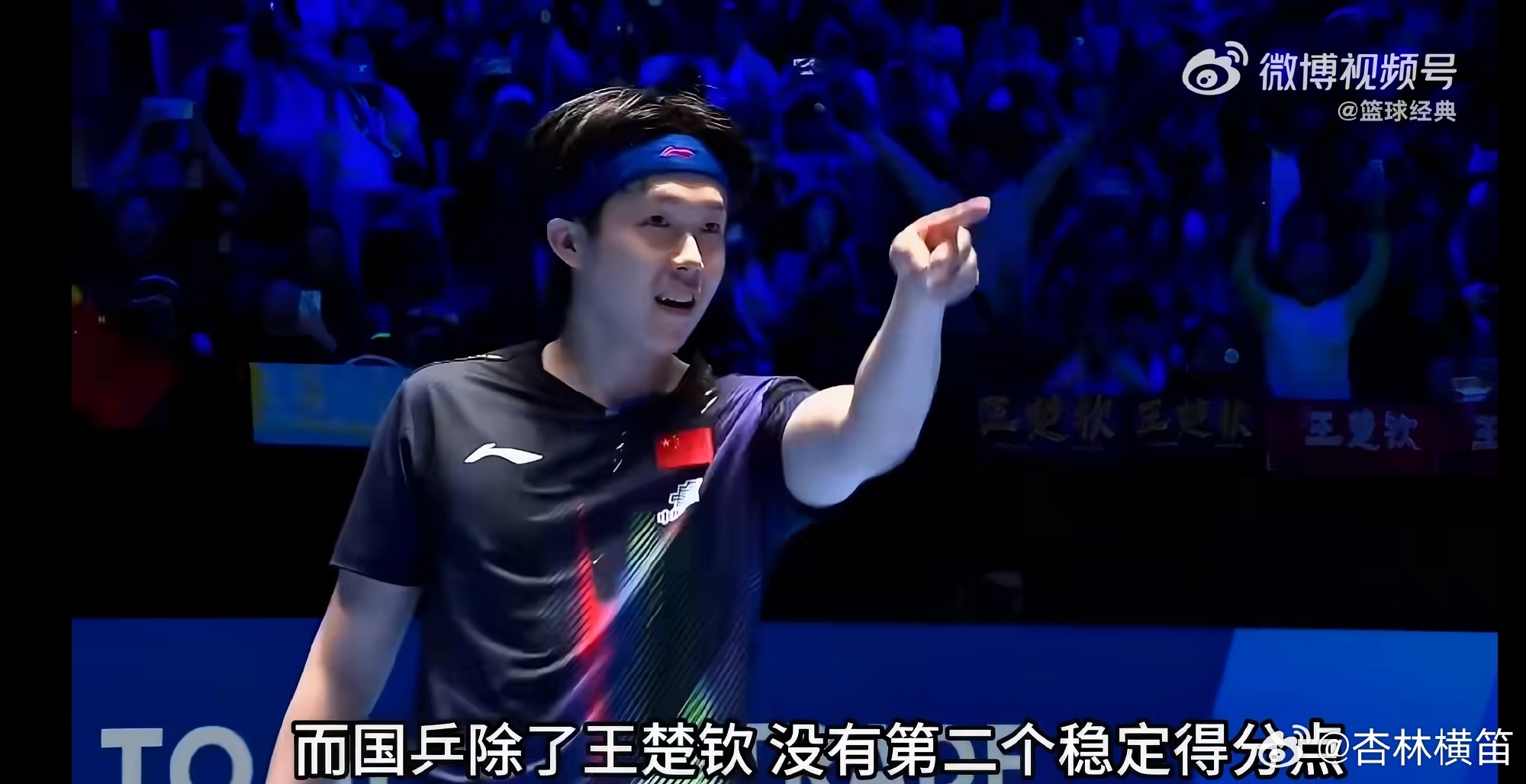
Others in the sport have stopped hinting. Speaking on the broadcaster Migu, the table tennis professional Cheng Jingqi described a no-win atmosphere around the team's most-followed athlete: "It has got to where he seems not allowed to lose — and when he wins, it counts for nothing. Sometimes the matches aren't even his, and a loss still ends up attached to him." Then came the line that made the interview trend: "This kind of public opinion has already cost us one truly outstanding athlete. If it burns through one more of those who can play, we don't know what we'll go through next."
The athlete he meant went unnamed but not unfelt. Fan Zhendong, the Olympic champion, stepped away from the world rankings at his peak and moved to Germany to keep playing. This week his name trended again — not for a result, but for the "Germany meme," fan shorthand that turns his exile into a running joke, now brandished to needle the new champion. The backlash was fast: "Humor needs boundaries; tragedy cannot be deconstructed," one widely shared post argued, liked more than 4,000 times. "Don't turn hardship into entertainment."
Wang's defenders make a different case about the silvers. One circulating post catalogued his shoulder injury — a rotator-cuff problem that flares with every full-power forehand — and a schedule that had him contesting three events at once. The Yangtze Evening News tallied what he actually did in Nagoya: won the opening point of the team final, dispatched the 34-year-old dark horse Alamiyan in the singles semi-final to guarantee a Chinese one-two, reached all three finals. "The gold is recorded under Lin Shidong's name," it concluded, "but the last line of defense on the road to that gold was built by Wang Chuqin." Lin, asked about the rout, was gracious to a fault: "He was carrying injury and fatigue. I also got some lucky nets."
A final data point came from a retired champion. Zhang Jike, ranking the strongest men's singles players ever, named Fan Zhendong, Ma Long and himself — a list built on grand-slam honors, with criteria he called non-negotiable, and one that included nobody from the team now playing in Nagoya.